Festival de Barriletes Gigantes: Keeping Memory in the Wind
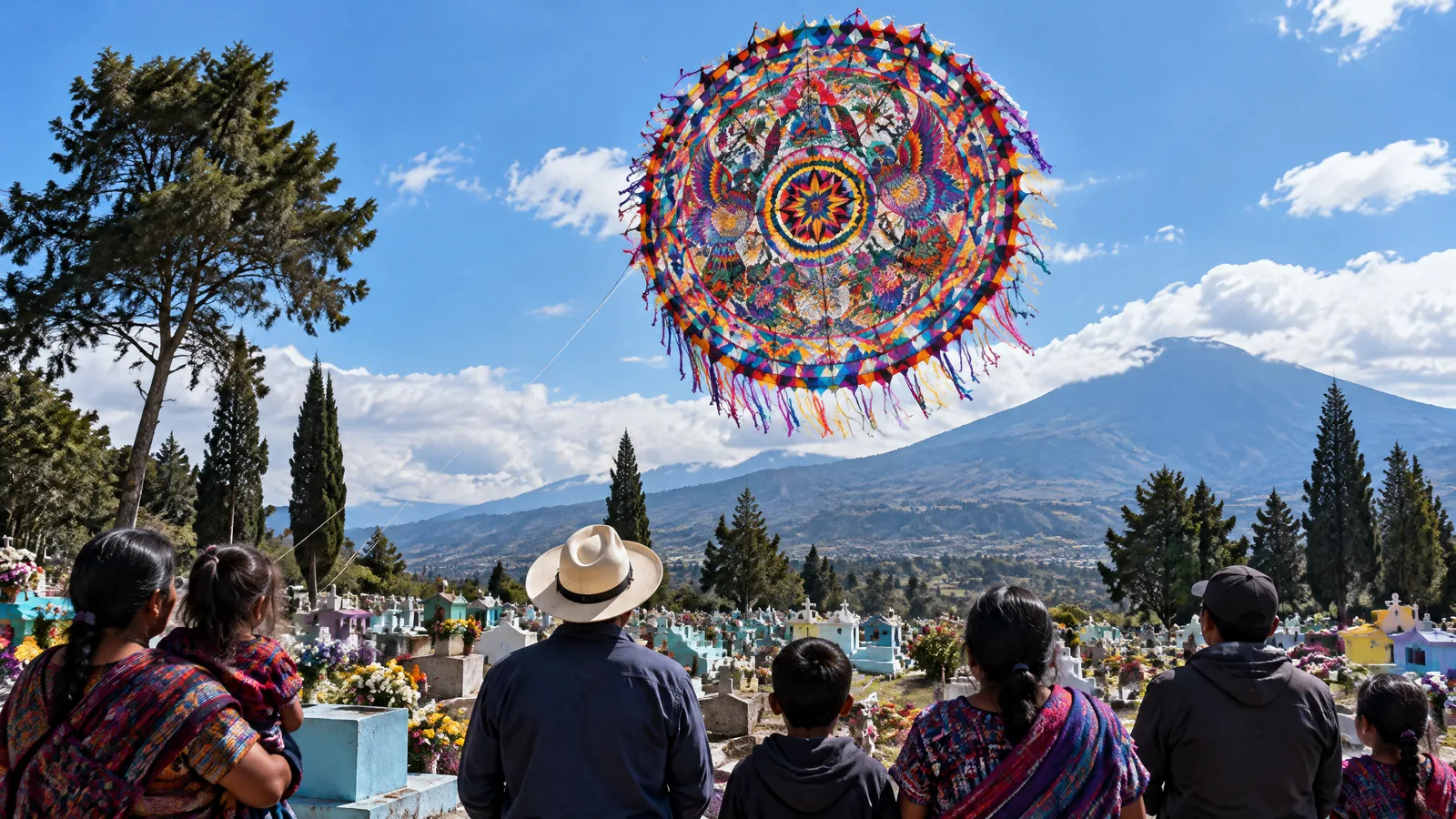
On the first day of November, the skies above Santiago Sacatepéquez and Sumpango in Guatemala’s department of Sacatepéquez become places of remembrance as well as colour. The Festival de Barriletes Gigantes brings communities together around monumental kites made of paper, bamboo, cord, fringes, and patient collective work. It takes place within the observances of All Saints’ Day and the Day of the Dead, and it should be understood in the particular cultural setting of these two municipalities rather than as a single practice shared in the same way by every community in Guatemala. 1 2
For many makers, known locally as barrileteros, the kite is not simply an object to admire from a field or cemetery edge. Guatemala’s Ministry of Culture explains that the festival is rooted in a Maya-Kaqchikel worldview in these largely Maya-Kaqchikel communities, where those who have died are regarded as ancestors who can be remembered and celebrated. The giant kite is understood as a spiritual connection between the living and the dead. That meaning gives the day its quiet seriousness, even amid music, families, colour, and the excitement of a public gathering. 2
A festival made long before the wind arrives
The visible festival lasts a day, but the work begins far earlier. The Ministry of Culture records that preparation starts in July and continues until the final day of October. Groups meet to decide the image and message that their kite will carry. They transfer the chosen design to a full-scale surface, prepare the broad face of the kite, and build its colour through pieces of tissue paper. 2
UNESCO describes five connected stages: designing; preparing the canvas, or visible face; decorating it with multicoloured tissue paper; making the backing; and assembling the canvas, backing, fringes, and tail. This is a useful way to see why the finished circle of colour represents more than a single maker’s skill. It is the outcome of planning, drawing, cutting, pasting, lifting, tying, and solving problems together over many months. 1
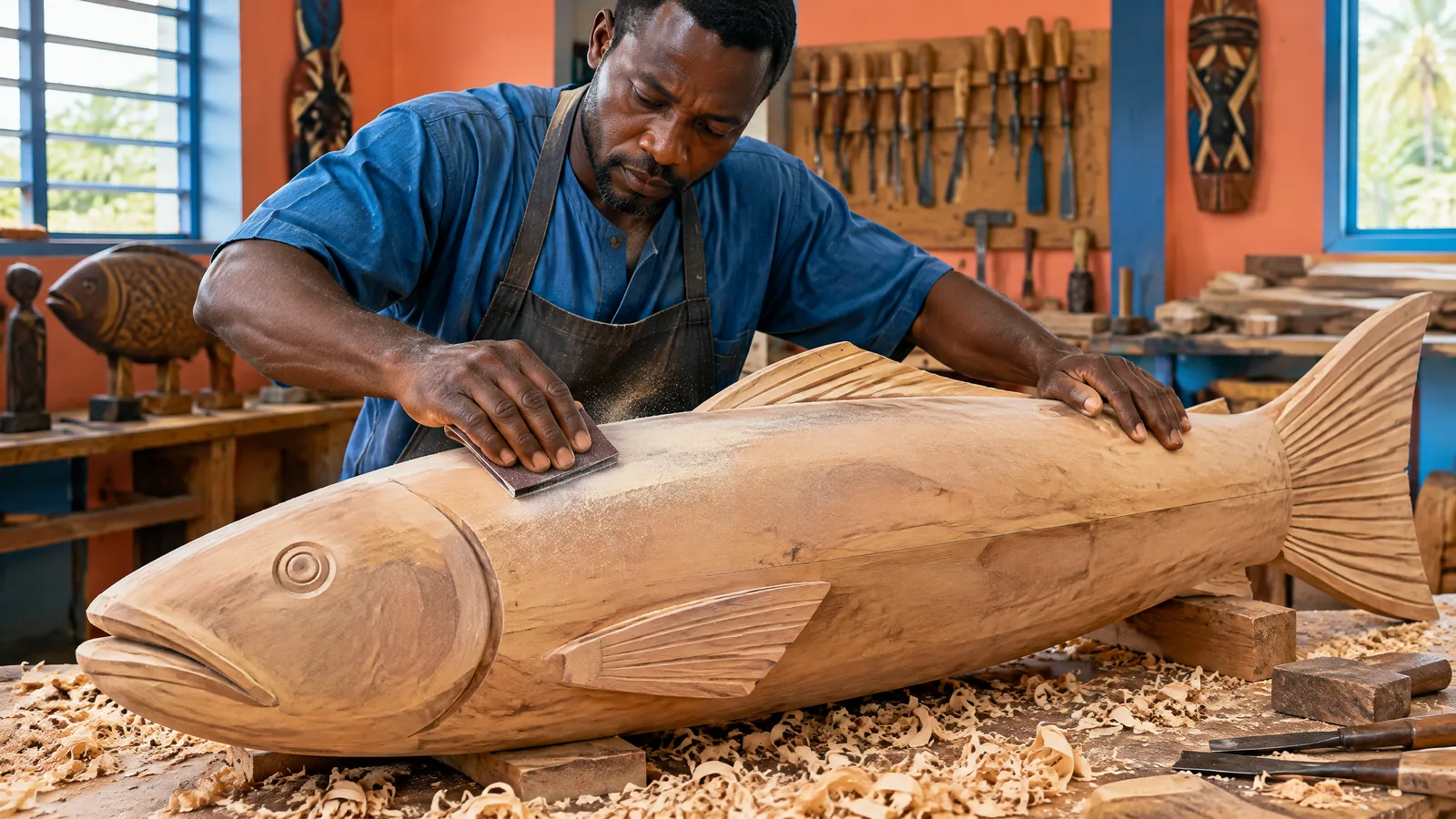
The frame is just as important as the image. In the local process documented by the Ministry, bamboo or caña de Castilla gives the work its support. Materials for the bamboo are blessed, and their return is marked with a procession, a Maya ceremony, and careful storage before assembly. The finished face is secured to the structure, while fringes, tail, and cord brakes help the kite respond to the air. Some of the largest works are displayed rather than flown, a practical decision that protects both the structure and the people around it. 2
Messages that face the present
A giant kite can hold remembrance and a public statement at once. UNESCO notes that designs may address environmental concerns, violence, and human rights. The Festival de Barriletes Gigantes is therefore also a forum where makers turn paper and colour into a message for neighbours and visitors. Each group chooses its own image and emphasis, so the kites should not be treated as if they speak with one uniform voice. 1
That creative freedom is balanced by communal responsibility. Craftspeople are affiliated with committees whose boards organize the fairs, establish rules, and award prizes, with support from municipalities and private-sector partners. People of different ages, genders, and abilities take part, while knowledge moves informally through doing the work alongside experienced makers. A child observing a design meeting, a relative helping prepare paper, or a new member learning how a frame is joined can all become part of the living transmission of the practice. 1
The messages are especially powerful because they remain tied to place. The festival is not an art display detached from daily life. Its process gives participants a public space for conversation, inclusion, and reflection while retaining its central relationship to ancestors. UNESCO identifies renewal and the warding off of negative spirits among the meanings connected to the tradition; these are beliefs and meanings carried within the participating communities, not a formula to impose on every visitor. 1
Remembering with attention
On festival day, kites are exhibited or raised during the local fairs. In Santiago Sacatepéquez, the Ministry reports that the day begins with placing kites at the general cemetery as a message of love for relatives who have died. In Sumpango, the modern festival is associated with a gathering beside the municipal cemetery and continues in a field close by. These settings make remembrance visible, but they also ask visitors to move with care. 3
A respectful visit starts by allowing the hosts’ purposes to set the tone. Observe the work of teams without blocking their movement or crowding the kite lines. Follow local directions around assembly areas and cemeteries. Ask before taking close photographs of makers, families, or acts of remembrance, especially when a person is not posing for the wider event. Use names carefully: a kite has makers, a group, a message, and a community context, rather than being only a striking background for a visitor’s image.
It also helps to listen for the story behind a design. Instead of assuming that every pattern has a single fixed meaning, ask an organizer or maker whether they wish to explain the image. Buy food, crafts, or services from local vendors when appropriate, keep public spaces clean, and be patient when wind, safety, or the needs of a large structure change the pace of the day. These small choices respect the labour that makes the festival possible.
Continuity carried by communities
In two thousand twenty-four, UNESCO placed the technique of making giant kites in Santiago Sacatepéquez and Sumpango on the Representative List of the Intangible Cultural Heritage of Humanity. The recognition names a technique and a community practice, not a frozen spectacle. Its importance lies in the makers’ continuing ability to teach, adapt, organize, remember, and speak to the present through the work. 1
The Festival de Barriletes Gigantes invites attention upward, toward immense circles of paper meeting the wind. Its deeper lesson is closer to the ground: remembrance is prepared through relationships. In these Sacatepéquez communities, months of shared work lead to a day in which art, ancestors, and current concerns can be held together in public. To encounter the festival well is to notice both the soaring kites and the people whose care gives them meaning.