Día de los Muertos in Mexico: Preparing a Welcome of Memory
Día de los Muertos is a season of remembrance in Mexico in which many families prepare to welcome and honor deceased relatives and loved ones. It is often described through bright flowers, candles, food, and home altars, yet its heart is quieter: sustaining a relationship of memory, care, and belonging. The observance takes place around the turn from October to November, and its meanings are shaped by family, locality, faith, and community. UNESCO’s heritage record specifically describes practices among Indigenous communities of Mexico, where the return of the dead is understood as temporary and preparations help receive them. 1
A season with many local meanings
There is no single Día de los Muertos ceremony that speaks for every community in Mexico. Customs differ across regions and households, and individual families decide which relatives to remember, how to mark the days, and whether observance centers on a home, a cemetery, a religious service, or a gathering. In several Indigenous communities, the season coincides with the close of the annual maize cycle. UNESCO notes that this connection gives remembrance a place within agricultural as well as family life. 1
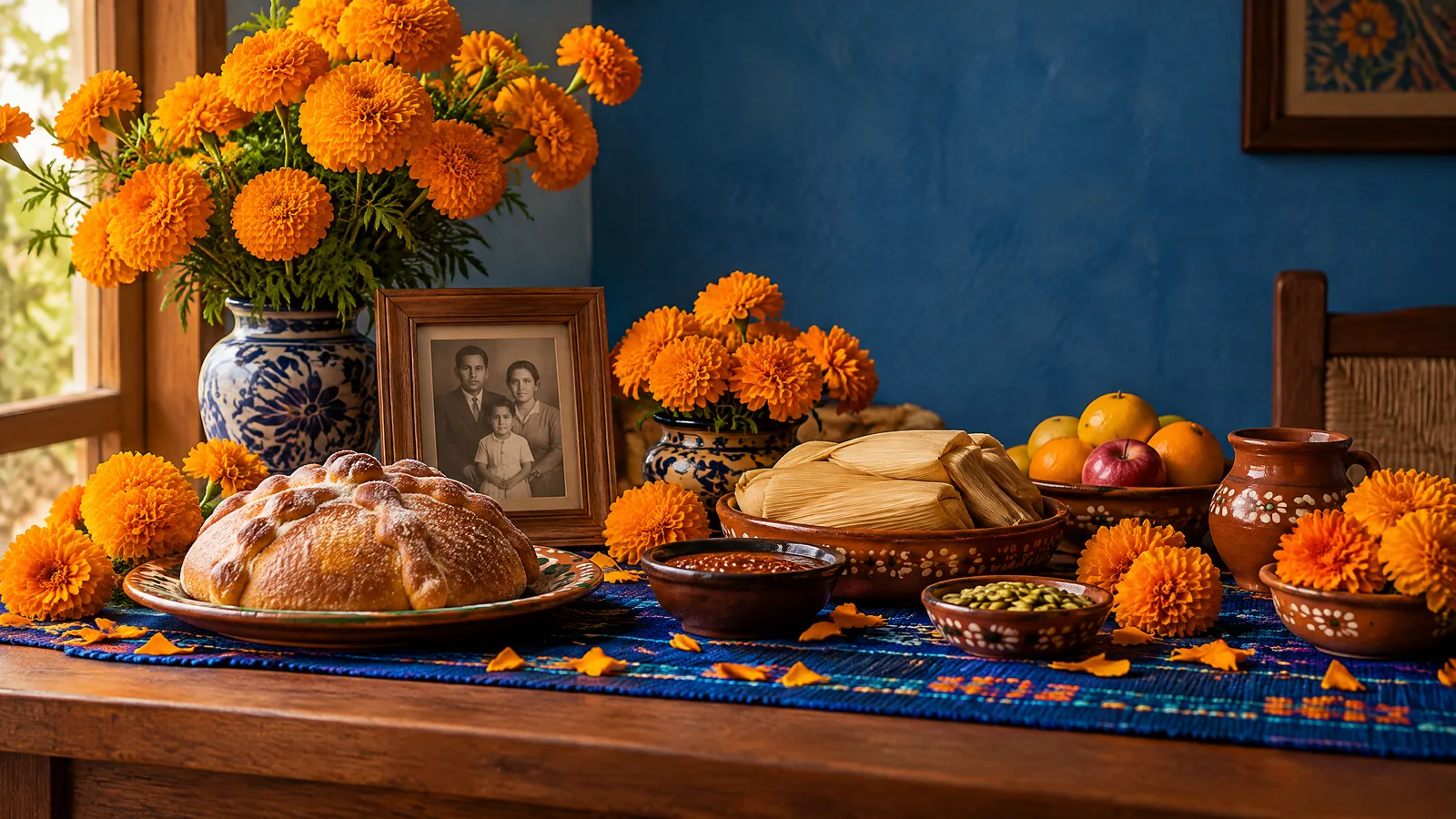
That variety matters when learning about the tradition. An ofrenda, or offering arrangement, may be elaborate or modest. It may include an image or name of the person being remembered, flowers, candles, food, paper decoration, and objects that evoke a life. It is not a universal checklist or a stage set. Its care lies in the relationship it represents. The National Institute of Anthropology and History describes families placing offerings at home shrines and graves, often preparing foods favored by the deceased. 3
For a visitor or a family member preparing an ofrenda, the most meaningful starting point is a person, not a color scheme. Begin with a memory worth sharing: a favorite meal, a song, a hobby, a story, or an object that recalls the person’s character. Ask relatives what feels appropriate. If a household keeps religious customs, follow its lead. If it does not, a simple arrangement made with attention can still be an honest act of remembrance.
The work of welcome
Flowers, candlelight, and food are not merely decorative details. In the Indigenous-community practices recorded by UNESCO, petals, candles, and offerings can form a route from cemetery to home, helping welcome returning loved ones. Food is placed at the family shrine and at the tomb, alongside flowers and handmade objects. 1 In some places, cempasúchil flowers frame altars or create arches and pathways; elsewhere, families make different choices according to local practice and available materials.
This preparation is often shared work. Someone may cook, another may arrange the altar, and another may tell younger relatives why a particular item belongs there. That exchange gives an ofrenda its depth. Rather than rushing to make it picture-perfect, allow time to write down a memory, identify a photograph with care, or ask an older relative about a loved one’s preferences. The tradition can open a gentle space for stories that ordinary days leave unspoken.
Care also means avoiding assumptions. Offerings are personal and, in some communities, tied to beliefs about the needs and categories of the dead. UNESCO records that particular days of remembrance may be assigned according to age, cause of death, sex, or sometimes profession. 1 A respectful guest does not rearrange an altar, treat it as a prop, or presume that every family observes the same sequence.
At the cemetery, presence comes first
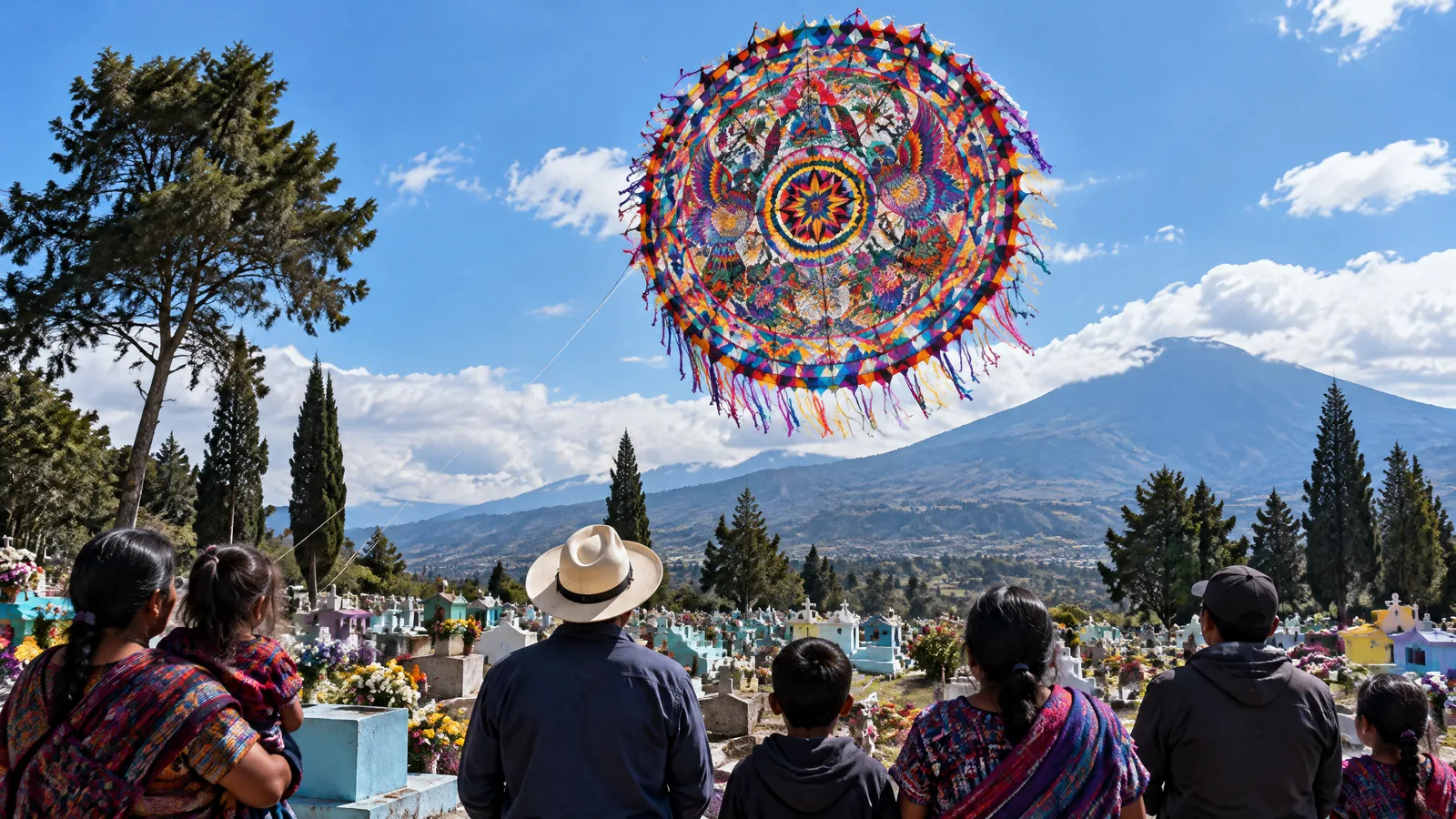
Cemetery visits are central for many, though not all, families. A grave may be cleaned and decorated, and relatives may bring flowers or food, pray, speak, sit together, or simply spend time nearby. The Institute of Anthropology and History notes offerings at both altars and tombs, with flowers, symbolic objects, and paper forms among the possible elements. 3
When visiting, follow the family’s invitation and the cemetery’s rules. Keep pathways clear, ask before joining a grave-side gathering, and never photograph mourners, children, or a family altar without explicit permission. Quiet attention is more valuable than an attempt to copy a custom. If conversation is welcome, listening to names and memories is a meaningful way to participate.
This etiquette is especially important because the season joins public life and private grief. Streets, markets, schools, and cultural spaces may display familiar imagery, while a family’s altar or grave can hold intimate meaning. The visible celebration should not obscure the personal loss or the continuing affection beneath it.
A layered history, held with care
Día de los Muertos is sometimes reduced to a single origin story, but Mexico’s own heritage institutions describe a more layered history. The Institute of Anthropology and History explains that the November observances developed through Catholic commemorations introduced in the colonial period, while ancestral Indigenous relationships with the dead had their own long histories and forms. 2 UNESCO likewise recognizes the meeting of Indigenous religious rites and Catholic feasts in the practices it documents. 1
These accounts make one point clear: the tradition is neither frozen nor uniform. Across generations, communities have given remembrance forms that speak to their own histories and obligations. The Institute also identifies the season as a setting for living cultural expression, including ceremonial crafts, music, dance, storytelling, and visual arts. 3 Such expressions deserve attention as community practices, not as interchangeable symbols.
Bringing remembrance home respectfully
Anyone wishing to engage with Día de los Muertos can begin by treating it as a practice of relationship rather than a theme. Choose one person to remember. Place a photograph, a favorite food if appropriate, and an object or flower that carries real meaning. Share a story aloud, or write one down for those who come after. If you are a guest, accept the guidance of the people who invited you and do not turn a private moment into a performance.
The lasting lesson of the season is simple but demanding: memory needs tending. Through preparation, conversation, food, and presence, Día de los Muertos gives many people in Mexico a time to affirm that deceased loved ones remain part of family and community life. The most respectful way to encounter it is to notice its particularity, honor the people at its center, and let care guide every gesture.