Samhain in Ireland: A Season for Memory, Welcome and Care
Samhain is a deeply rooted Irish seasonal tradition, associated with the turn into winter and with Oíche Shamhna, the evening before the Feast of All Saints. The National Museum of Ireland describes Samhain as the first day of winter in the traditional calendar, while noting that much of the observance took place on the preceding evening. In older accounts, this was a time for food, play, protection and attention to the unseen. It was also a moment when households could think about those who had died. 1
It is best approached as a varied inheritance rather than as a single fixed ritual. Customs recorded in Ireland changed across places, families and periods, and people now meet the season through different faiths, memories and levels of involvement. Some keep a lively family evening; some observe a Christian holy day; some simply notice the shortening light. A respectful observance leaves room for all of those choices.
A threshold in the Irish year
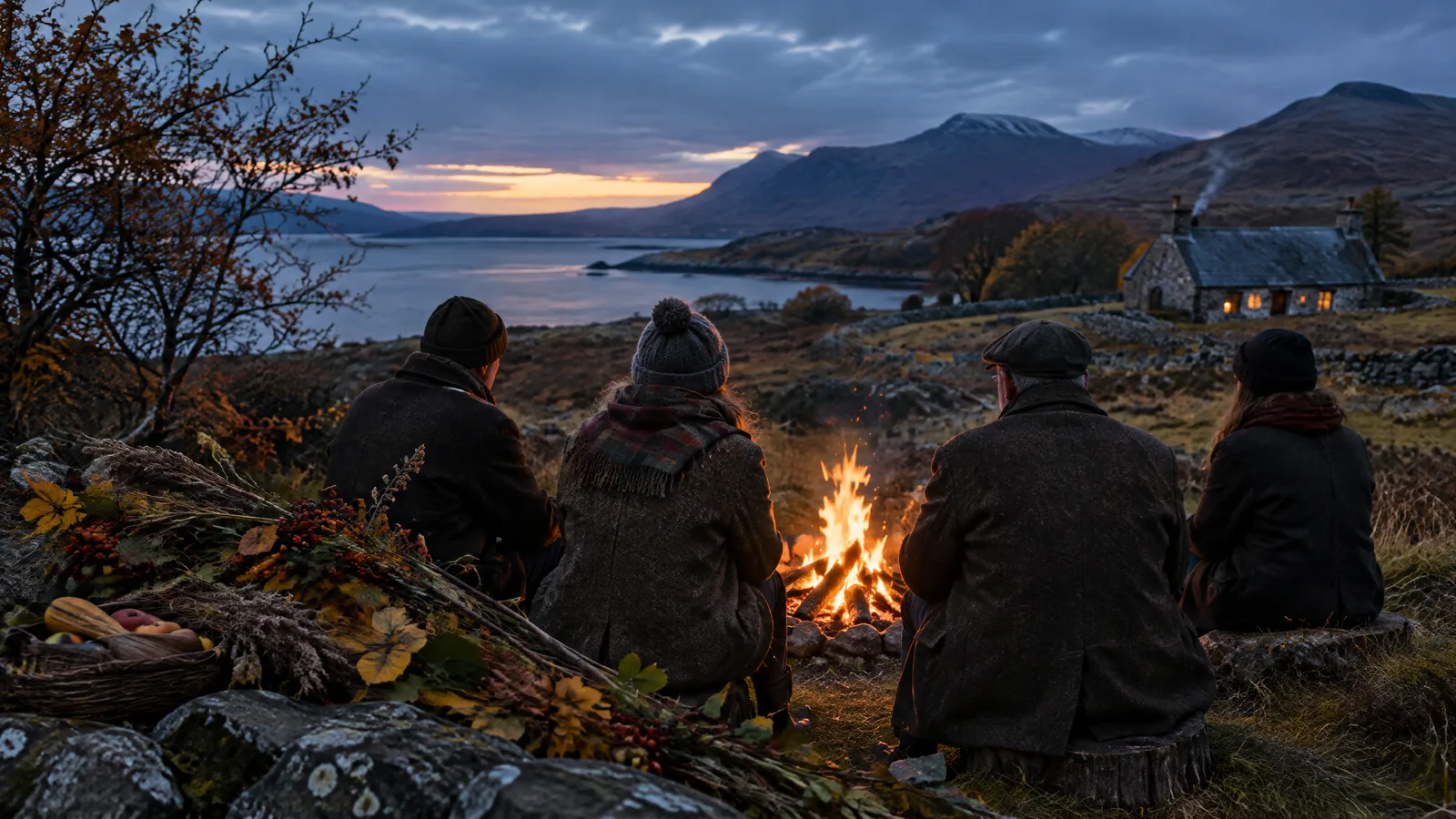
The seasonal setting matters. Samhain came at the close of autumn work, when fruit gathering and seasonal fishing had ended in farming communities. Maynooth University’s account of the Schools’ Collection describes the festival as a practical turning point tied to the land, as well as a time surrounded by stories of the dead and the Otherworld. 2 That pairing of seasonal work and imagination gives the tradition its character. It is not only about a frightening night. It is about crossing into a quieter part of the year, when home, kinship and memory may feel especially close.
The historical sources also ask us to be careful with language. Folklore records beliefs and reported practices; it does not require a present-day visitor to accept every belief or repeat every custom. The value of these accounts lies in what they reveal about how people made meaning together: through a shared supper, a story, a game, a protective gesture or a neighbourly call.
What the records remember
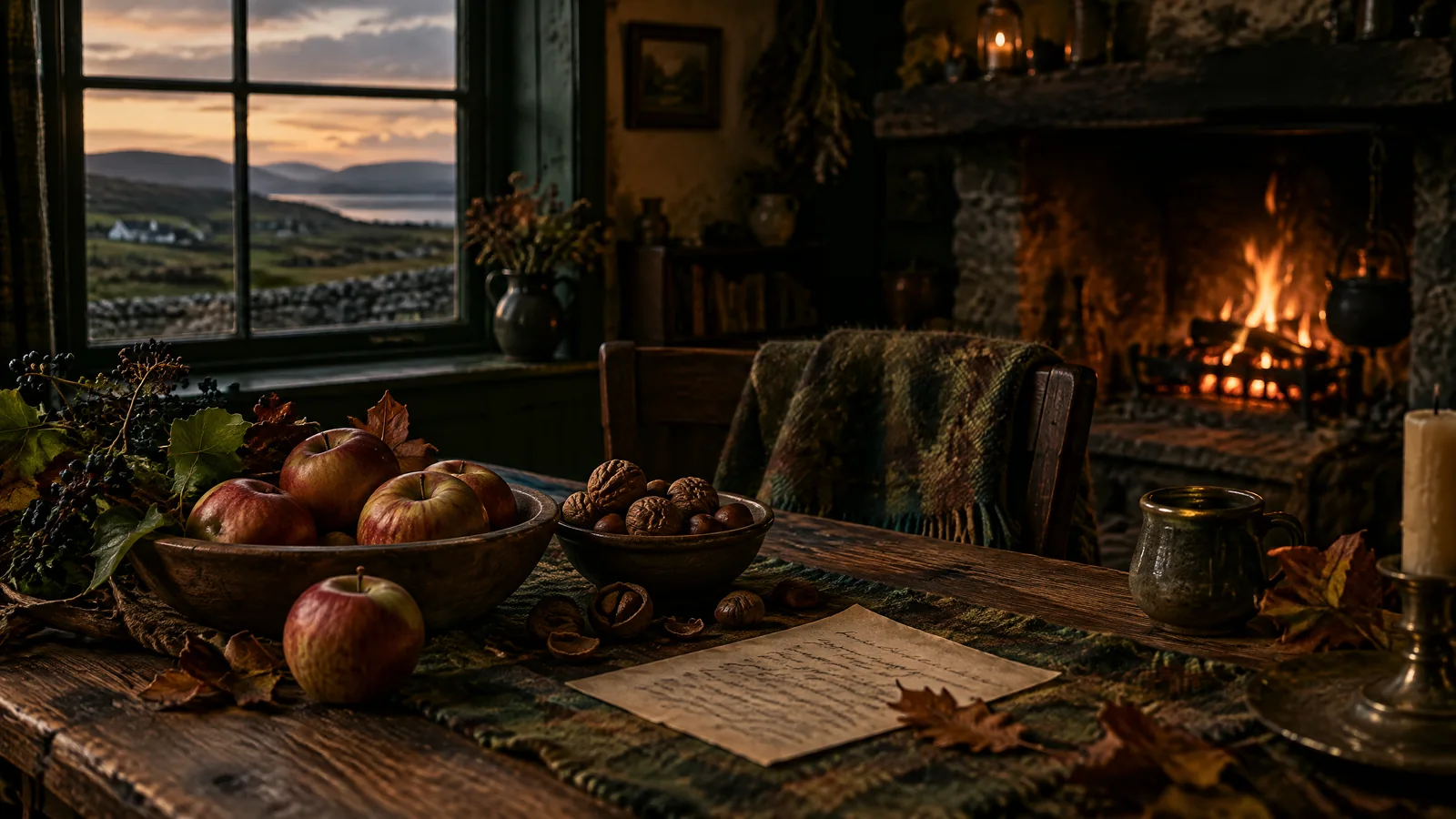
Food was central. The National Museum of Ireland records fruit and nuts as traditional festive fare, and says they also appeared in games played by children and families. Some games were linked to hopes about marriage. Masks were made, while disguised groups sometimes went visiting and entertaining. 1 These details suggest an evening that could hold both mischief and fellowship, with the household acting as a place of hospitality.
Remembrance had a distinct place in the folklore. The museum notes the belief that the souls of the dead might return to the family home. In material highlighted by Maynooth University, a child’s account from Leitrim describes people leaving part of their supper and a drink for wandering spirits. 1 2 Such reports should not be flattened into a rule for every Irish family. They are local evidence of how some people expressed care, caution and connection with the dead at this time of year.
Protective customs appear alongside welcome. The museum records special crosses placed above doors in some areas, and its seasonal account also mentions holy water. 1 The combination is revealing: the home was imagined as a threshold that needed tending. Whether someone understands that threshold spiritually, historically or emotionally, the idea can still prompt a gentle question: what helps a home feel safe enough to remember?
A thoughtful observance at home
Begin by choosing the scale that feels right for the household. A simple seasonal meal can be enough. Use autumn fruit, offer nuts only where they are safe for guests, and set the table with an uncluttered sense of welcome. There is no need to recreate a museum display or to turn private grief into a performance. The point is attention.
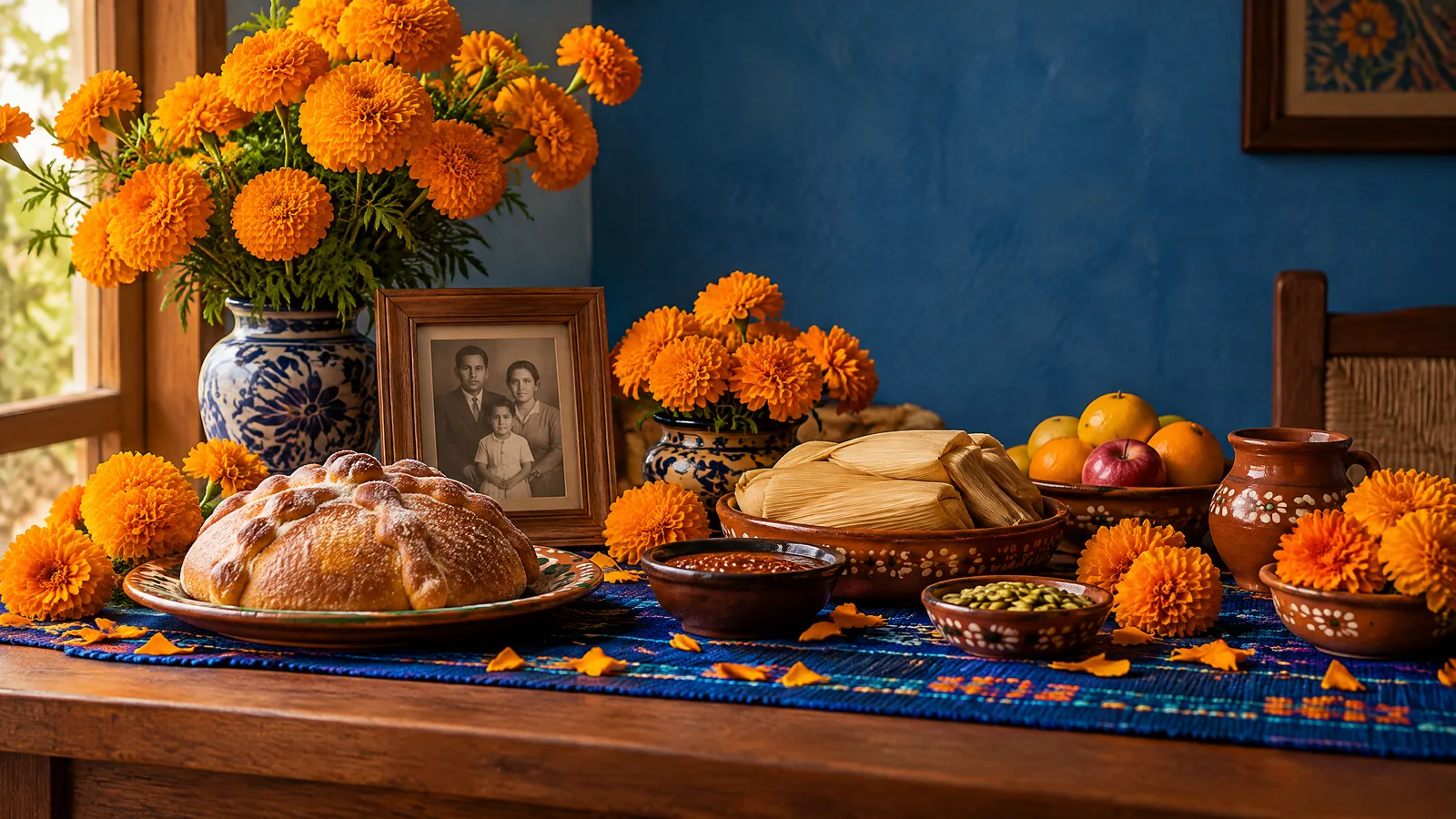
Make a small place for memory. A photograph, a written name, a favourite flower or an object connected with someone missed can sit on a mantel, shelf or table. If speaking names aloud feels welcome, each person can share a brief recollection: a kindness, a lesson, a recipe, a saying or an ordinary moment worth keeping. Children should be invited rather than pressed, and silence should be treated as a valid form of participation.
Stories suit the season, especially stories that strengthen family knowledge. Ask an older relative about a past Oíche Shamhna, a local custom, a neighbour remembered with affection or the way the house was prepared when they were young. Write down only what the teller is comfortable sharing. This is a practical act of heritage care: a conversation can preserve a voice or detail that might otherwise disappear.
If the household wants an outward gesture, choose one rooted in care. Visit a grave only if it is welcome and accessible. Leave a tidy doorstep, check in on a neighbour, donate seasonal food or make time for a phone call with someone who may be alone. The older tradition’s emphasis on the home and its visitors can be carried forward through kindness rather than spectacle.
Holding the tradition with respect
Samhain in Ireland carries harvest memory, winter awareness, household play, storytelling and remembrance in the same season. Its folklore is most meaningful when it is neither treated as a costume nor claimed as identical for everyone. The archival record shows customs that were lively, tender and sometimes protective. 1 2
A modern observance can be equally modest: share food, listen carefully, remember someone by name and make the home feel welcoming. In doing so, a family need not imitate the past exactly. It can receive the season as an invitation to notice change, care for its people and give memory a calm place at the table.