About this recipe
Images are illustrative; follow the written ingredients and food-safety instructions.
These recipes have not been kitchen-tested; cooking times can vary with equipment and ingredients. They offer ways to enjoy extra-virgin olive oil with vegetables, beans, grains, fish and fruit.
Oleocanthal is a naturally occurring compound in virgin olive oil. Laboratory findings are interesting, but they do not establish that a particular meal treats inflammation or prevents disease. Its amount varies between oils and cannot be measured by tasting a recipe. Enjoy the oil as food, not as a replacement for medical treatment. Read The Oleocanthal Molecule: Extra Virgin Olive Oil as Nature’s Daily Anti-Inflammatory Shield and the scientific review of oleocanthal for context.
Choose an extra-virgin olive oil you like. A peppery finish can be pleasant, but it does not tell you the exact oleocanthal content. Keep the bottle closed in a cool, dark cupboard, away from the stove. Several recipes add a little oil at the end for its fresh flavor; extra-virgin olive oil is also suitable for ordinary cooking. See the related MemContinuity publication.
Measurements: 1 tablespoon = 15 mL; 1 teaspoon = 5 mL. Cup measures are approximate US cups. Salt and pepper may be adjusted to taste. Wash produce before use.
Recipe
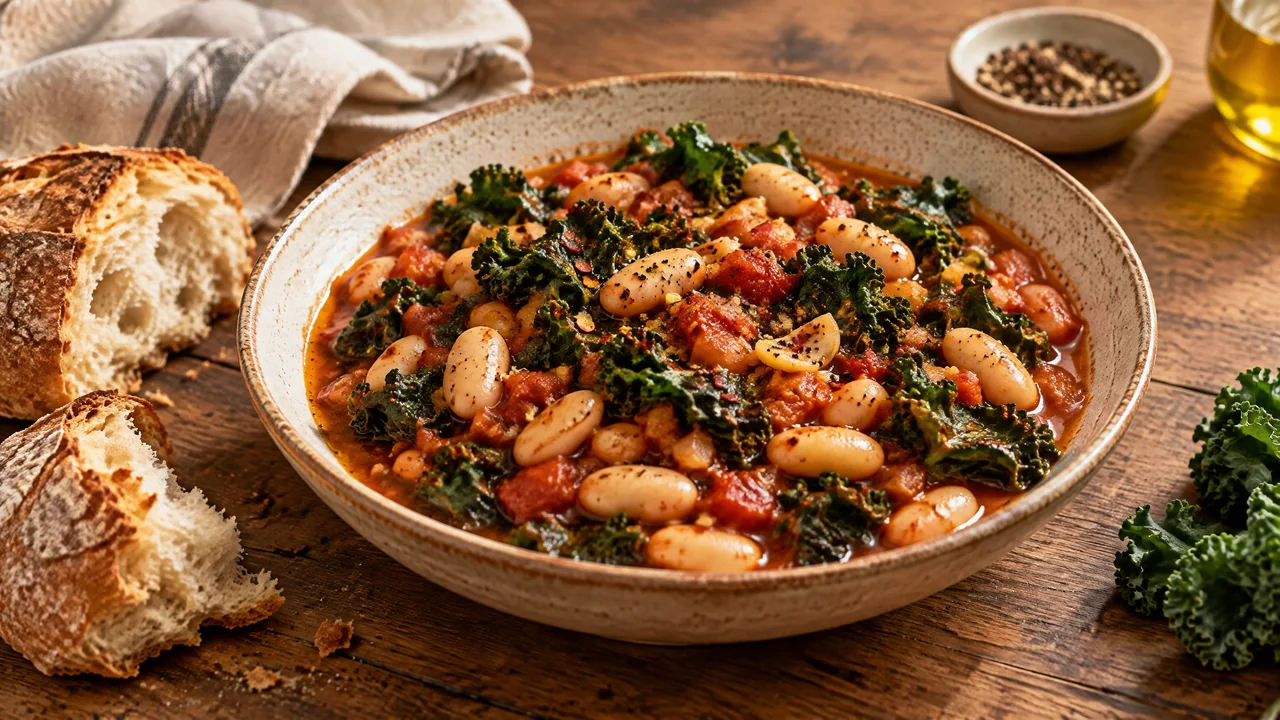
A simple pan of beans and greens becomes a comforting meal when spooned over toast.
Serves: 4 | Prep: 15 minutes | Cook: 20–25 minutes
Ingredients
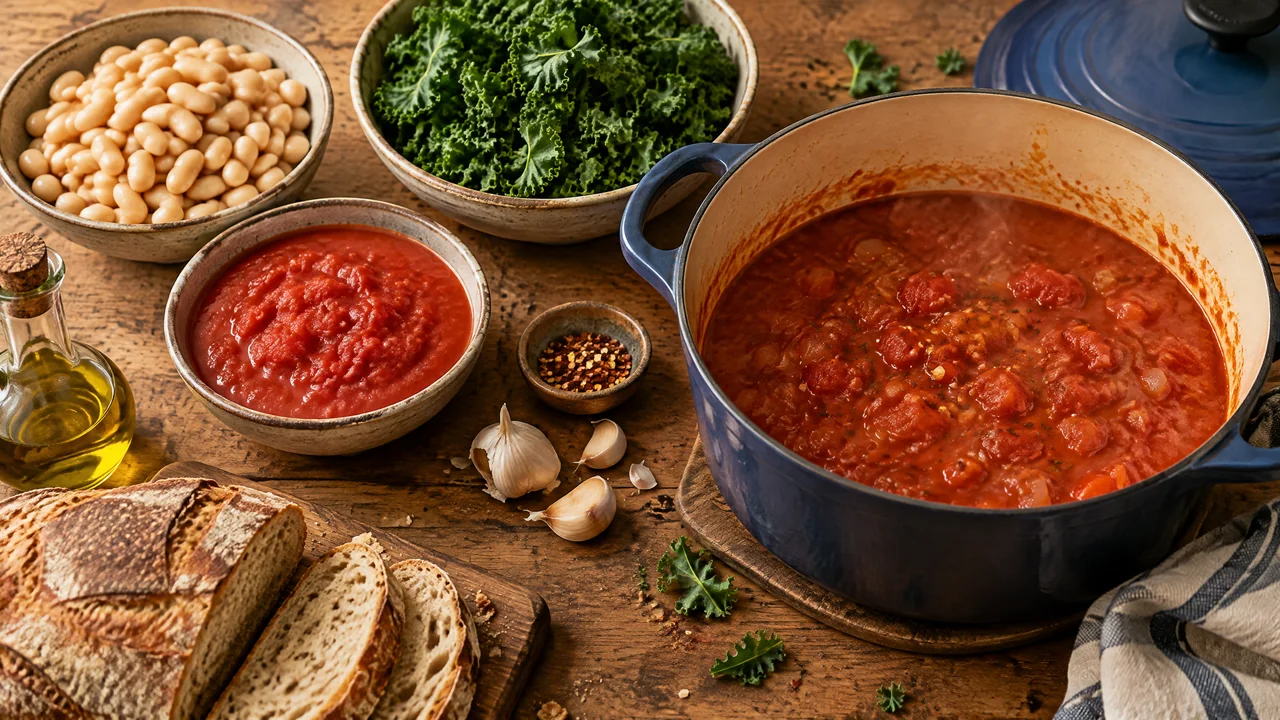
- 3 tablespoons (45 mL) extra-virgin olive oil, divided
- 1 medium onion or large shallot, finely chopped
- 2 garlic cloves, thinly sliced
- 1 can chopped or crushed tomatoes, 400 g (14 oz)
- 180 mL (¾ cup) water or low-sodium vegetable stock
- 2 cans cannellini beans, 400 g (14–15 oz) each, drained and rinsed
- 180 g (6 oz) kale, tough stems removed and leaves thinly sliced
- 1 tablespoon lemon juice
- 4 thick slices bread, toasted
- 2 tablespoons chopped parsley or basil
- Salt and black pepper, to taste
Instructions
- Heat 2 tablespoons of the oil in a wide pan over medium heat. Cook the onion for 4–5 minutes until softened. Add the garlic and stir for 30 seconds.
- Add the tomatoes, water or stock and beans. Bring to a gentle simmer and cook uncovered for 10 minutes.
- Stir in the kale. Cover and cook for another 4–5 minutes, or until the leaves are tender. Add the lemon juice and season to taste.
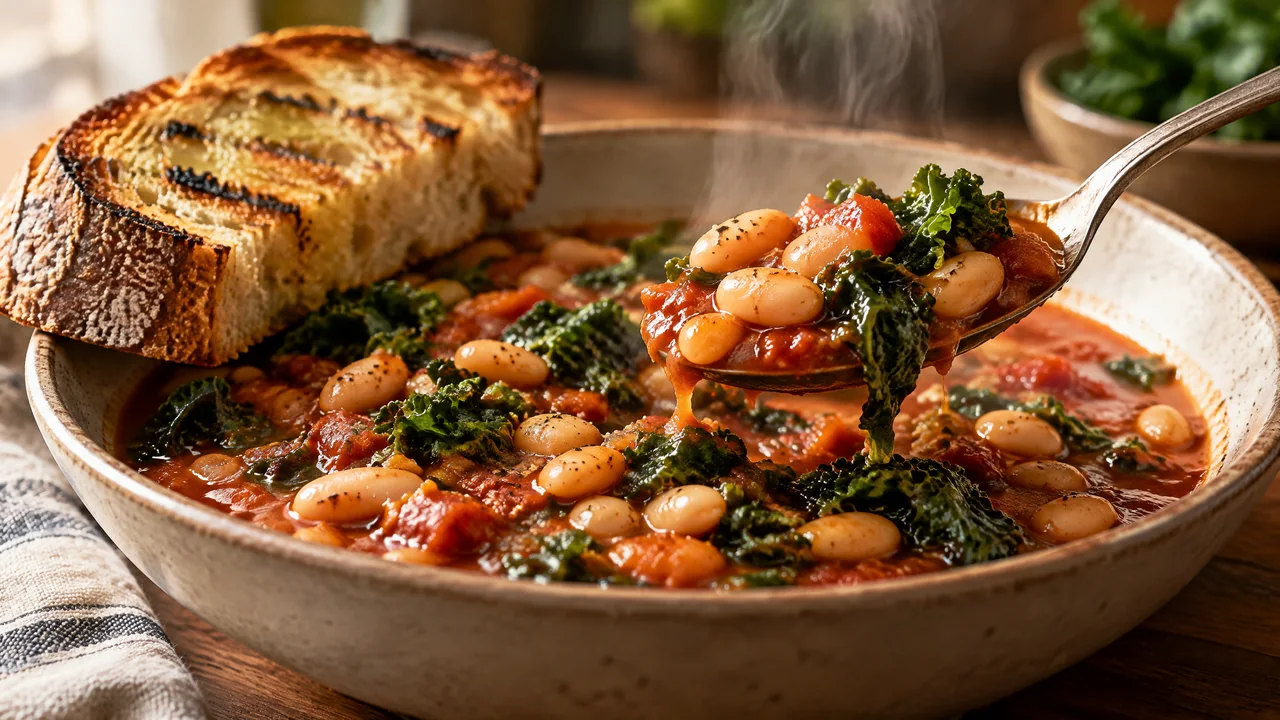
- Spoon the beans over the toast. Scatter with herbs and finish with the remaining 1 tablespoon of oil, divided among the portions.
Kitchen note: For a softer texture, simmer the kale a few minutes longer and serve the beans without toast. Bread commonly contains wheat/gluten.
Storage and food safety
Refrigerate perishable foods within 2 hours, or within 1 hour if the surrounding temperature is above 32°C / 90°F. Store refrigerated leftovers at 4°C / 40°F or below, use most cooked leftovers within 3–4 days, and reheat cooked leftovers to 74°C / 165°F. See the USDA Food Safety and Inspection Service’s Leftovers and Food Safety guidance.
Food allergies and texture needs differ. Check packaged ingredients and adapt or omit toppings to suit the people eating. If someone has a swallowing difficulty, follow their clinician’s or speech-language professional’s individual guidance rather than assuming a recipe is safe for them.