
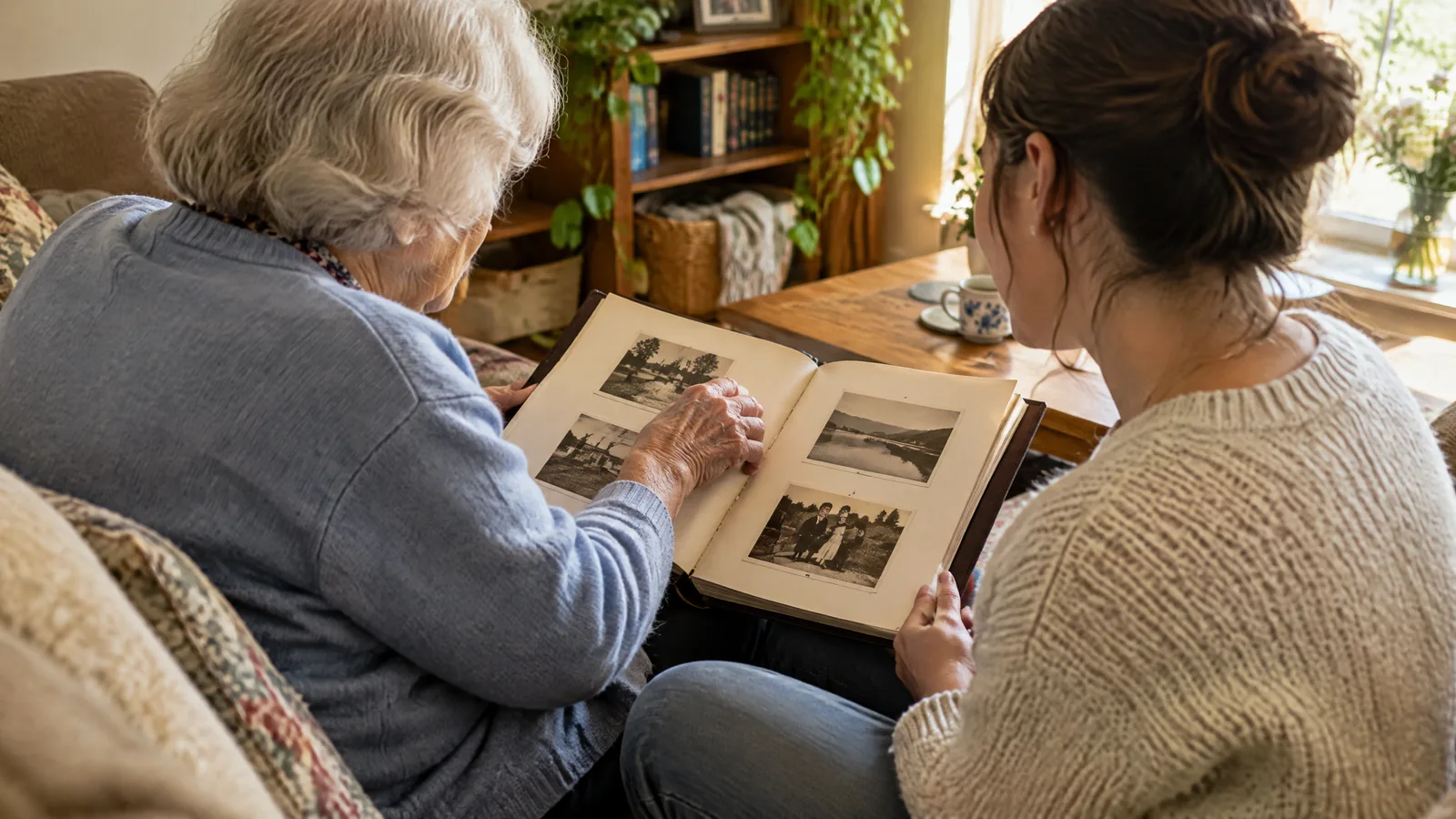
A photograph on the table can be an invitation, not a question with a correct answer. You might sit together, notice a bright coat or a garden, and see where the conversation goes. If it goes nowhere in particular, that can be all right too.
Sharing stories with someone who has dementia is not about filling every gap or assembling a perfect family history. It is a chance to spend time together on terms that feel comfortable to them. People experience dementia differently, so let the person, rather than a set of rules, guide the moment.
Start with an invitation
Choose a time when neither of you needs to rush. You might ask, Would you like to look at a photo with me? If they would rather have tea, talk about the weather or sit quietly, follow that choice. A visit does not need an activity to be worthwhile.
Make it easier to hear and see each other. Sit where your face is visible, and check before turning down the television or moving anything. Speak in the language and manner that feel most natural to the person. The Alzheimer’s Society’s communication guidance suggests allowing time for responses and keeping distractions to a minimum. Talk to the person as an adult, not as a child, and include them when others are present.
Offer a memory instead of asking for one
Questions such as Who is that? or Do you remember where this was? can make a pleasant moment feel like an examination. Try offering a detail instead: I remember how much you liked that blue coat. Or, looking at a picture together, you might say, That garden looks lovely.
Then pause. The person may add a story, comment on the colour, ask a question or simply enjoy looking. There is no need to fill the silence or produce a particular response. If they want to talk, let them finish without supplying the missing word at once. The NHS advice on communicating with someone with dementia recommends giving people time and acknowledging what they express, including through body language.
An occasional conversational question can be welcome; it need not be a quiz. If an open question seems difficult, offer a simple choice: Would you like another picture, or shall we put the album away? Leave room for neither option and for the person to communicate in their own way.
Let the story follow their interests
A story does not have to begin with a photograph. A familiar song, a favourite recipe or an object they enjoy handling might give you something to share. Ask before putting music on or handing them an object. The Alzheimer’s Association’s guidance on reminiscence describes using familiar items while following the person’s lead, rather than testing what they remember.
Start with one item, not a whole album and a list of names. Notice what holds their attention. They may be more interested in the cake in a photograph than the occasion it was made for. You can talk about cake. There is no obligation to steer the conversation back to the family tree.
The same story may come up more than once. If the person is enjoying telling it, listen as you would to any story worth hearing again. A smile, a gesture or a comfortable silence can be part of the exchange too; speaking is not the only way to take part.
Respond to feelings, not just details
If a date or name sounds different from the version you know, consider whether correcting it is necessary. A minor detail usually does not need a debate. You might respond to what matters in the moment: That sounds important to you, or You really enjoyed being there. Avoid supplying an emotion the person has not expressed.
This does not mean agreeing with everything or ignoring a misunderstanding that affects safety or a real decision. When a practical fact matters, explain it gently and simply, and seek appropriate help if needed. For an ordinary story, though, making the record exact can often wait.

Notice when it is time to stop
Even a familiar subject can bring up sadness, uncertainty or discomfort. Watch for changes in expression, turning away, restlessness or a direct request to stop. Do not assume you know exactly what a gesture means, but treat it as a reason to pause and check in gently.
If the person seems distressed, put the photo or object away and stop the activity. A simple We can leave this for now may be enough. Listen if they want to say more, offer reassurance, and let them choose what happens next. If distress continues or concerns you, consider asking a healthcare professional or another trusted source of support for advice.
Treat photos and recordings as separate choices
Looking at a photograph together is different from taking a new photograph, recording someone’s voice or sharing their words. Ask permission for each. Explain in plain language what you want to record, why, where you plan to keep it and who may see or hear it. Make clear that it is fine to say no or stop later, and check in as you go.
A diagnosis alone does not tell you whether someone can make a particular decision. Give the person time and any communication support they need. Do not treat silence as permission, and stop if their words or behaviour suggest they no longer want to continue. The Alzheimer’s Society’s consent guidance for dementia research discusses consent as an ongoing process; although written for research, its emphasis on clear information and noticing withdrawal is useful to consider here.
If someone changes their mind, stop recording, do not share it and ask whether they want the file deleted. If it has already been shared, ask recipients to delete their copies. If you are unsure whether the person can agree to recording or sharing, leave the device off and seek appropriate local guidance before proceeding. A relative’s enthusiasm is not the person’s permission. Respect other people’s privacy too, especially before sharing images or stories that identify them. Keep anything agreed upon private to the people the person has chosen, and check before wider sharing.
Leave room for an ordinary visit
Some days the best part may be a few minutes with a picture. On another day it might be looking out of the window together. The folder named sort these later can remain unsorted; there is no deadline for making a visit meaningful.
This article offers practical general information, not clinical advice. A healthcare professional who knows the person can help with questions about their individual needs.
Sources and further reading
- Alzheimer’s Society: How to communicate with a person with dementia — England, Wales and Northern Ireland.
- NHS: Communicating with someone with dementia — England.
- Alzheimer’s Association: Reminiscence and reminiscence therapy — United States.
- Alzheimer’s Society: Consent and capacity of people with dementia — England, Wales and Northern Ireland; written for research involvement and includes references to local law.