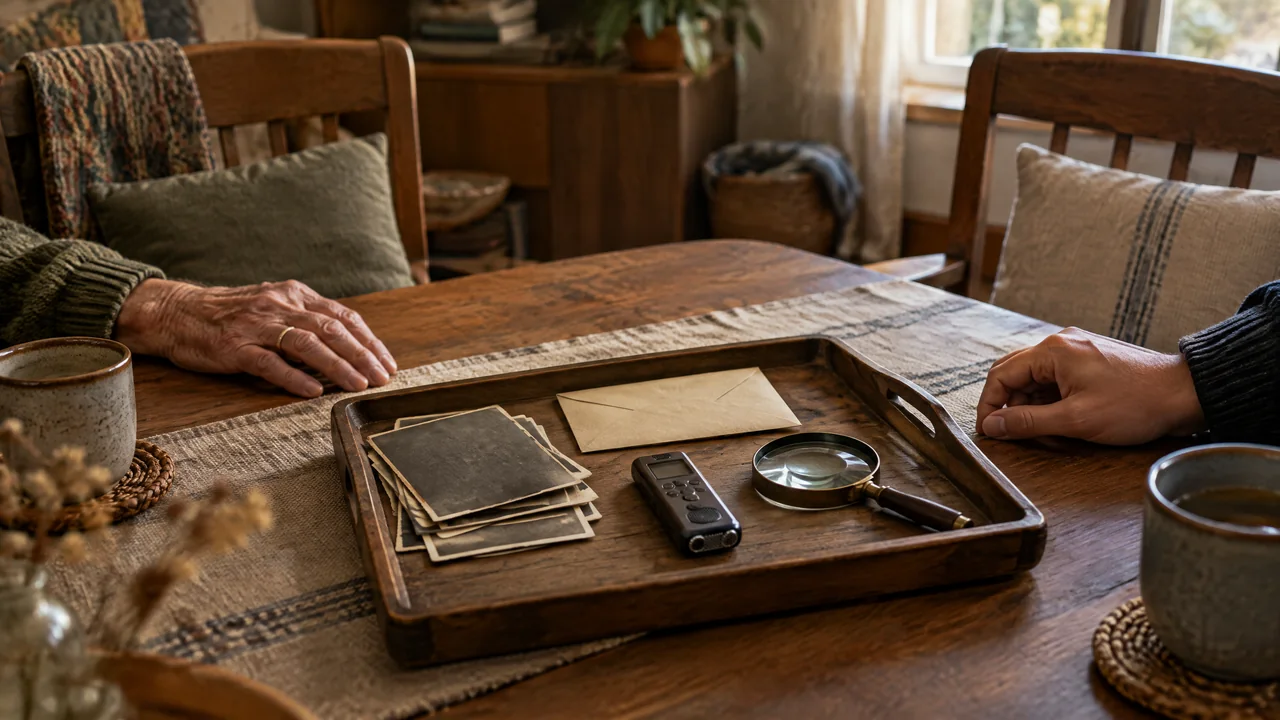
Invite people as if you are opening a door, not assigning a task. Say what would be useful, offer a few small ways to help, and make “no, not now” a completely good answer. A family tree becomes more useful through voluntary contributions, not by persuading every relative to take part.
Begin with a specific, gentle ask
A broad message such as “Please send everything you know about the family” can feel large, vague, or emotionally demanding. A smaller invitation is easier to consider: “Would you be willing to identify the people in this one photograph?” or “Do you remember what Grandad’s first job was called?”
Give a reason for asking, but keep it modest. You might say that you are trying to place a photo, confirm a date in an old record, or preserve the story behind a familiar object. This tells a relative why their knowledge matters without suggesting that they are responsible for completing the family history.
It also helps to explain what will happen next. Professional oral-history guidance recommends explaining the project’s purpose, the process, possible uses, review arrangements, and the narrator’s own expectations before recording begins. It also recognises that a person may refuse subjects or ask for limits on access. 1 The same calm clarity is useful for a short family message, even when no formal interview is planned.
Offer choices that fit different people
Not everyone has the same time, interest, memory, or comfort with technology. Some relatives enjoy a long conversation; others would rather answer one question by phone. Someone may have a box of papers but no wish to sort it. Another person may know a great deal and prefer that it remain private. These are different forms of participation, not failures to participate.
Offer options rather than a single request. A relative might choose to:
- identify faces, places, or dates in one image;
- share a short voice note or a favourite family saying;
- lend or photograph one document while keeping the original;
- correct a name, date, spelling, or relationship;
- suggest one person to ask next; or
- simply say that they would rather not contribute.
Keep the first step deliberately light. “Could you choose one photograph?” is kinder than asking someone to review an entire branch. If they offer more later, welcome it. If they do not, thank them for the answer they gave.
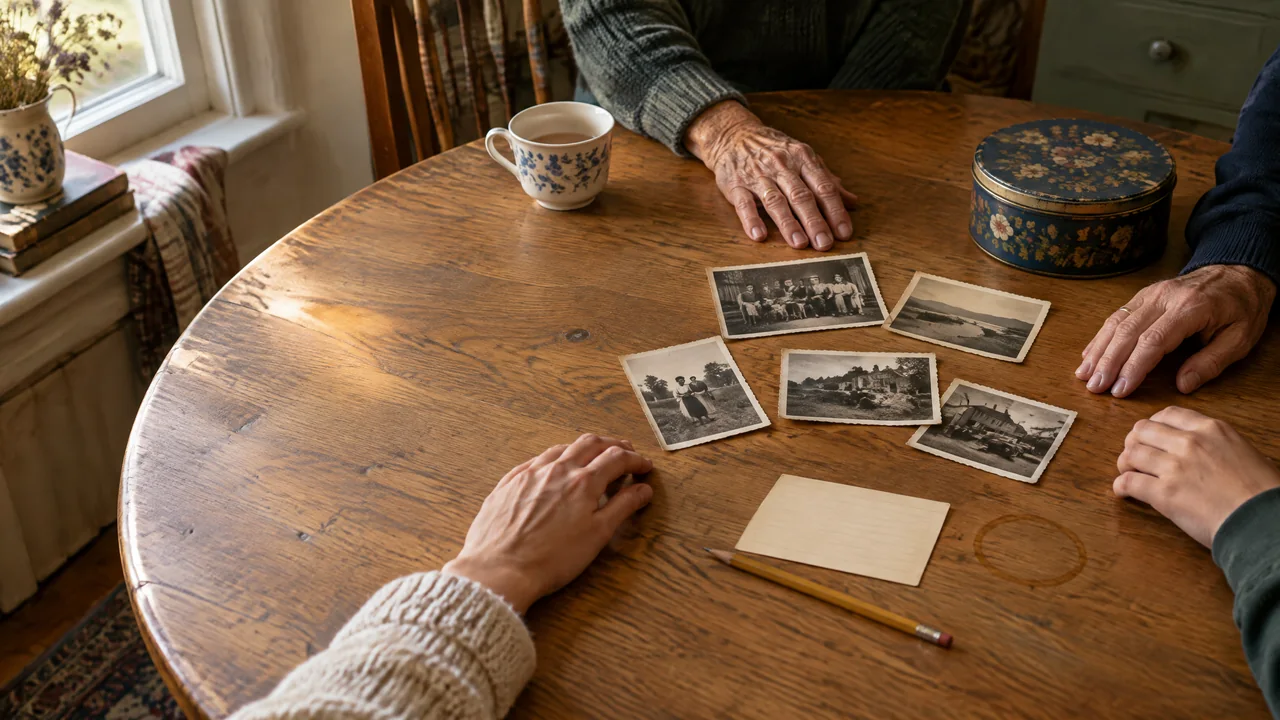
Use this invitation checklist before you send
This short check makes an invitation clear without making it formal or heavy:
- Name one small contribution. Ask about one photo, one fact, one story, or one person.
- Say how long it might take. “A five-minute call is plenty” lowers the sense of obligation.
- Offer more than one route. Let them reply by telephone, message, email, post, or in person if that suits your family.
- Explain the boundary. Say whether you are only keeping a private note, recording a conversation, or hoping to share a summary with relatives. Do not assume permission to pass on a story, image, or detail about a living person.
- Include an easy opt-out. A line such as “It is absolutely fine if you would rather not” gives people room to decide freely.
- Ask one follow-up at most. If there is no reply, let the invitation rest. A later, unrelated conversation may create a more comfortable opening.
For recorded stories, consent is more meaningful when a person understands the project’s purpose and possible outcomes, including how a recording may be used or stored. Boston Public Library notes that consent may be documented by a recorded statement or a consent and release form; its examples are not legal advice. 3 For a simple family project, the important habit is to talk through the plan before recording and respect the answer.
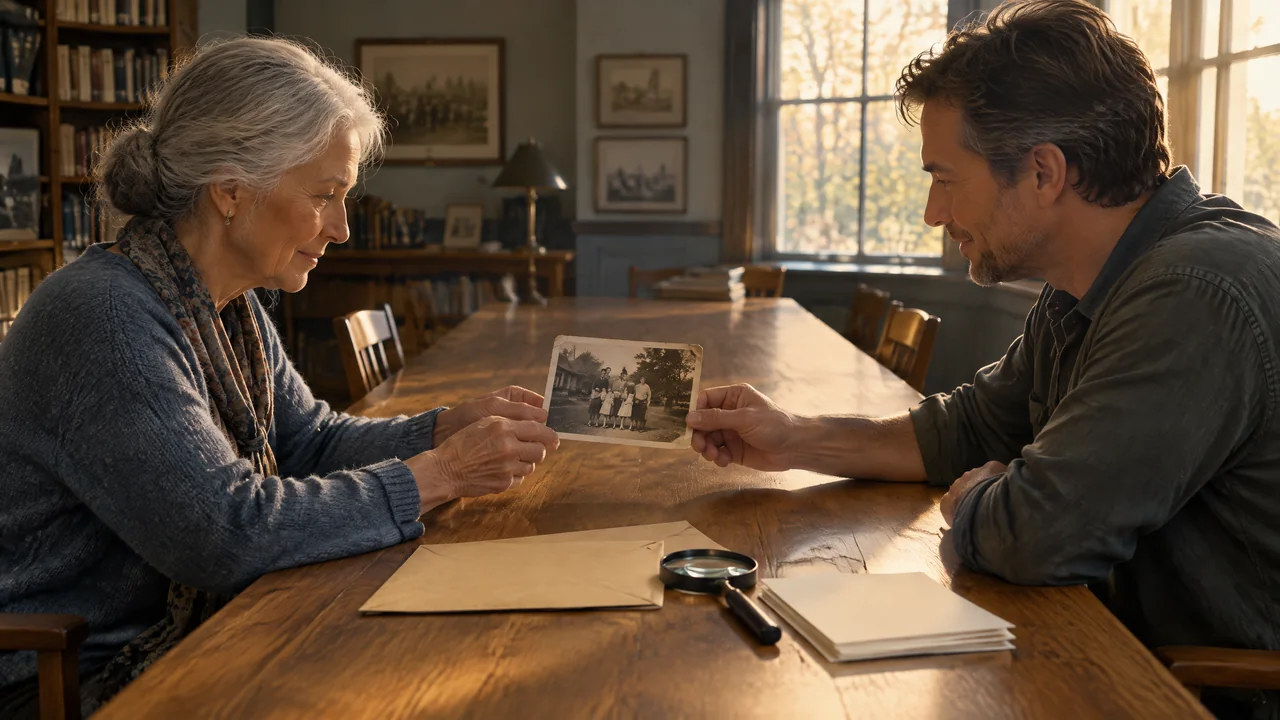
A message you can adapt
Hello [Name], I am slowly putting together a family history for us to refer to over time. I came across this [photo/document/question] and thought you might know something about it. If you feel like it, would you be comfortable telling me who you recognise, or sharing one memory? A quick reply, a phone call, or no reply at all is fine.
I will treat anything you share about living people with care. Before I repeat, record, or share a story more widely, I will check with you about what feels comfortable. There is no deadline, and you do not need to look for papers unless you want to.
Adapt the final paragraph to match what you can genuinely do. If a relative does not want a name, image, address, or personal detail passed on, do not try to negotiate them out of that boundary. The Association of Professional Genealogists’ ethics code calls for safeguarding information about living people, maintaining confidentiality, and obtaining informed consent before using or publicly sharing information. 2
Keep records, stories, and questions in their own lanes
A kind invitation should not make anyone feel that their memory must settle a disputed fact. When a relative shares a story, record it as their recollection and, if they wish, note the date and circumstances in which they told it. Keep research records, oral stories, and unanswered questions distinct. For example, an official birth record may support a date, while an aunt’s memory can add the reason a family moved or the nickname a person used.
That distinction honours both kinds of contribution. Oral-history guidance asks users to recognise the subjectivity of an interview and to verify information presented as factual when possible. 1 If two accounts differ, you can preserve both respectfully rather than deciding at once which relative is “right.” A helpful note might read: “Two family recollections differ; no supporting record has been found yet.”
Make room for silence and changing minds
Some subjects bring grief, disagreement, estrangement, or a wish for privacy. Do not use the family tree as a reason to reopen them. Thank a person who declines, and move on without asking them to explain. Opting out is a valid contribution to the project’s boundaries.
People may also change their minds. Someone who says no to a recorded conversation today may later send a photograph or answer a single question. Leave the relationship warmer than you found it. The aim is not to collect every detail; it is to create a respectful path for the details people freely choose to share.
If you would like an optional place to explore a family-tree project, visit MemContinuity’s Family Tree.