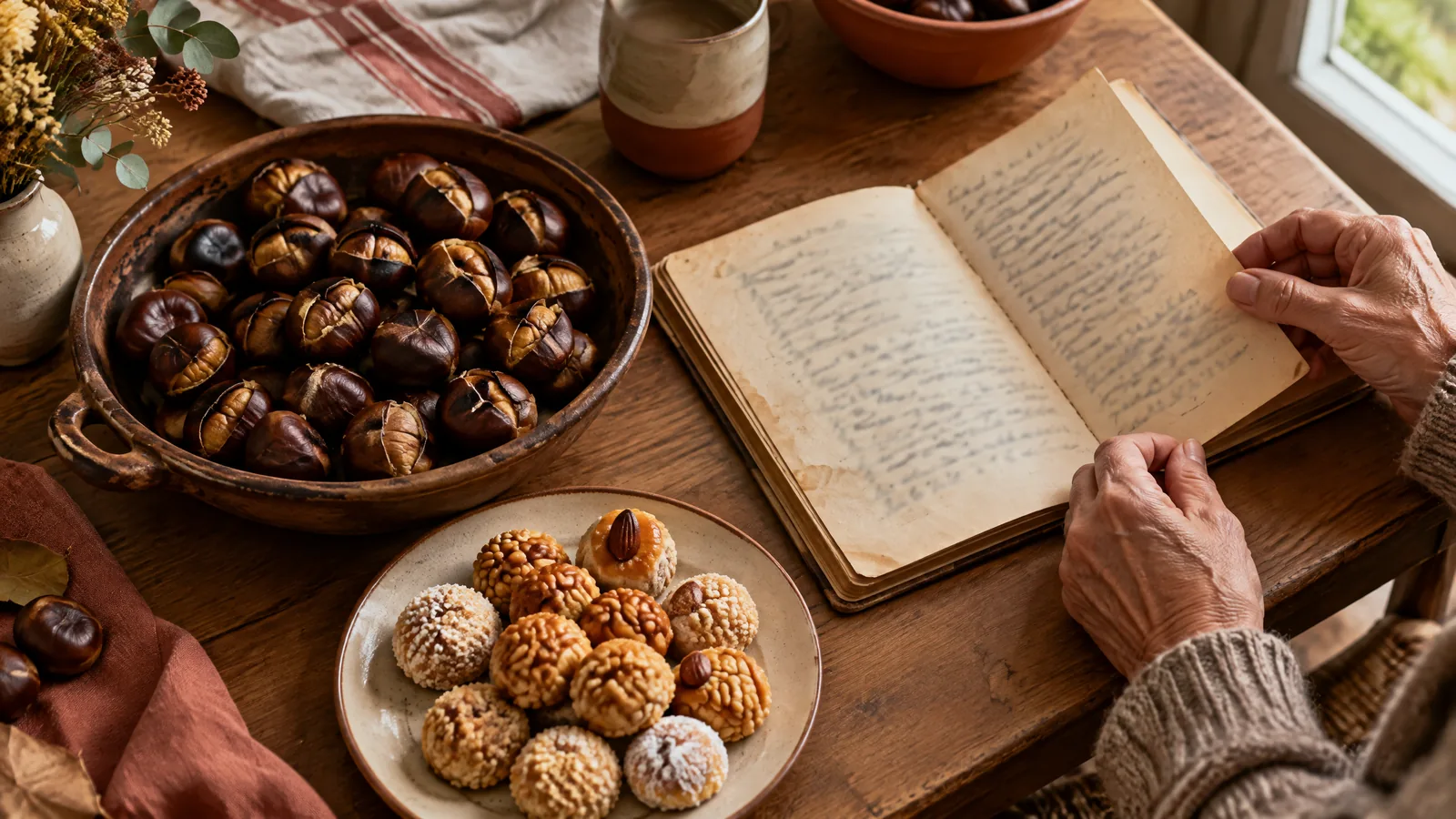
A family recipe is rarely only a recipe. It may carry the memory of who bought the ingredients, who always stirred the bowl, where the first batch went wrong, and which neighbour arrived when the table was already full. Around All Saints’ Day, seasonal food can become a gentle way to open those stories.
In Barcelona, the public Tots Sants programme identifies the first day of November with chestnuts and panellets, and describes chestnuts, panellets, and sweet potatoes as familiar autumn foods.1 A Castanyada memory notebook does not need to make a claim about one fixed tradition for every family. It simply uses food as a prompt: what does this season bring back for us?
The notebook can hold a precise recipe if the family has one. It can also hold a list of memories from people who never cooked but always appeared at the table. Both belong in a family record.
Choose a food that already has meaning
Start with what is real in your household. It might be chestnuts, panellets, sweet potatoes, a soup made when the weather turns, a shop-bought cake, or a dish made by a relative from another region or country. The point is not to reproduce a magazine-perfect menu.
Ask: Which food makes someone in this family start telling a story? That is the right food for the notebook.
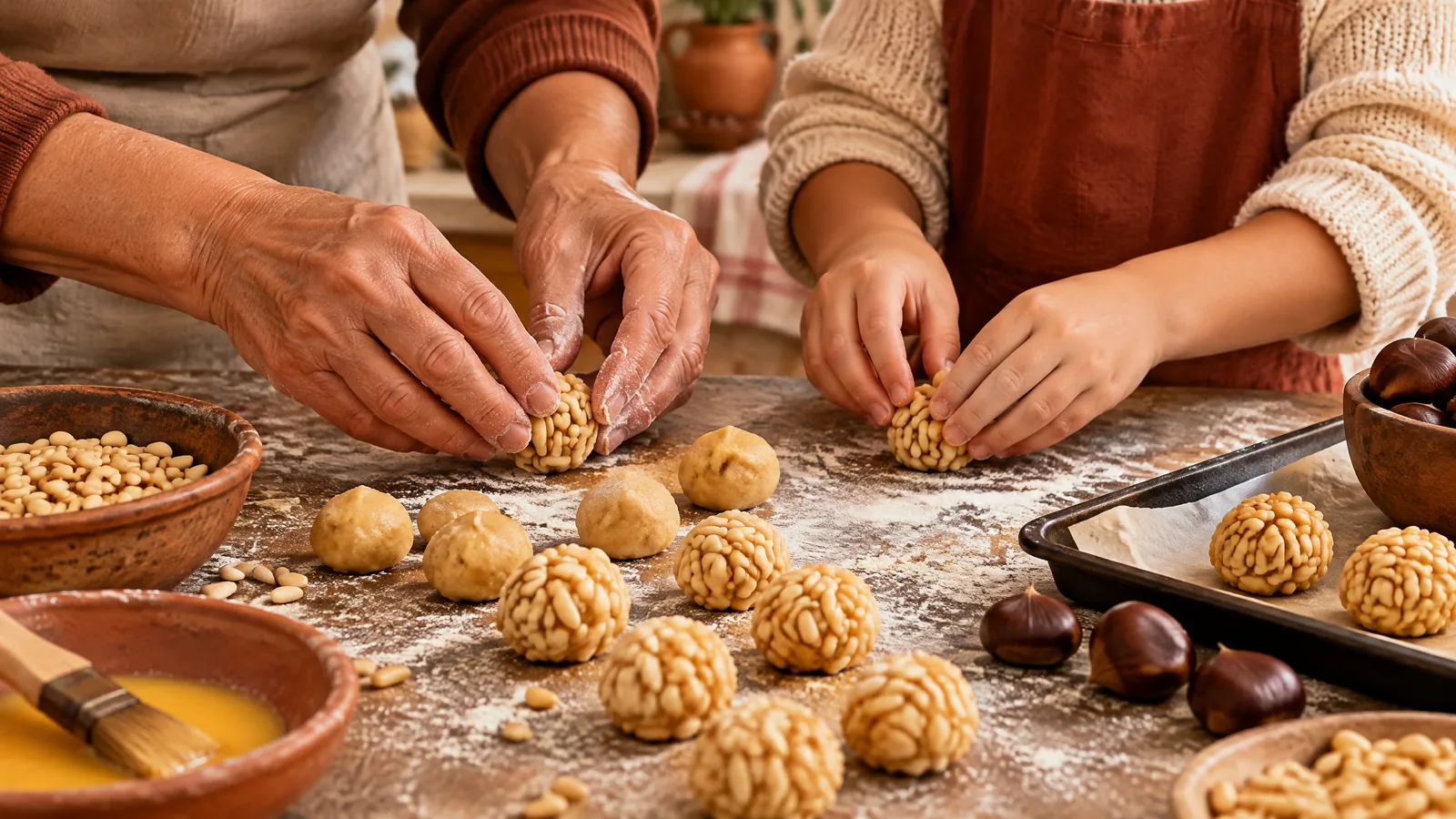
If you are preparing panellets or another family recipe, let the work unfold at a pace that allows conversation. If you are not cooking, place the food on the table and ask the same questions over tea. The memory matters more than the method.
Make one page for the food and one page for the people
A useful notebook has two kinds of pages.
The food page
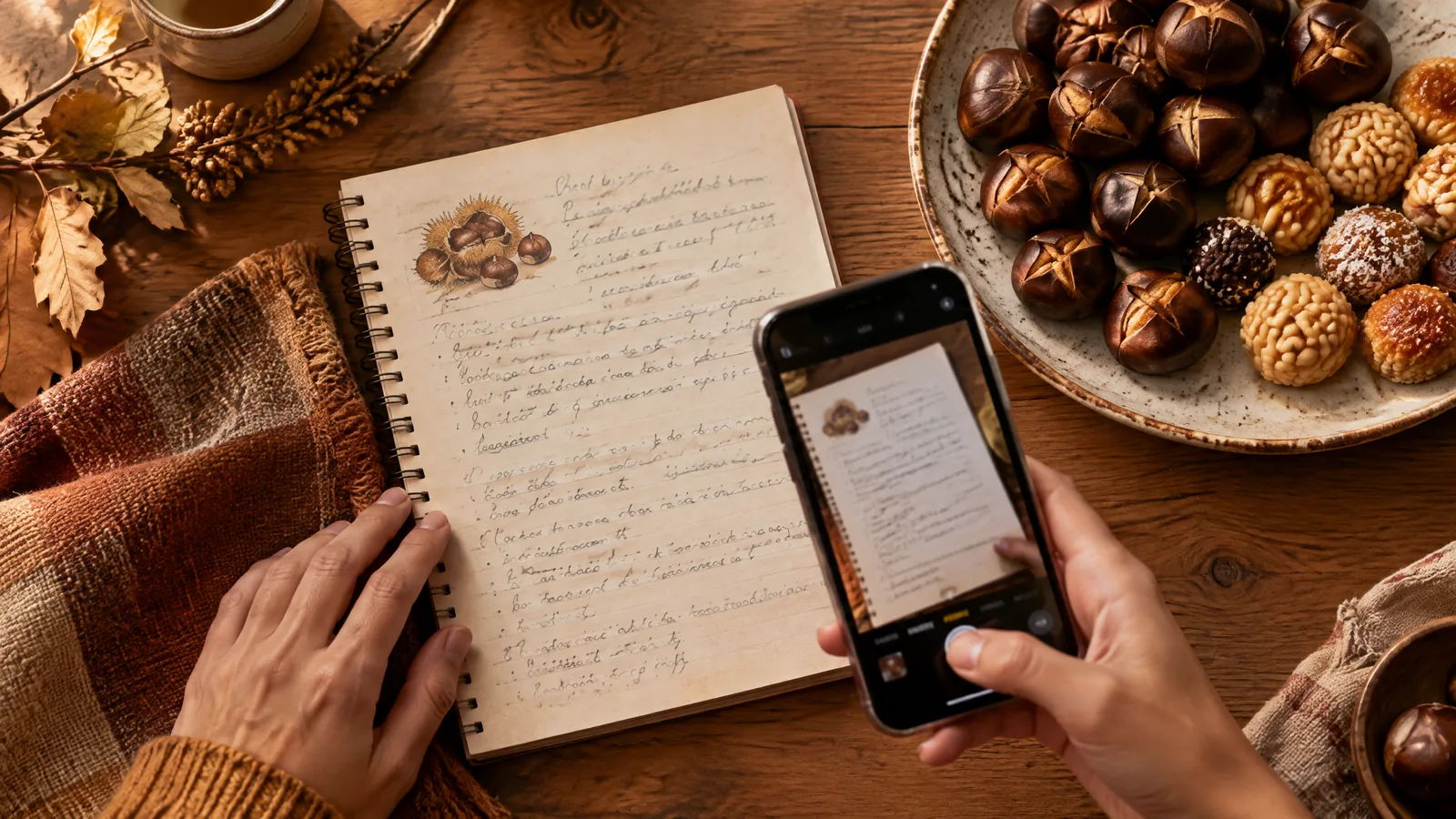
Write the version of the recipe you actually use. Include practical details that a future cook will need:
- ingredients and approximate quantities;
- the order in which things are mixed;
- oven, pan, or timing details if known;
- substitutions that worked;
- what to do when the texture looks wrong;
- the date and the person who wrote the page.
Do not silently “improve” a recipe while copying it. If you changed something, write that down. “Grandmother used almonds; we use walnuts because of an allergy” tells a future reader more than a tidy, unchanging list.
The people page
Under the recipe, record the story that comes with it. Try these prompts:
- Who made this first, as far as we know?
- Where was it usually eaten?
- Who was always asked to bring it?
- What did the kitchen, table, or neighbourhood feel like?
- What changed over the years?
- Who can clarify the spelling of names or the place connected to the story?
This second page is important because recipes migrate, adapt, and gather new meaning. A future relative may make the dish differently but still value knowing that it was once linked to a particular aunt, flat, village, or November afternoon.
Treat the conversation with care
Food memories can unexpectedly carry grief. A recipe may be the first thing someone notices after a death. It may also connect to money worries, family conflict, illness, or a person who is not yet ready to be discussed.
Set a gentle expectation before you begin: “We are collecting memories, not testing anyone’s memory. Skip anything you do not want to talk about.” If someone says, “I do not remember,” move on. Silence is information too.
The Oral History Association’s guidance emphasises preparation, clear expectations, open-ended questions, and respect for a narrator’s choices about what to discuss or share.2 A family food notebook is smaller than a formal oral-history project, but the same courtesy matters. Do not record someone or post their story without asking.
Invite children without turning them into an audience
Children can contribute in concrete ways. They might measure an ingredient, draw the serving plate, write down a word they have heard in Catalan or Spanish, or ask a grandparent what happened on a particular All Saints’ Day.
Give them a genuine role: “Can you write the date on this page?” or “What would you call this recipe in our family?” Their observation may be different from an adult’s, and that is valuable. A food memory can include the colour of the bowl, the sound of shells cracking, or the fact that nobody could agree on the right amount of sugar.
Avoid turning a child into a performer for visitors. If they lose interest, let them leave. The notebook can wait.
Separate family memory from universal claims
The city’s cultural information links chestnuts, panellets, and sweet potatoes with the Tots Sants season in Barcelona.1 That does not mean every Catalan or Spanish family eats the same things, or that every family attaches the same meaning to them. Write what is true for your household.
Use phrases such as “In our family…” or “Marta remembers…” rather than “This is how everyone did it.” That small precision respects both tradition and difference. It also makes the notebook more trustworthy.
Preserve the page before it disappears
When the session ends, photograph or scan the finished page. Name the file clearly, for example: “November_Castanyada_notebook_page-one.jpg”. If an older relative has written by hand, keep the original as well as the scan. Handwriting can be part of the memory.
Store the file in a folder that at least two family members can locate. Add a short note about who was present and what you made or ate. If there is a recording of the conversation, ask again who may hear it before sharing it.
The Oral History Association advises making redundant copies and keeping context with recordings and related materials.2 For a family notebook, a practical version is simple: keep the original safely, save a digital copy, and do not let the only file live on one phone.
A short Castanyada notebook session
You can do this in half an hour:
- Put one seasonal food on the table.
- Write the name of the food and the date.
- Ask one person to explain where they first remember it.
- Record one practical cooking detail and one human detail.
- Add the names of everyone present.
- Photograph the page and decide where it will be stored.
That page may become the most useful thing you make all afternoon. It will not only tell a future relative how to prepare food. It will tell them that on an autumn day, people sat together and decided the memory was worth keeping.