Allerheiligenstriezel: A Bavarian Bread for All Saints and Family Memory
In Catholic parts of Bavaria, Allerheiligenstriezel belongs to the reflective turn of the year around All Saints and All Souls. It is not a custom practiced in every German community, nor does one recipe or name govern every locality. Yet the braided loaf, also encountered under regional names such as Seelenzopf and Seelenstriezel, offers a meaningful way to understand how food, kinship, and remembrance can meet at the family table. In the Upper Palatinate, the Diocese of Regensburg records several local names and forms for seasonal soul breads, alongside a long-established role for godparents and godchildren. 2
The days that frame the bread
All Saints falls on the first of November and honors the communion of saints. All Souls follows on the second and is dedicated to remembering the dead. In Catholic regions, the days are often marked by worship, visits to family graves, flowers, lights, and time together. The German Catholic portal katholisch.de notes that cemetery processions and the blessing of graves are customary on All Saints in Catholic federal states. 1
The closeness of these observances matters for the bread. Customs surrounding All Saints and All Souls have often overlapped in lived family practice, so a loaf connected with one day may be remembered or shared across the whole commemorative period. Rather than treating the calendar as a strict rule for one object, it is more accurate to see the seasonal bread as part of a wider rhythm of care for the dead and attention to the living. 1
A braid with regional names
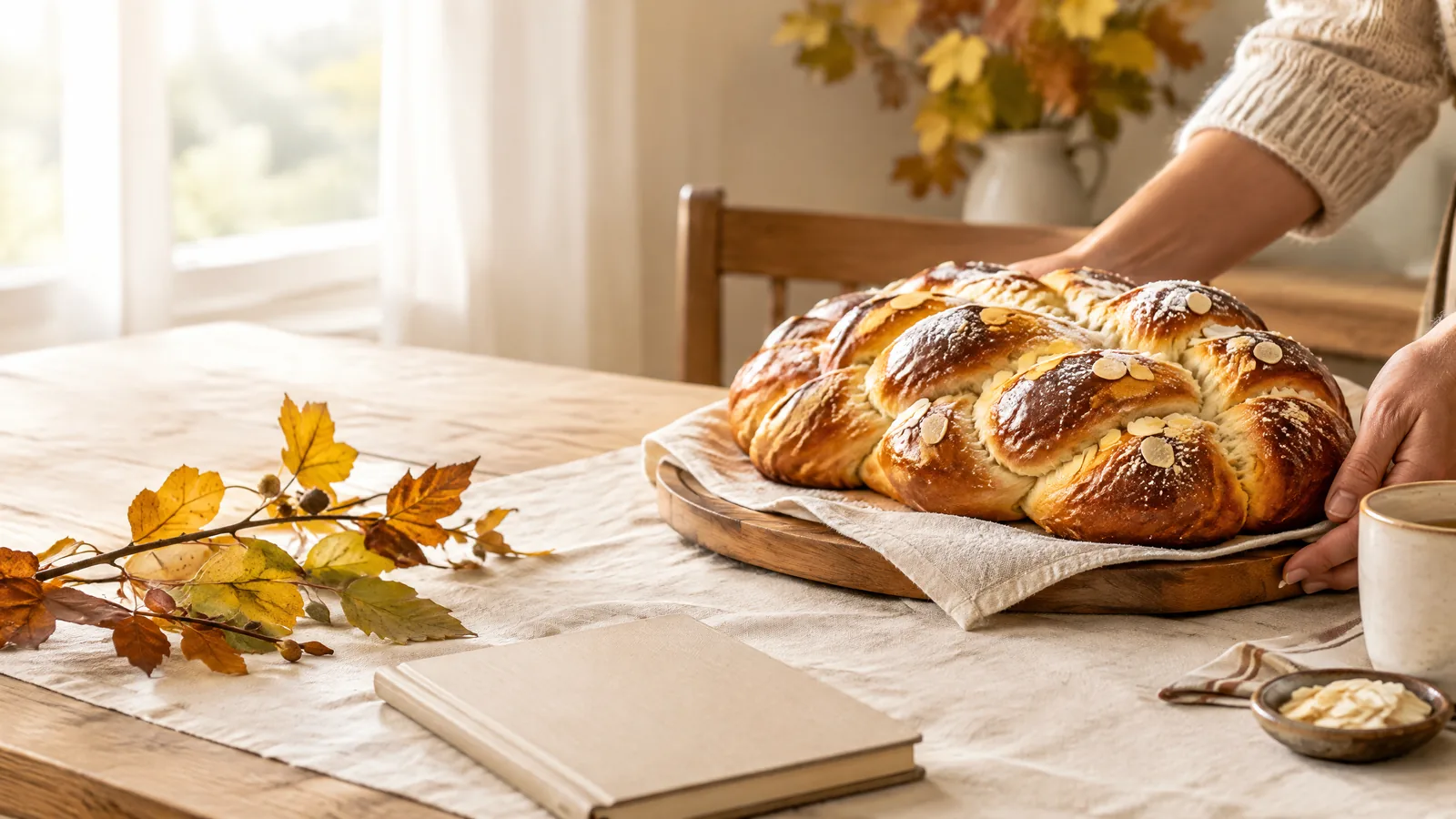
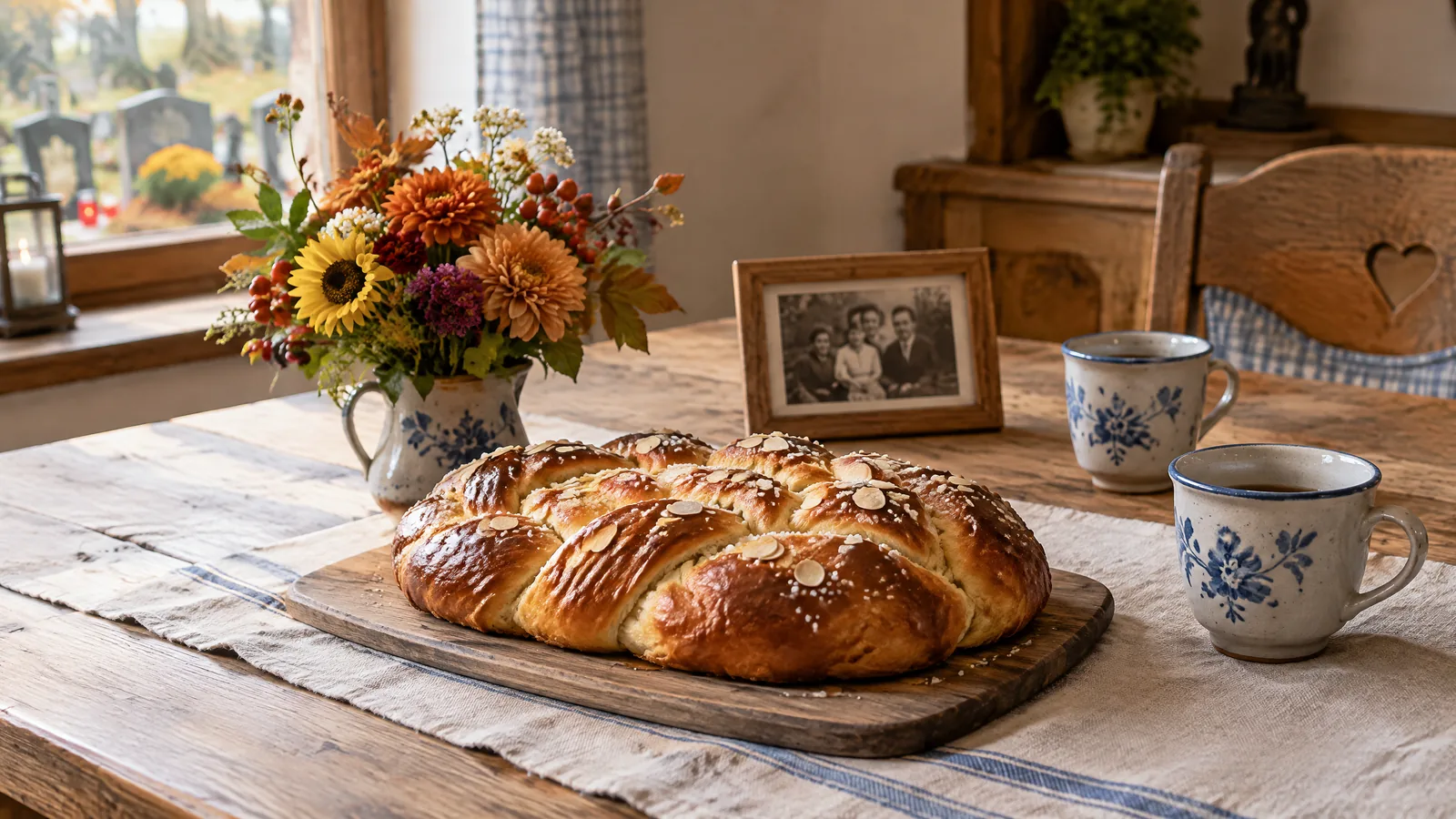
The word Striezel points to a braid, and the braided form is central to the tradition’s visual language. In Bavaria, katholisch.de describes the gift to children as a Seelenzopf: a white bread in braid form, given by godparents on All Souls. 1 The Diocese of Regensburg similarly identifies Seelenstriezel, Seelenspitz, Godelwecken, and Seelenweckerl among the many names found in the Upper Palatinate. 2
That vocabulary is worth preserving. It shows that an Allerheiligenstriezel is not merely a standardized bakery item. Its local name can signal a particular town, parish area, family memory, or relationship between a godchild and a sponsor. A home baker does not need to claim an inherited recipe in order to participate respectfully. A simple braided yeast loaf, made with care and identified honestly as an interpretation for the season, leaves room for those local histories.
The braid also suits the occasion without demanding elaborate symbolism. Its joined strands can make a beautiful shared loaf for a family gathering, while the act of dividing it makes hospitality visible. Serve it on a clean cloth or board after a cemetery visit, with warm drinks and a quiet invitation for stories. The most important element is not decorative perfection. It is the attention given to the people at the table and to the people being remembered.
Godparents, godchildren, and a seasonal gift
The strongest thread in the Bavarian record is the gift relationship. Katholisch.de reports that girls and boys in Bavaria received a Seelenzopf from their godparents on All Souls. 1 The Diocese of Regensburg likewise recalls that children received seasonal baked goods from baptismal and confirmation sponsors in the All Saints and All Souls period. 2 The gift made a religious and family bond tangible in an ordinary, welcome form.
For families renewing the custom today, this history suggests a gentle approach. A godparent may bring or send a braided loaf to a godchild, but the exchange need not become expensive or performative. It can be accompanied by a handwritten note, a shared prayer, a walk to the cemetery, or a conversation about a grandparent, relative, or friend who has died. If the godchild is young, name the person remembered and share one specific, age-appropriate memory. If the godchild is older, allow silence as well as conversation.
The custom can also remain inclusive when family structures do not follow older patterns. A trusted aunt, uncle, neighbor, family friend, or chosen elder may share bread with a child and explain why the season matters. This does not recreate every historical detail. It carries forward the underlying care: an adult marks a relationship, a child is welcomed, and remembrance is given a place in domestic life.
From almsgiving to remembrance
The historical background is serious as well as affectionate. Katholisch.de explains that certain breads were once baked for All Souls and distributed to people in need as acts connected with prayer for the dead. 1 In the Upper Palatinate, the diocesan account notes that simple Seelenzöpfe were given to poor people who went from house to house during the All Souls period. The response of thanks was understood within older beliefs about aid for souls in purgatory. 2
Those beliefs belong to a particular historical Catholic setting. They should not be reduced to a decorative story attached to a recipe. The useful lesson for a present-day household is the link between memory and generosity. If baking an Allerheiligenstriezel, consider preparing an additional loaf for a neighbor who is grieving, a parish gathering, or a local food-sharing effort. Offer it without requiring anyone to disclose a loss or to take part in a religious conversation.
Keeping the practice thoughtful today
Begin by choosing a time near All Saints or All Souls when the household can slow down. Bake or obtain a modest braided loaf, then decide whom the gathering will remember. Place no pressure on anyone to speak. A candle, a photograph set aside from food, or a few flowers can create a calm setting, but none is required. Before sharing the bread, someone may simply say the names of loved ones who have died and express gratitude for what they gave the family.
If a godparent and godchild are present, make the gift direct and warm. Explain that the bread comes from a Bavarian seasonal custom in which sponsors gave children a soul braid. 1 Let the child help carry the loaf, break off a piece, or choose a person whose story the family will tell. These small actions turn heritage into participation rather than a display of nostalgia.
A final note of care is useful. Grief has different shapes, and a family remembrance should never force cheerfulness. Keep the gathering short if that is what the day calls for. The enduring value of Allerheiligenstriezel lies in its scale: a braided bread can hold faith, affection, memory, and welcome without trying to solve sorrow. In Bavarian Catholic settings where the custom is known, that modest shared act remains a respectful way to connect the calendar of remembrance with the care of family.