Allerheiligenstriezel: Austria’s Braid of Remembrance
A braid made for remembering
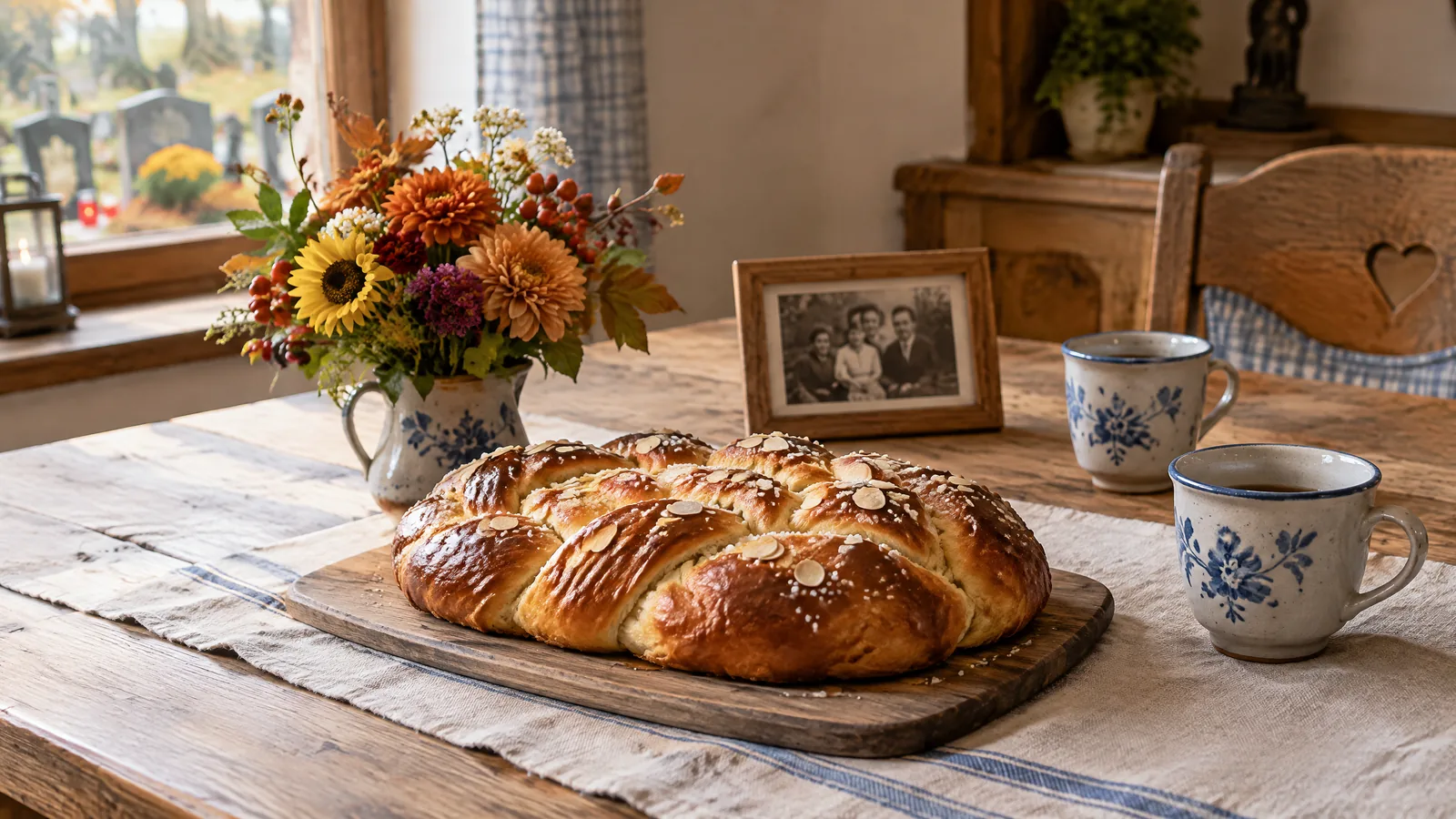
At the beginning of November, an Allerheiligenstriezel brings a tender, everyday gesture into Austria’s season of remembrance. The name joins Allerheiligen, the feast of All Saints, with Striezel, a soft enriched yeast bread that is often braided. In families and regions where the custom is observed, the loaf can be baked, bought from a bakery, carried to a gathering, or given to a godchild. It is food, but it is also a way of acknowledging relationships that outlast an ordinary visit.
The custom belongs beside, rather than in place of, the religious and family practices of the period. The feast days are associated with remembering the dead, visiting graves, bringing flowers, lighting candles, and prayer. Austrian church guidance describes the sweet yeast pastry as a symbolic form of nourishment for the soul, usually given around All Souls’ Day. 1 A loaf is not a requirement for mourning, and it does not speak for every family in Austria. Its meaning rests in the care with which people choose to share it.
From simple loaf to ceremonial bread
Austria’s federal food-heritage documentation traces a likely early written reference to a “Heiligenstriezel” in Upper Austria in the late seventeenth century. That bread was a plain roll rather than the familiar braid, yet it was already made from notably fine ingredients: wheat, fat, eggs, and honey. 2 The later plaited form became a recognisable festive bread. By the nineteenth century, accounts described the giving of a braided white bread at All Saints in Vienna, while local forms and names continued to vary. 2
The braid itself carries a suggested historical meaning, not a rule that every baker or family must read into it. The federal record presents the hair braid of women as the probable source of the shape and links it to older mourning practices in which cut hair could be an offering. 2 Salzburg’s provincial cultural documentation similarly treats the striezel as a festival bread and godparent gift remembered in connection with women’s earlier hair offerings. 3 These accounts give the shape a resonant history, but a present-day loaf can be meaningful without being treated as an archaeological object. It remains a living seasonal bread.
The tradition also has a social history. Earlier Allerheiligenstriezel were distributed to children and people in need, with a request that prayers be offered for the dead. 2 In some places, All Saints was known as Godntag or Godltag, because a godmother or godfather brought a striezel to a godchild. 1 The federal record notes that the present still survives in parts of Austria through the years leading to confirmation. 2 This regional survival is worth stressing: godparent giving is a cherished practice in some communities, not a universal expectation.
What makes an Allerheiligenstriezel
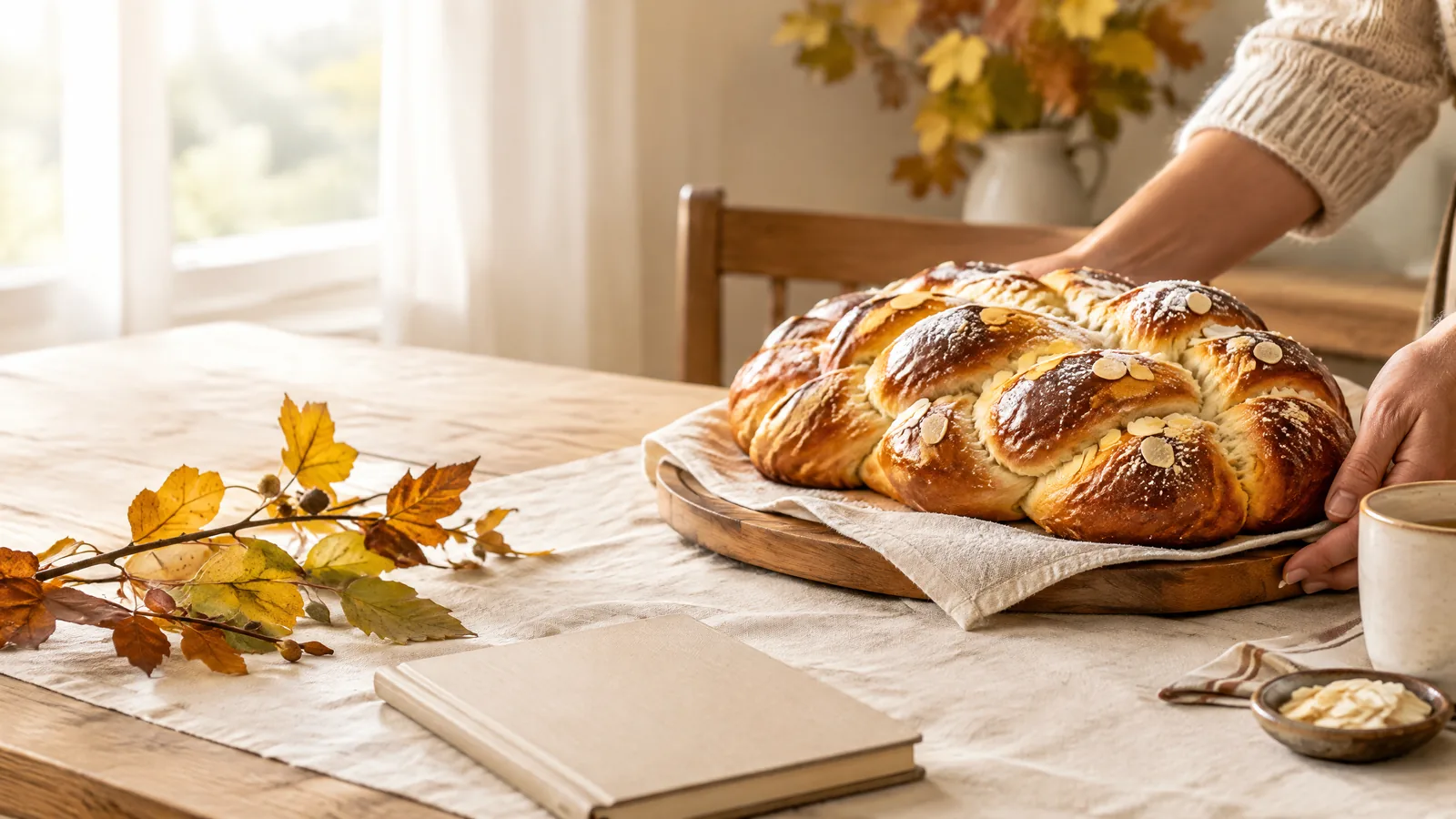
The bread is an enriched yeast dough, often in the brioche family. Its glossy, gently sweet crumb may include raisins, and its top may be finished with coarse sugar or sliced almonds. 2 A classic Allerheiligenstriezel is hand braided from four or six strands, making the loaf’s structure visible before it is cut. 2 The choice between a compact loaf, a long braid, raisins or none, almonds or sugar belongs to the bakery and household. Variation is part of the tradition’s character.
For someone preparing the bread at home, the most practical approach is to allow time rather than chase perfection. Use a dependable enriched-dough recipe, let the dough rise until airy, divide it evenly, and braid it on a lined tray. A modestly uneven braid is still a braid made by hand. Brush it with egg wash if that suits the recipe, then bake until the crust is a deep, warm gold and the loaf sounds light when tapped. If time is short, choosing a striezel from a local bakery is equally in keeping with a custom long sustained by bakers and confectioners. 2
For someone receiving it, there is no special performance required. Slice it for breakfast or afternoon coffee, send part home with a guest, or place it at the centre of a simple family table. The gift can be accompanied by a few spoken words: a memory of someone missed, thanks to a godchild, or a wish for a peaceful season. If faith is important to those gathered, a prayer may be welcome; if it is not, quiet remembrance is enough. The point is to let the gesture fit the people present.
Offering the bread with care
A thoughtful Allerheiligenstriezel begins with attention to the recipient. Ask about allergies before baking with raisins or nuts. If the loaf is for a bereaved household, arrange delivery rather than expecting them to host. If a godchild is receiving it, make the sharing warm and unforced; the bread can be a connection, not an obligation. A handwritten remembrance note is optional, but it should stay personal and brief.
The season can hold both public ritual and private grief. Families may visit a cemetery, gather after a service, or remain at home with photographs and stories. The striezel does not replace any of these forms of care. It offers a gentle reason to pause together, to feed the people who are remembering, and to make room for a name or a story that might otherwise go unspoken.
That is why the braid endures as more than a sweet loaf. In the Austrian settings where it is kept, Allerheiligenstriezel joins skilled baking with kinship, memory, and seasonal attention. Its strands suggest connection; its sharing gives that idea a practical form. Whether made in a kitchen or chosen from a bakery counter, it is best offered simply, with generosity and respect for the different ways people remember.