Farvardigan and Nowruz in Iran: Remembrance at the Turn of the Year
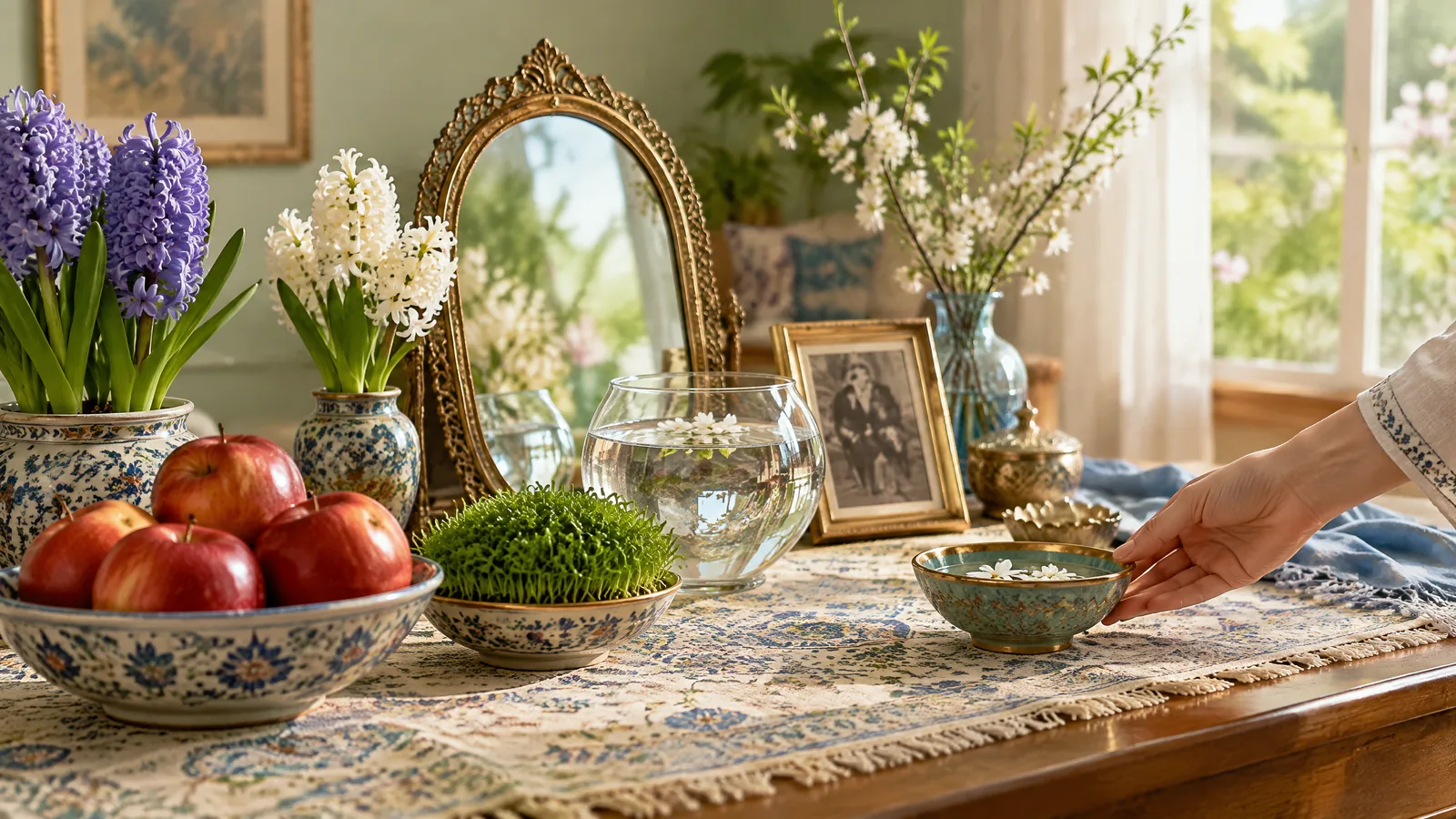
Nowruz opens the Iranian new year with spring, renewal, family visits, and a deliberate sense of beginning again. UNESCO describes it as an ancestral festivity marking the first day of spring and the renewal of nature. Its forms include rituals, meals with loved ones, new clothes, gifts, and visits among family and friends. 1 In Iran, many homes prepare for the season through cleaning, gathering, and the arrangement of a Haft Sin table. 4 Yet it is important not to turn that broad celebration into a single story about the dead.
Ancestor remembrance has a documented connection to the turning of the year in the Zoroastrian tradition of Farvardigan, also called Frawardigan or, among Persian Zoroastrians, Panji. This is not a practice that can accurately be assigned to every household or community in Iran. It belongs to a particular religious heritage within the country, and its timing has varied with religious calendars. Farvardigan is best understood alongside Nowruz: an observance that historically precedes the new year, rather than a universal feature of the Nowruz celebration itself. 2 3
A threshold between seasons
The word Nowruz means “new day.” UNESCO places its central meaning in the arrival of spring and nature’s renewal, while also noting its role in bringing generations and families together. 1 For many people in Iran, the festival is therefore a time to refresh the home, receive relatives, exchange good wishes, share food, and begin the year in company. These acts can carry family memory in a quiet, everyday way. A recipe, an object saved from an elder, or a story told while preparing the table can make an earlier generation present without forming a formal rite for the departed.
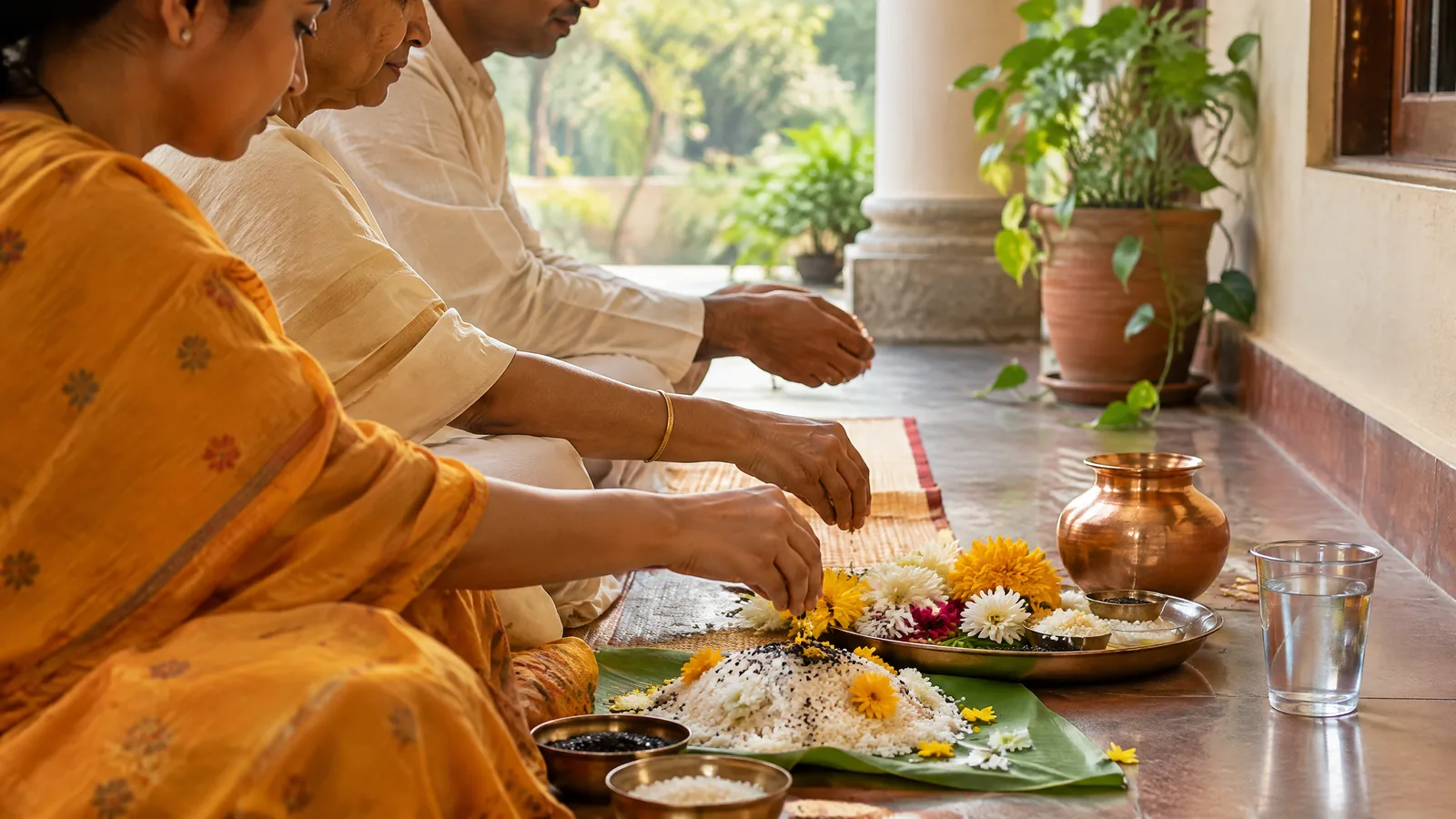
The historical Zoroastrian calendar gives the season a more explicit memorial threshold. The Encyclopaedia Iranica explains that a night immediately before Nowruz was associated with welcoming departed kindred back to their former home. Ritual blessings and consecrated food and clothing were offered, with the belief that their essence reached the dead. The account describes this as a joyful observance, marked by hospitality, light, fragrance, and communion rather than by spectacle. 2
That record helps clarify a phrase often used too loosely: “ancestor remembrance at Nowruz.” The connection is real in the historical Zoroastrian setting, but it does not mean that every Nowruz table is an ancestor altar or that all Iranian families perform a rite of welcome for the dead. The seasonal proximity is meaningful; the practices remain distinct and community-specific.
Farvardigan and the departed
Farvardigan is a ten-day Zoroastrian festival at the end of the religious year that honours the spirits of the dead. A reference article by Iran specialist William Malandra describes its basic purpose as welcoming departed ancestors into the home and treating them with rites of hospitality. It identifies two five-day parts and notes that calendar differences have meant the observance does not always fall at the same point in the civil year. 3
This is remembrance expressed through care. The historic sources describe families cleaning and preparing domestic space, then receiving invisible guests with food, light, and prayers. In an account of a Yazdi village, Encyclopaedia Iranica records a farewell to the Fravashis before sunrise as the new year began, followed by family food and greetings. It also makes clear that this description concerns a particular place and period; it should not be projected onto every Zoroastrian community, much less onto all of Iran. 2
The word Fravashi has a religious meaning that is more specific than a casual synonym for ancestor. In the sources on Farvardigan, the Fravashis are connected with the righteous departed and with protective spiritual beings. For a respectful reader, the useful point is not to flatten that theology into a generic custom. Farvardigan reflects a relationship between memory, religious duty, household hospitality, and the changing year as understood within Zoroastrian tradition.
What can be held in common
Even where Farvardigan is not observed, Nowruz can still prompt families to think about continuity. The festival’s attention to renewal does not require forgetting what came before. A family may set time aside to name people who taught a recipe, preserved a language, tended a garden, or shaped a household’s sense of welcome. Someone may ask an older relative about a beloved person who is no longer alive, or preserve a short memory in writing with the speaker’s permission. These are personal choices, not prescribed Iranian rituals.
The distinction matters because it lets remembrance remain truthful. A spring meal can become a place for family stories without being described as a religious offering. A photograph can be placed in a private home if that is meaningful to the household, without being presented as part of Haft Sin or Farvardigan. People of different beliefs and family histories may approach the season differently. Respect begins with allowing those differences to stand.
For families who do maintain a Zoroastrian remembrance practice, its centre is not an opportunity for outsiders to recreate a ritual. Private prayers, offerings, sacred objects, and spaces used for worship deserve the guidance of the people who keep the tradition. Do not treat a family ceremony as a display, enter a religious setting without permission, handle devotional items, or photograph mourners and worshippers. Listening to a host or community representative is more respectful than assuming that a calendar date grants access.
A careful way to carry memory forward
The meeting of Farvardigan and Nowruz offers a useful lesson in precision. One is an Iranian new-year celebration with many regional, religious, and household expressions. The other is a Zoroastrian end-of-year remembrance observance with an ancient relationship to the new year. 1 2 They can be discussed together because of that seasonal threshold, but they should not be merged.
This distinction does not make the season less moving. It makes it more legible. Nowruz invites people to welcome spring and renew ties with the living. Farvardigan, in the communities that observe it, gives the departed a place in the passage between years. Together, without being confused for one another, they show how memory can be carried through cleaning, hospitality, prayer, food, and the patient telling of family stories.
For anyone writing down a family memory at this time of year, a gentle question can be enough: Whose way of welcoming the new season do we still remember? The answer may be a name, a habit, a scent, a dish, or a saying. Recording it carefully and with consent can honour both the individual remembered and the distinct traditions that give such remembrance its meaning.