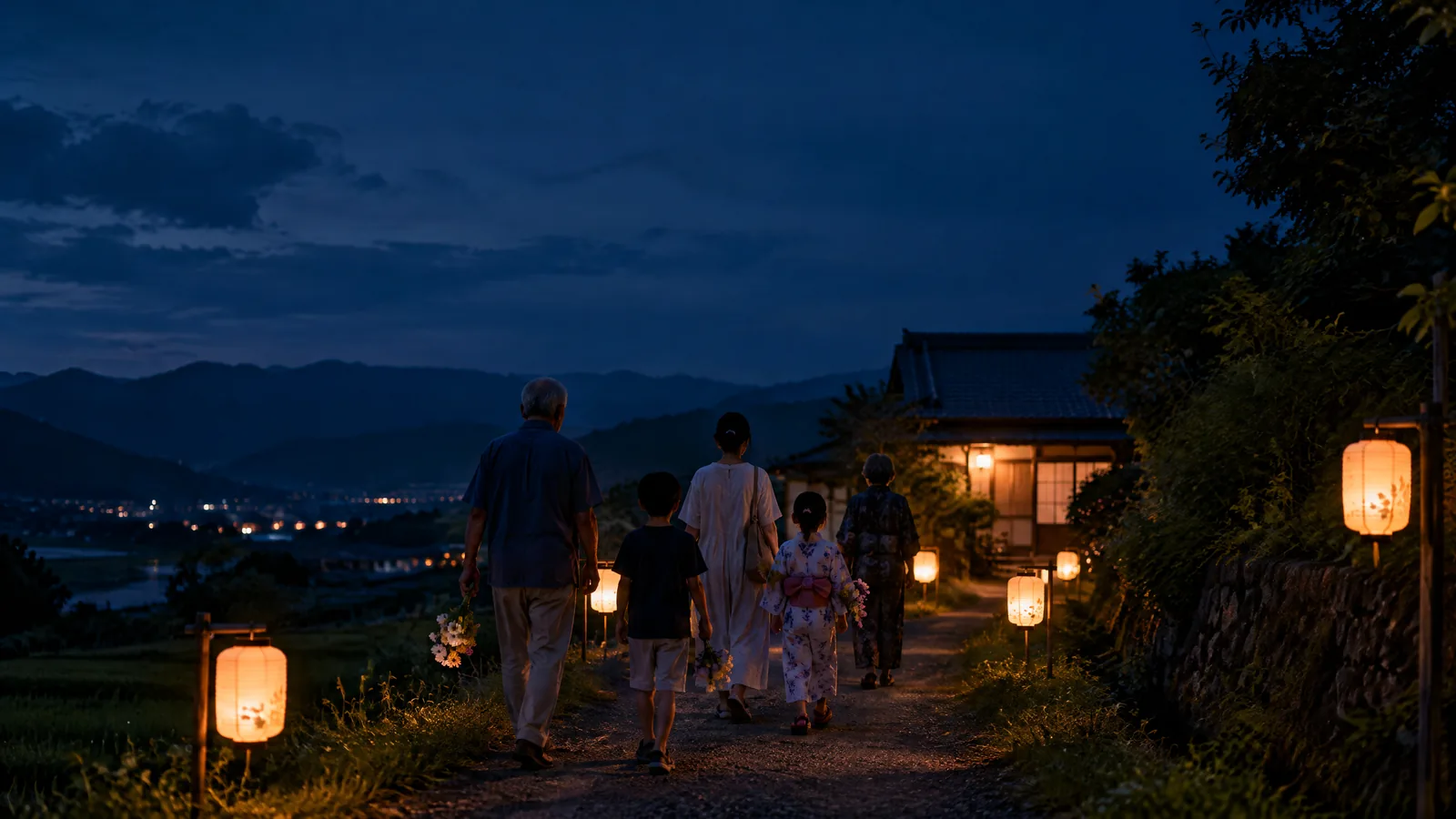
A season set aside for ancestors
Obon is one of Japan’s most meaningful summer observances. At its heart is remembrance: a time shaped by Buddhist memorial practice, family ties, and the belief that deceased ancestors may be welcomed and honoured. Japan Search, a cultural platform connected with the National Diet Library, describes it as a Buddhist memorial ceremony for ancestors. That definition is useful, but the lived occasion is not one single nationwide script. Timing, household customs, temple observances, and public celebrations can differ by place, family, and Buddhist tradition. 1 4
In much of Japan, Obon falls around mid-August. Some communities observe it around mid-July, reflecting different calendar traditions. Rather than assuming a fixed date, it is best to check the local calendar and the plans of the family or temple involved. The season may bring travel home, grave visits, quiet altar preparation, temple services, and evenings filled with dance. These strands can appear together, yet the balance between them is local and personal. 1 3
From Buddhist observance to family practice
The word Obon is linked to urabon, a Buddhist term associated with the story of Mokuren, a disciple who sought relief for his deceased mother’s suffering. Japan Search notes that the Buddhist observance became intertwined with older Japanese practices of welcoming ancestral spirits. That layered history helps explain why Obon carries both religious and family meanings. It is not simply a spectacle or a holiday event; it is a period in which people may make space for memory, obligation, gratitude, and prayer. 1
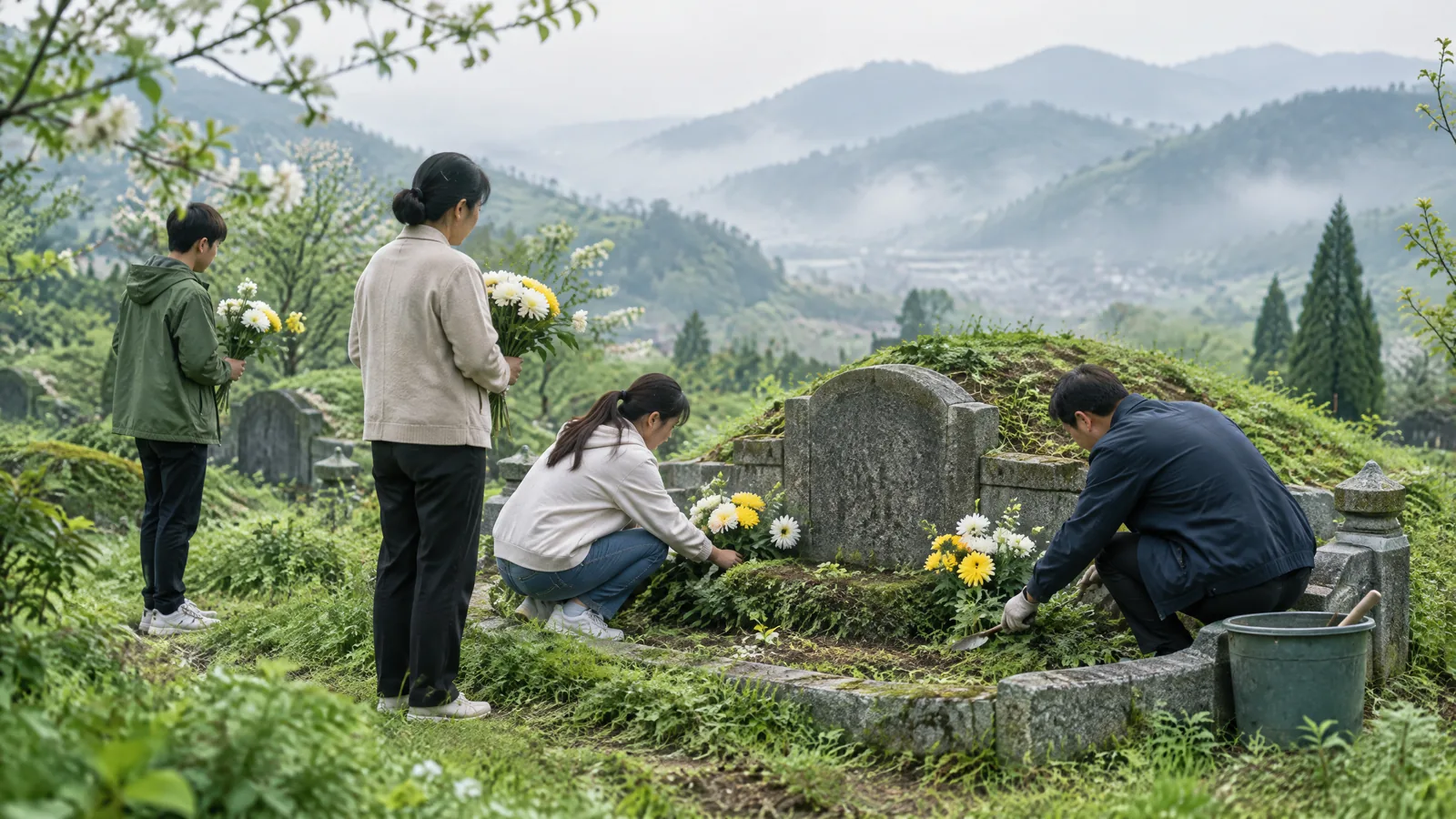
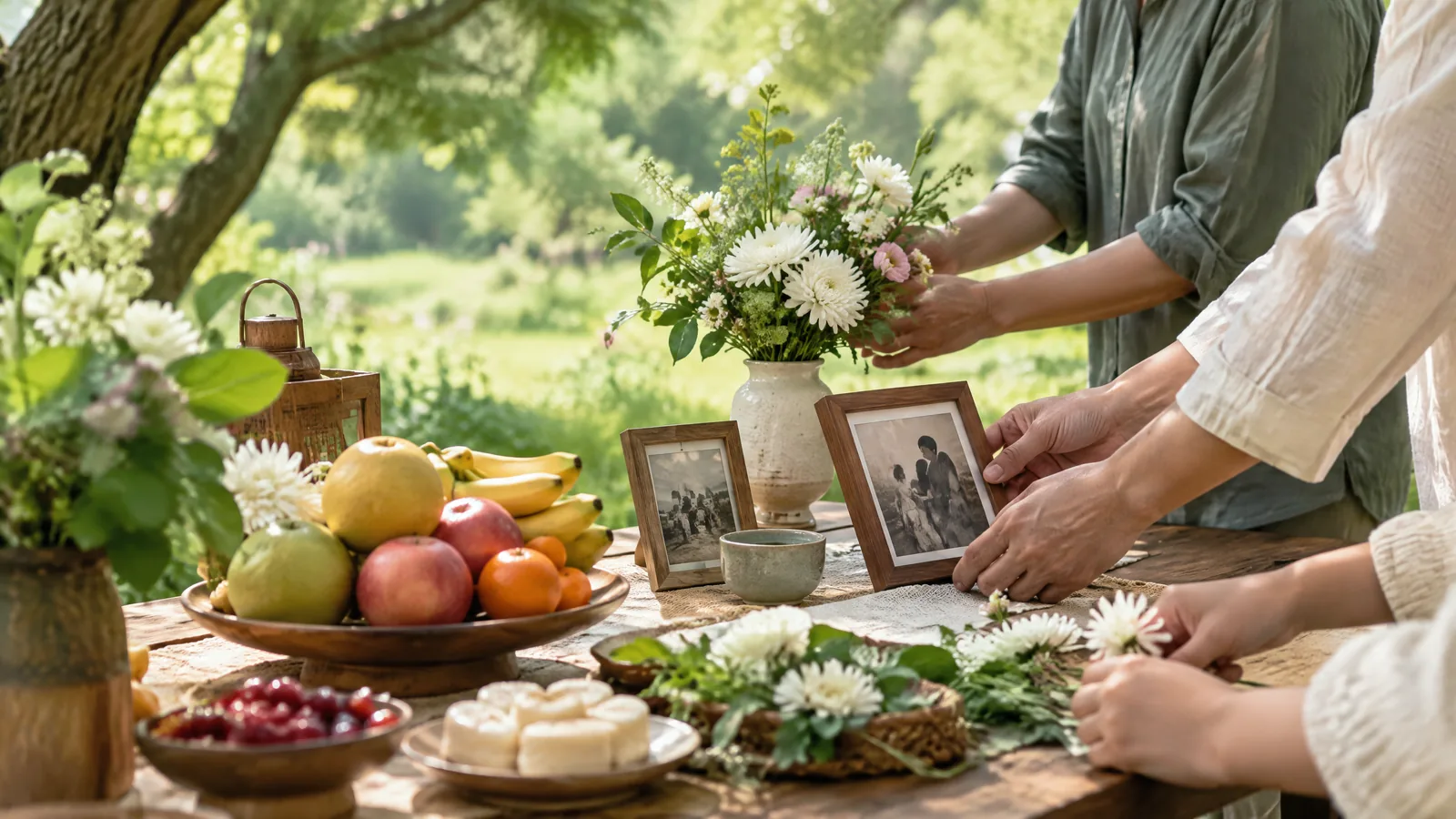
For many families, care begins with the graves of relatives. A visit may include cleaning the grave, bringing flowers or other offerings, and taking a quiet moment to remember. At home, some households prepare a shōryōdana, an altar for ancestral spirits, with offerings such as fruit and vegetables. The objects and prayers used, if any, depend on household and sectarian practice. The respectful approach is to see these actions as family rites, not as a display to be copied or judged. 1 4
In some places, welcoming fires known as mukaebi are lit at the beginning of the observance, while farewell fires, or okuribi, mark the spirits’ departure at the end. Families may also arrange seasonal food and other items before a Buddhist altar. These customs are meaningful to those who keep them, but they are not a checklist for every home. Visitors and younger family members can learn most by asking gentle questions and following the lead of those hosting the remembrance. 4
The shared circle of Bon Odori
Obon is also widely associated with Bon Odori, the communal Bon dance. The Cabinet Office describes it as the summer highlight of a centuries-old Buddhist custom and traces its roots to Nembutsu Odori, a dance connected with Buddhist chanting. The dance’s religious background matters, even when the present-day gathering feels bright and social. It developed as a way of welcoming or consoling the deceased, and its circular movement still gives the event a sense of shared participation. 2
A familiar setting places dancers around a raised yagura platform, with musicians or recorded music above. Paper lanterns, folk songs, summer clothing, food stalls, and neighbours meeting after dark may shape the atmosphere. Yet the music, choreography, setting, and degree of formality vary considerably from region to region. The Cabinet Office notes that dances can take place in parks, streets, or temple grounds, and that local music and steps differ. Some places safeguard inherited forms closely; some urban gatherings incorporate newer songs. 2
That variation is an invitation to pay attention rather than to expect one definitive performance. In Tokushima, Awa Odori is performed during the Obon period, while other areas maintain their own dances and rhythms. The Japan National Tourism Organization identifies this local richness as part of Japan’s wider festival culture. A regional dance can be an expression of a particular community’s history, not a generic backdrop for the season. 3
How to take part with care
If you are joining an Obon gathering, begin by noticing what kind of occasion it is. A temple memorial service, a family grave visit, and a public Bon Odori have different expectations. Check the date, venue, access arrangements, and any guidance from the organisers. At a dance, watching a few rounds before stepping into the circle is a considerate way to learn the direction, pace, and gestures. Follow the people near you rather than turning the dance into a performance.
A yukata may be worn at summer festivals, but it is not required for respectful participation. Comfortable, modest clothing and attention to local instructions are more important. If you are a guest at a home altar or graveside, wait to be invited before approaching closely or handling offerings. Keep phones quiet during prayers and ask before taking photographs, especially where families are mourning or a ritual is underway. These small choices protect privacy and allow the occasion to remain centred on the people being remembered.
Obon also offers a useful way to speak across generations. A relative may have a story about an ancestor, a hometown, a favourite food, or the particular song heard at a local dance. Ask an open question, then give the answer room to unfold. Recording a name, recipe, memory, or song title with permission can become a modest act of family stewardship. The goal is not to make every household alike. It is to recognise the particular threads through which remembrance is carried forward.
Holding joy and remembrance together
The distinctive strength of Obon is its ability to hold solemn remembrance and lively community life within the same season. A visit to a grave, an offering at home, a temple chant, and a dance under lanterns may each speak to a different part of that experience. None alone defines all of Japan. Together, they show how remembrance can be practiced through care, presence, movement, and return.
For anyone encountering Obon, the most respectful posture is simple: arrive with curiosity, follow local guidance, and give families the space to honour their own dead in their own way. The dance may be welcoming, but the centre of the season remains the relationship between the living, the departed, and the communities that continue to remember them.