Qingming Festival in China: Remembering the Dead, Welcoming Spring
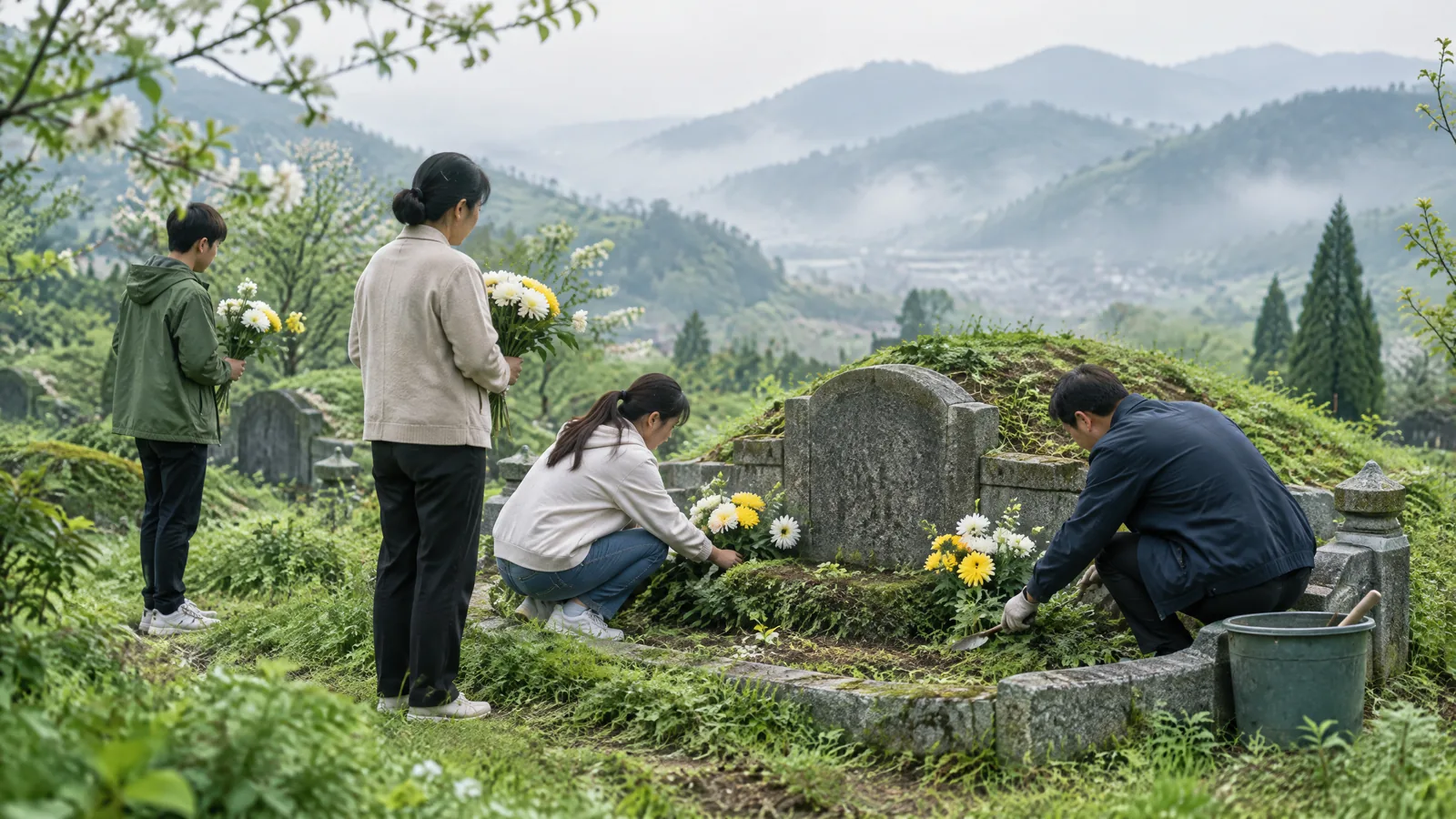
At Qingming, many families in China make time for the dead while the landscape is becoming green again. A visit may involve a journey to a cemetery or ancestral grave, practical care for the site, an offering, and a moment to name the people being remembered. It can also make space for a spring walk afterwards. This closeness of mourning and renewal gives the festival its distinctive emotional texture: grief is not pushed aside by the season, and the season does not erase grief.
A festival shaped by the season
Qingming means clear and bright. It is both a traditional festival and the fifth of the twenty-four solar terms that structure the Chinese seasonal calendar. It falls in early April, when warmer temperatures and more rain make the period important for spring cultivation. The season is therefore part of the festival’s meaning, rather than merely its backdrop. 1 2
The national record for intangible cultural heritage describes Qingming as a festival of remembering ancestors, with ancestor offerings and tomb-sweeping at its centre. It also notes a long history of grave visits, while tracing the way older Cold Food observances and Qingming became closely connected over time. 1 East China Normal University likewise describes the continuation of ancestor worship and mourning for deceased relatives as a living part of Chinese culture. 3
That history is useful context, but it should not be treated as a rulebook for every household. Families approach Qingming through their own religious beliefs, kinship ties, migration histories, and local customs. Some visit a known family grave; some honour relatives through a cemetery memorial, a home-based remembrance, or a private act of reflection. The shared thread is attention: an intentional return to the people and relationships that came before.
At the grave: care before ceremony
For families who visit a grave, cleaning the site is a central gesture. Clearing weeds, tidying the area, and adding fresh soil where appropriate show care for a resting place. Official guidance from Shanghai describes tomb cleaning and offerings as key practices of the period. 2 The work is often as meaningful as anything said aloud. It gives children and younger relatives a tangible way to participate, while older relatives can share names, family stories, and memories.
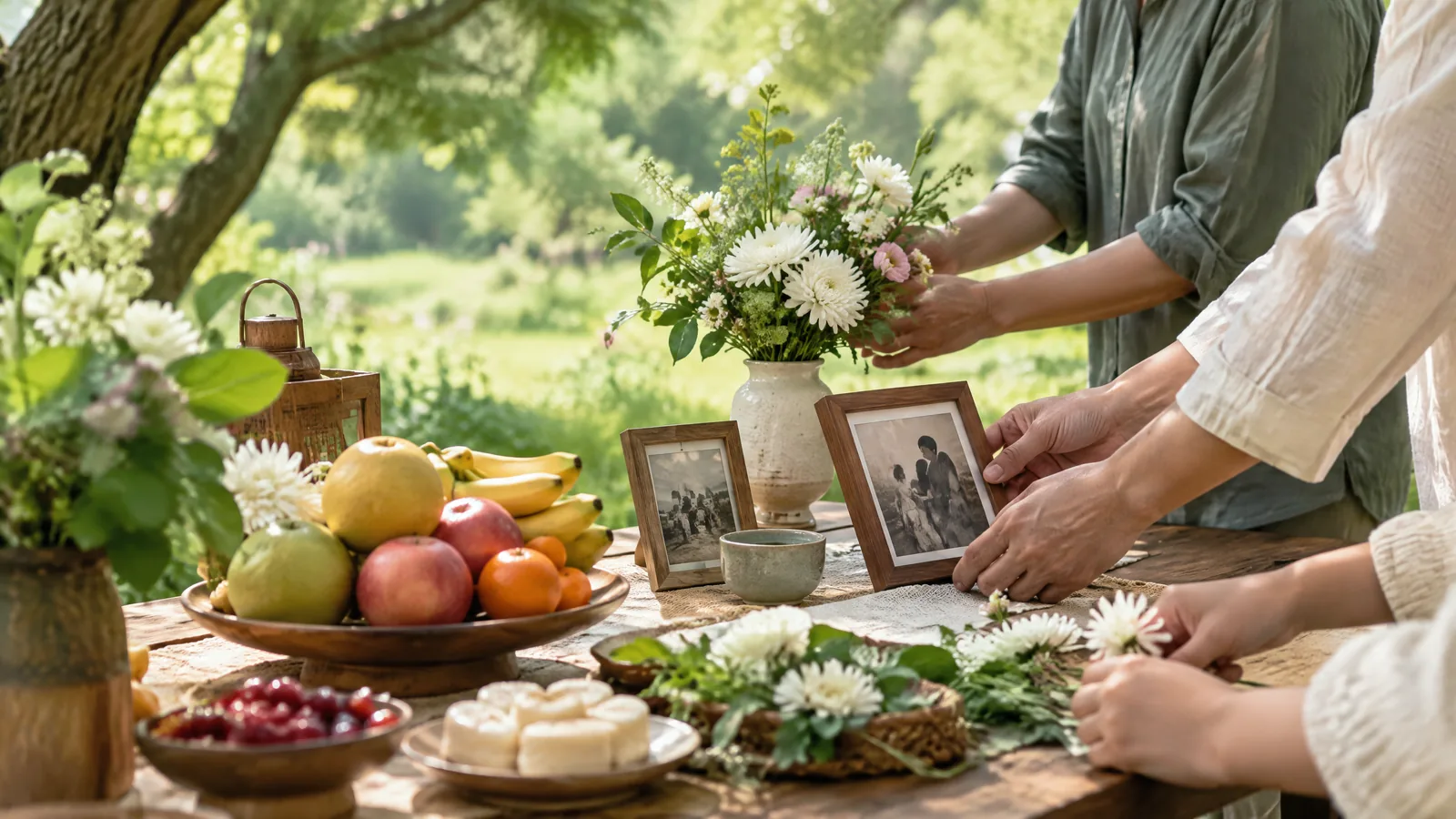
Offerings vary. Depending on the household and the cemetery’s rules, they may include fresh flowers, food, tea, wine, incense, or paper offerings. No offering needs to become a performance of devotion. The most respectful choice is one that accords with the wishes of the family, the practices of the local community, and the regulations of the place being visited. If burning is permitted and desired, it calls for particular care with weather, designated areas, and fire safety.
A visit can remain simple. Pause after the tidying, stand together quietly, and speak a few words about the person being remembered. A grandparent might tell a story that otherwise risks being lost; a child might place a flower or listen. There is no need to force conversation. Silence can be an equally sincere form of respect.
Customs with regional roots
Qingming is widely recognised in China, but its observance is not a single national script. The national heritage record names tomb-sweeping, spring outings, kite flying, swings, and other pastimes, then points to local expressions such as sericulture-related gatherings in Jiangnan. It also records specific heritage forms in places including Jiangsu and Shanxi. 1 These details matter because they show that a festival can be widely shared without being identical from place to place.
Food can carry this local character. In the lower reaches of the Yangtze River, qing tuan are familiar Qingming snacks: green glutinous rice balls that may also be used in offerings to ancestors. 2 Elsewhere, a household may prepare another customary dish or none at all. The purpose is not to assemble every custom associated with Qingming, but to sustain the practices that have meaning in that particular family and locality.
The public dimension of remembrance also differs. Qingming can include visits to memorial sites for revolutionary martyrs as well as family graves. 1 In some regions, communities prepare for large numbers of returning visitors, while cemetery services may help mourners arrange their visits. 4 These forms of commemoration belong to the festival’s broader landscape, yet they do not replace intimate family remembrance.
Grief alongside a living spring
Qingming is not solely a day at the cemetery. The seasonal practice known as taqing invites people outdoors to enjoy spring growth and blossoms. The university account of the festival identifies walks and kite flying among customary spring activities, while official seasonal guidance similarly presents spring outings as a longstanding element of Qingming. 2 3
This is not a contradiction. A family may leave a grave with a heavy heart and still notice new leaves, birdsong, or rain in the fields. A walk can give mourners breathing room after a formal visit. For children especially, it can make clear that remembering the dead remains part of an ongoing family life, not a subject shut away from ordinary experience.
A respectful observance today
Practical choices are changing in some places. Official reporting documents cemetery initiatives that encourage flowers in place of paper burning, as well as biodegradable memorial materials and other lower-impact forms of tribute. 4 Some people also use online memorial spaces when distance, access, or personal circumstances make a graveside visit difficult. 4 These options are best understood as additional ways to remember, not as a universal replacement for older customs.
A considerate Qingming begins with listening. Confirm cemetery arrangements before travelling. Ask relatives what they would value, especially elders who hold family knowledge. Bring only what is welcome at the site, keep the grave area clean, and avoid treating a mourning visit as a photo opportunity. Afterwards, record a story, recipe, name, or memory that emerged during the day.
In this way, Qingming can be both modest and enduring. It asks for care of a place, gratitude for a lineage, and honesty about loss. Set within early spring, the festival offers many families in China a gentle annual occasion to carry remembrance forward.