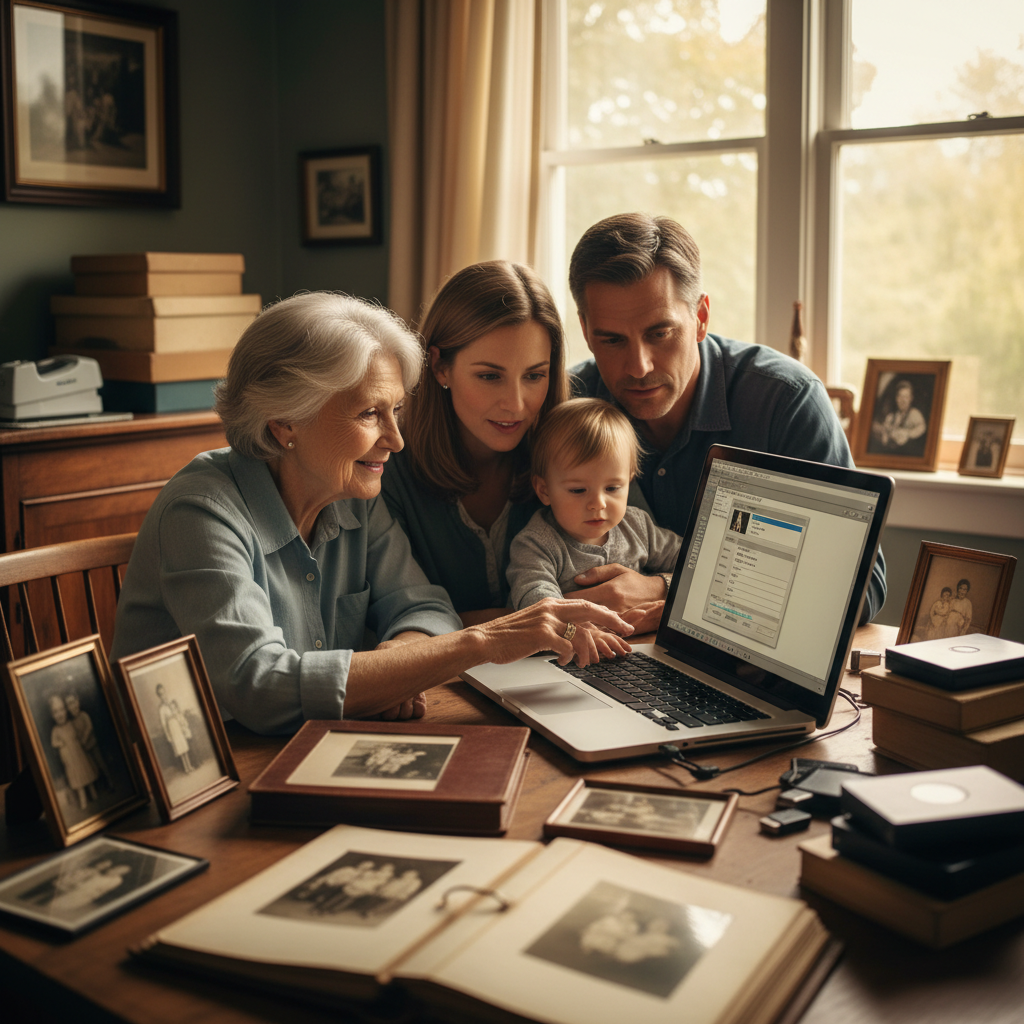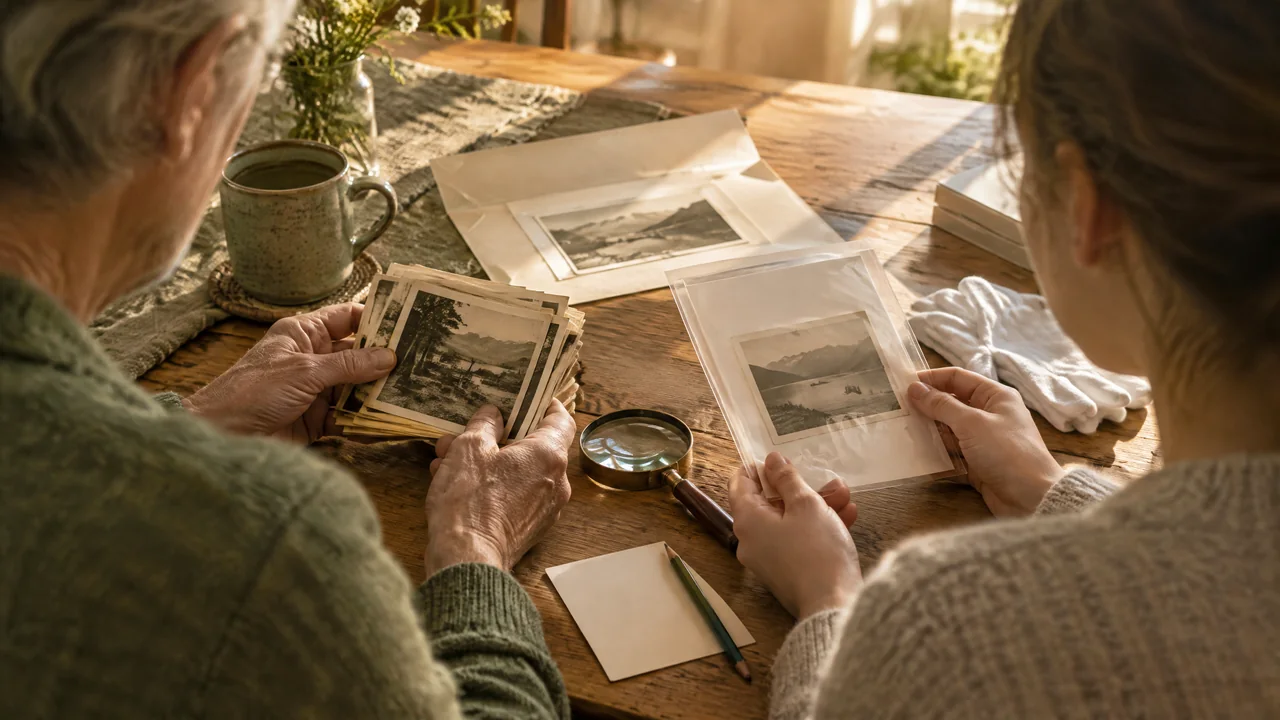
Treat each family photograph as a small record: keep the original safe, then add a copy with names, date, place, source and sharing wishes. A careful caption lets one image strengthen a family tree without asking anyone to write a life story.
Start with the picture someone can explain
Choose one photograph that a relative recognises. It might be a wedding group, a kitchen snapshot, a school portrait or a holiday scene. The best first contribution is not necessarily the oldest image. It is the one for which someone can add reliable detail today.
A useful description answers the basic questions of who, what, where and when. The U.S. National Archives recommends adding this basic metadata because it helps people find and identify files later. 1 That simple habit turns “Grandma’s photos” into something a cousin can search, understand and connect to the right people in the tree.
Begin with what is visible. Name people from left to right if you can. Say what is happening, name the venue or town, and give a full date when it is known. “About 1968” or “summer, late 1960s” is more honest and more useful than a guessed exact day.
Protect the original before you improve the description
Work from a scan or a clear digital copy whenever possible. Digitising lets a family view and share an image without repeatedly handling the original, and the National Archives advises keeping the original after digitising because digital files can be lost. 1
Do not trim, tape, glue, fold or “tidy up” an original print to make it easier to use. The National Archives also advises against ink and markers around photographs; if a full caption will not safely fit, put it on the photo enclosure instead. 2 Keep prints in a cool, dry place away from damp basements, garages and hot attics. 2
For the digital copy, use a calm, understandable filename such as 1972-06-Smith-reunion-Lakeview.jpg. Keep the original file too. A camera file may contain EXIF information such as date and time, geographic data and copyright details, but it will not reliably explain who is in the room or why the day mattered. 4 Add the human context in a caption, note or linked contribution rather than relying on a filename alone.
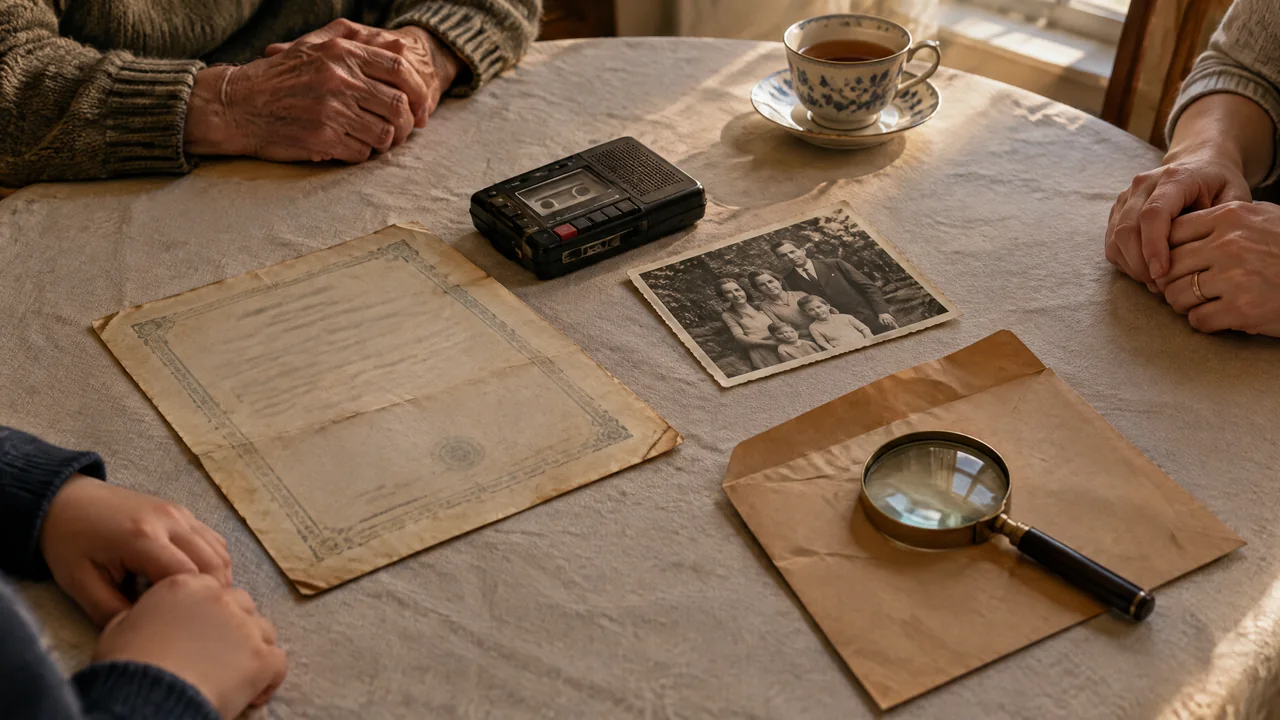
Use this one-photo contribution card
Copy this checklist into a notebook, email or shared document. It is designed to be completed in ten quiet minutes, not perfectly. Leave a line blank when no one knows the answer.
- Photo label: Give the image a short, plain name.
- People: List each person, from left to right where useful. Add a relationship only if known.
- Date: Record an exact date, a month and year, or a clearly marked estimate.
- Place: Name the house, street, town, region or event venue that is known.
- What is happening: One or two sentences are enough. Include a distinctive detail, such as a graduation, a picnic after a move, or a visit from an aunt.
- Source and provenance: Say who owns the original or who supplied the copy, and how it came into the family. For example: “Scanned from Ruth Patel’s album, lent to her by her brother Daniel.”
- Supporting record: If a date or name comes from a certificate, newspaper notice, album inscription or another record, name that record.
- Oral story: If the detail comes from someone’s memory, label it as a family recollection and note who told it.
- Unanswered question: Write the next question plainly: “Is the boy in the red jumper Michael or his cousin?”
- Sharing wishes: Note who may see the copy, whether permission was requested, and any wish not to share it further.
This card separates three valuable but different things. A research record points to evidence. An oral story preserves someone’s recollection and voice. An unanswered question gives the next relative a useful task. Keeping those labels visible prevents a fond memory from quietly becoming a stated fact.
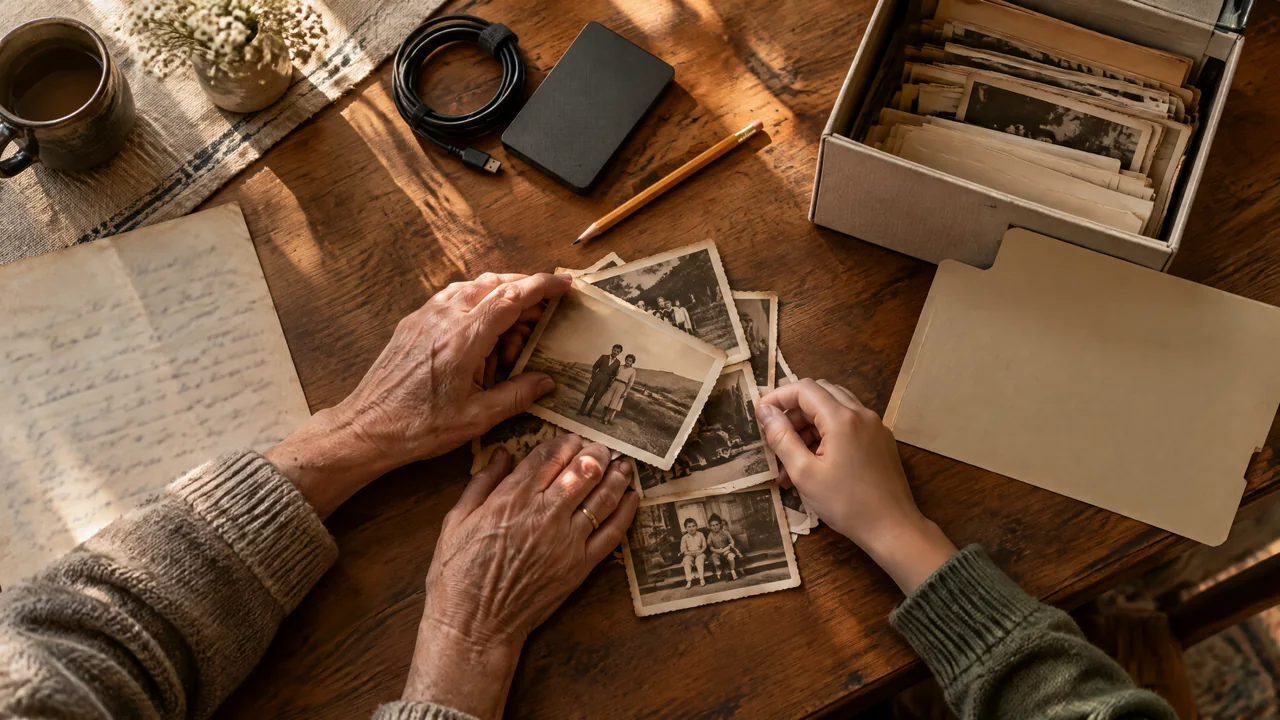
Let the contributor keep their own words
Invite relatives to caption in the language they naturally use. “Aunt May’s back garden after the rain” may be more meaningful than a formal historical sentence. You can add a second, clearer line beneath it for the tree: “May Wilson, her daughters Eva and Nia, Bristol, about 1984.”
Ask one follow-up question at a time: “Who is the man beside Dad?” or “Was this before or after the move?” Showing the image often helps memory more than requesting a list of dates. If answers disagree, preserve both as attributed recollections and make the uncertainty clear. There is no need to settle every question at once.
Record descriptions while the person who knows them is present or soon afterwards. The Library of Congress similarly advises recording what you can promptly and keeping descriptions with photographs and files. 3
Agree the audience before sharing
A photo can carry more than faces. It may reveal a child, an address, a difficult period or a moment someone would rather keep within the family. Before adding a copy beyond a small trusted group, ask living people shown in it whether they are comfortable with that use. The UK Information Commissioner’s Office advises getting people’s consent before uploading their pictures or personal information. 5
Be specific, but keep the choice easy: “May I add this photo to our family-tree project for relatives to see?” Ask whether a name, date or location should be left out, and accept “no” without debate. Opting out is completely acceptable. For a child or anyone unable to decide for themselves, pause and seek guidance from the appropriate parent, guardian or responsible relative.
Do not promise privacy or permanence that you cannot control. If an image is to be placed online, review the service’s current audience controls and privacy information first; the ICO also recommends considering how a service will use personal information and who may see it. 5 When a relative’s wishes are unclear, keep the image as a private family working copy or do not add it.
Make the next contribution easy
End each photo conversation by choosing one small next step: a cousin checks the date, an aunt identifies a neighbour, or the owner photographs the album page that gives the image context. This makes the tree a shared working project rather than a collection one person must finish. Thank the contributor for the detail they supplied, even if it was only one name or a correction.
A photograph with an honest caption, a clear source and respected sharing wishes can be useful for years. One careful contribution is enough to begin.
If this approach suits your family, you may optionally explore a family-tree project through MemContinuity’s Family Tree.