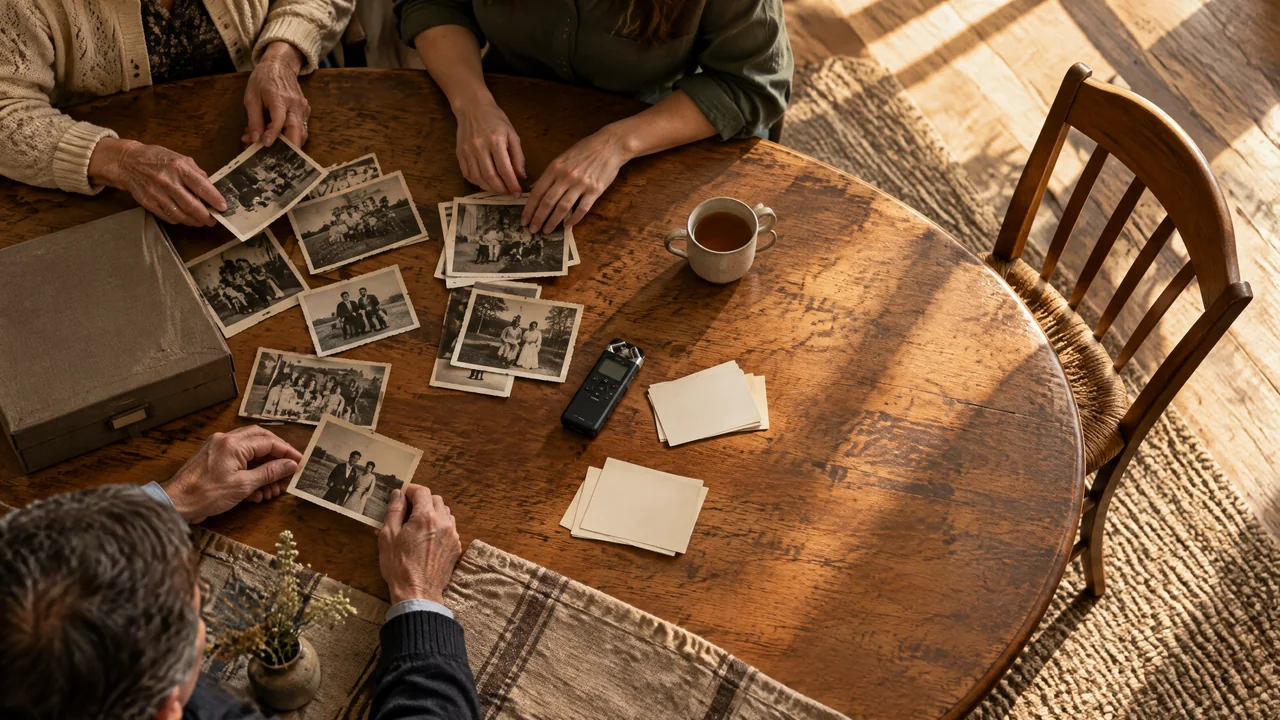
Start with a small agreement, not a search for perfection. A family tree becomes more useful when relatives treat it as a shared, revisable project: they decide why it exists, what belongs in it, who keeps it moving, and when they will look at it again.
Begin with a charter, not a perfect chart
A chart can look finished long before the family knowledge behind it is settled. Names may be missing, dates may conflict, and a cousin may remember an important story next year. That is normal. Begin this series with a practical idea: make a short family-tree charter before trying to fill every space.
A charter is a one-page agreement. It helps avoid one person quietly carrying all the work while everyone else assumes the tree is complete. It also tells new contributors how they can help, without expecting them to become researchers.
Family history can draw on many kinds of material. The U.S. National Archives, for example, lists census, military, immigration, naturalization, and land records among the holdings often used by genealogists. 1 That variety is a good reason to give your project a purpose and a boundary.
Give the project one shared purpose
Start with one sentence: What do we hope this family tree will help us understand or pass on?
Your purpose might be to connect grandparents’ memories with photographs, identify earlier family places, or leave a gentle starting point for younger relatives. Choose what matters to your family now. A broad aim such as “everything about everyone” can make a small project feel impossible. A focused aim gives people permission to add one useful piece at a time.
A purpose is not a promise that every relative will take part. Some people may have little time, prefer not to discuss the past, or simply not be interested. All of those choices are acceptable. The project should invite contribution, never demand disclosure.
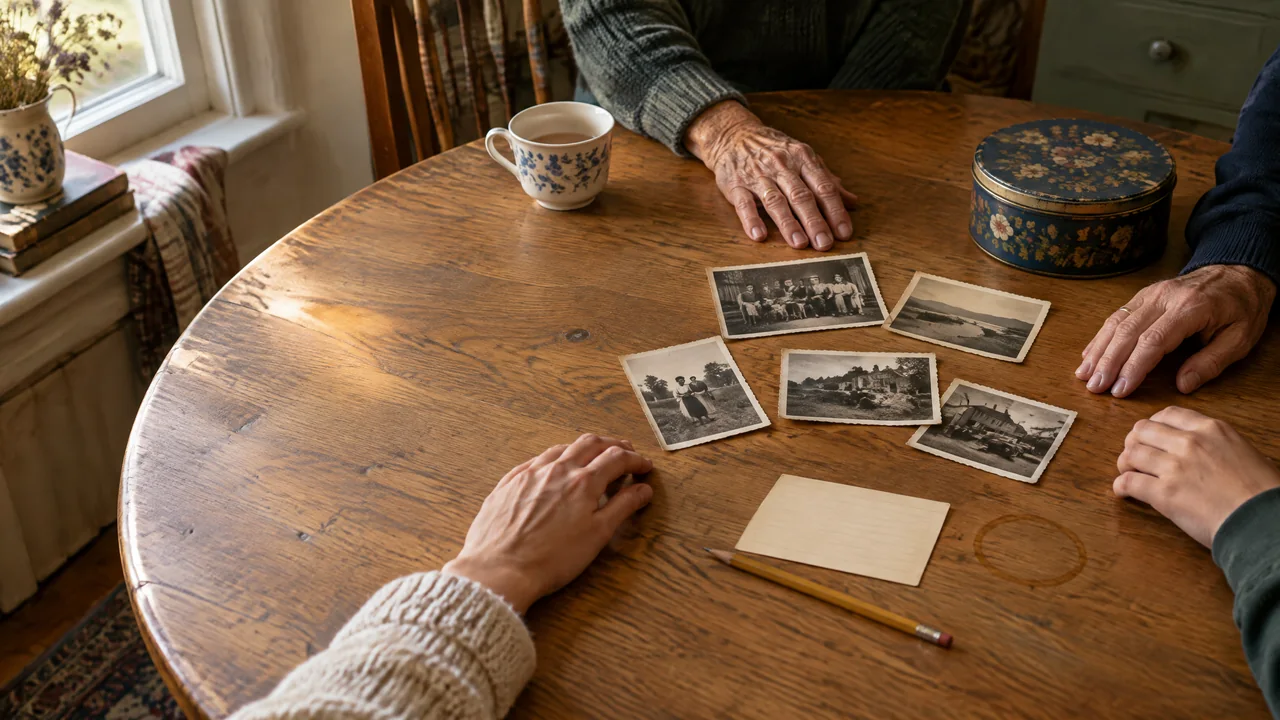
Decide what each entry means
Before anyone starts adding material, agree on three labels. This habit makes a living tree easier to understand and improve.
Research records are items that can be checked again, such as a certificate, census entry, letter, photograph with a known date, or archival catalogue reference. Note where it came from and what it says.
Oral stories are memories and family accounts. They preserve a person’s perspective, voice, and meaning. Oral history is built from planned recorded interviews and personal recollections; the Smithsonian Institution Archives advises interviewers to prepare, ask open questions, and respect the narrator’s choices. 2 Record who told the story and when, rather than turning it at once into an unquestioned fact.
Unanswered questions are not failures. Label them plainly: “Was this the same Anna?” or “Which town did he leave from?” A good question gives the next contributor a place to begin. If a record and a story differ, keep both with their labels while the family looks for more evidence.
Choose a steward, not an owner
Name one steward for a modest period, perhaps six or twelve months. The steward does not own the family story or decide whose memories count. Their job is practical: welcome contributions, keep the charter visible, note questions, and suggest the next small task.
They can ask a second person to help with scanning photographs, arranging a conversation with an elder, or checking place names. Sharing roles prevents the project from stalling when one person is busy. At the next review, the role can stay with the same person or pass to someone else.
Care for living people belongs in the charter as well. Ask before recording or sharing a living person’s story, details, or image, and be clear about the intended use. The Smithsonian says an interviewee should be told the purpose and how an interview may be used, may choose which questions to answer, and can ask for the recorder to be turned off. 2 FamilySearch likewise advises consent before submitting photographs of living people other than one’s own minor children. 3 Your family can set respectful boundaries; this is courtesy and consent, not legal advice.
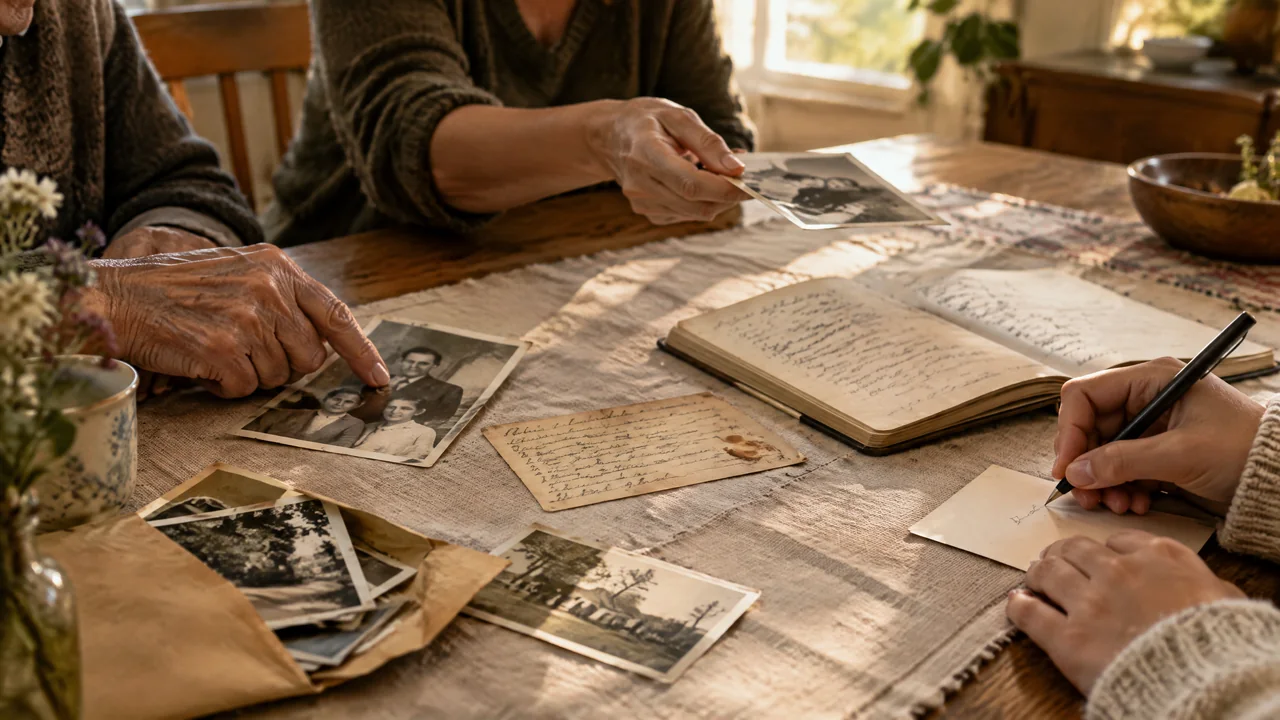
Try this 20-minute family-tree charter
At a call, meal, or quiet afternoon, fill in these prompts together. Keep the answers short enough that someone will return to them.
- Our purpose: We are building this tree to …
- Our first scope: For the next six months, we will focus on … and will not try to cover … yet.
- Our labels: We will distinguish research records, oral stories, and unanswered questions. For records and stories, we will note the source or teller and date.
- Our steward: … will coordinate until … . They can ask … for help with … .
- Our contribution rhythm: We will invite a small contribution every … . A contribution can be one name correction, photo caption, memory, question, or source.
- Our care promise: We will ask living people before sharing their material. Anyone may say no, ask for a pause, or opt out without explanation.
- Our review date: We will meet or check in on … to decide what to continue, correct, or leave open.
Send the finished charter to anyone who might contribute, including relatives who are not using a computer. A phone call and a printed copy can be as welcoming as a group message.
Set a rhythm that leaves room for life
A family tree needs a gentle rhythm. One simple option is a monthly invitation with a single request: “Do you recognise anyone in this photograph?” or “What should we ask Aunt Rosa about her first job?” People are more likely to reply to a small, specific question than to a general request for their whole family history.
After a conversation or discovery, take ten minutes to record what arrived. Add the contributor’s name, label the item as a record, story, or question, and note any follow-up. This prevents useful details from becoming detached from their source.
Review the tree before calling it complete
Put review points on the calendar: after three months, at the end of a family gathering, or whenever a new branch is added. At each review, ask: What did we learn? What needs a clearer label or source? What is a manageable next step?
Also ask whether the purpose still fits. Perhaps the original aim was to identify everyone in a box of photographs, and it is now time to collect the stories behind them. Perhaps a relative has asked for more privacy, or the steward needs a break. Updating the charter is a sign that the project is being cared for.
The chart is only a snapshot. The project is the ongoing, voluntary work of noticing, checking, remembering, and making room for what is still unknown. If you would like an optional place to explore a family-tree project, visit MemContinuity’s Family Tree.