Choose the audience before you choose the detail. A family tree can hold different kinds of knowledge, yet each item does not need the same audience. Clear sharing lanes let relatives contribute with care and say no when they wish.
Begin with three sharing lanes
Think of the tree as a working family project with three lanes: private working notes, family-only memories, and public heritage stories. They are choices, not permanent labels. A note may stay private, move to a family conversation, or become a public story only when those involved are comfortable.
Private working notes are the research desk: a lead to check, an uncertain relationship, a photo needing identification, a citation, or a reminder to ask about a date. Keep unanswered questions here too. A useful question should not become a fact simply because it is written down.
Family-only memories are stories that matter to relatives but are not ready for a wider audience: a difficult move, a nickname, a private letter, or a recent photo. Share them only with the agreed group. For a living person, pause before adding a full name, exact date, location, or recognisable photograph.
Public heritage stories are pieces you would feel comfortable telling to a broader community. An ancestor’s trade, an old photograph, or a family tradition can make a generous public story. Share what the story adds, not every personal detail.
This is not about hiding the past. It is about matching detail to audience and letting each contributor decide what feels comfortable.
Keep three kinds of information visibly different
A strong tree is easier to improve when it does not mix proof, memory and possibility together. Use a small label in your own notes, or simply name the type in a sentence.
A research record is something you can point to: a certificate, register entry, newspaper item, photograph, letter, or other source. Record where it came from and what it actually says. The Association of Professional Genealogists asks its members to communicate work clearly using reliable, fully cited sources, a useful family standard too. 1
An oral story is a person’s account, remembered in their own words. It can be vivid and valuable without becoming proof of every detail. Write who told it, when it was shared, and whether the narrator is happy for it to be passed on. If memories differ, keep both versions with respectful wording rather than forcing a winner.
An unanswered question is a prompt for future work. Mark it openly: “To check,” “Family recollection,” or “Not yet confirmed.” This invites a cousin to help without turning a hunch into a permanent family claim.
Ask first, especially for living people
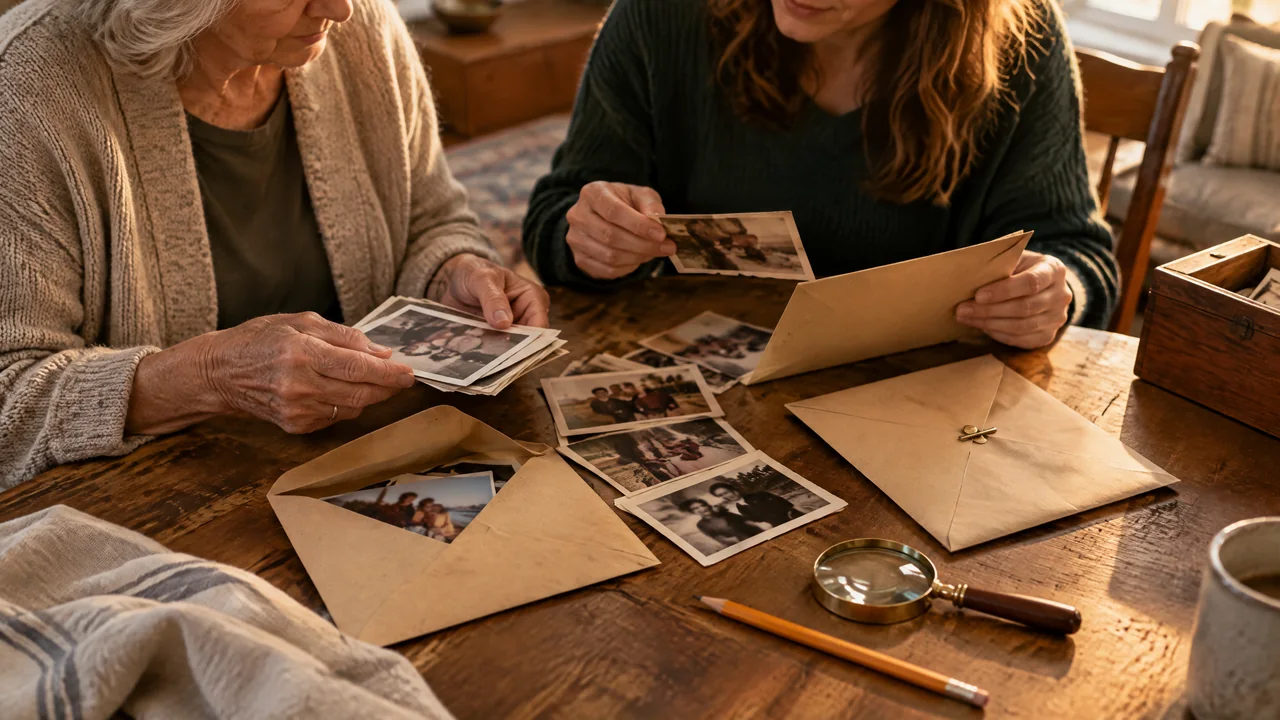
A kind request is more useful than an assumption. Before sharing a living person’s information or their words beyond a small agreed group, explain what you hope to share, who may see it, and whether they can review it first. The APG’s professional code calls for safeguarding information about living people and obtaining informed consent before using or publicly sharing information. 1
The same courtesy matters when someone tells a story about another relative. One person may enjoy a funny childhood anecdote while another feels it belongs at the dinner table, not in a family record. If the story concerns several living people, ask the people most directly involved. A “not now” deserves the same respect as a “yes.” Opting out is acceptable, and no one needs to defend that choice.
Oral-history guidance offers a helpful model: explain the purpose of an interview, how it will be recorded, any review process, plans for access, and possible uses before recording begins. It also recognises a narrator’s right to refuse subjects or restrict access. 2 Your family conversation can be simpler than a formal interview, but the spirit is worth keeping.
A five-minute family sharing worksheet
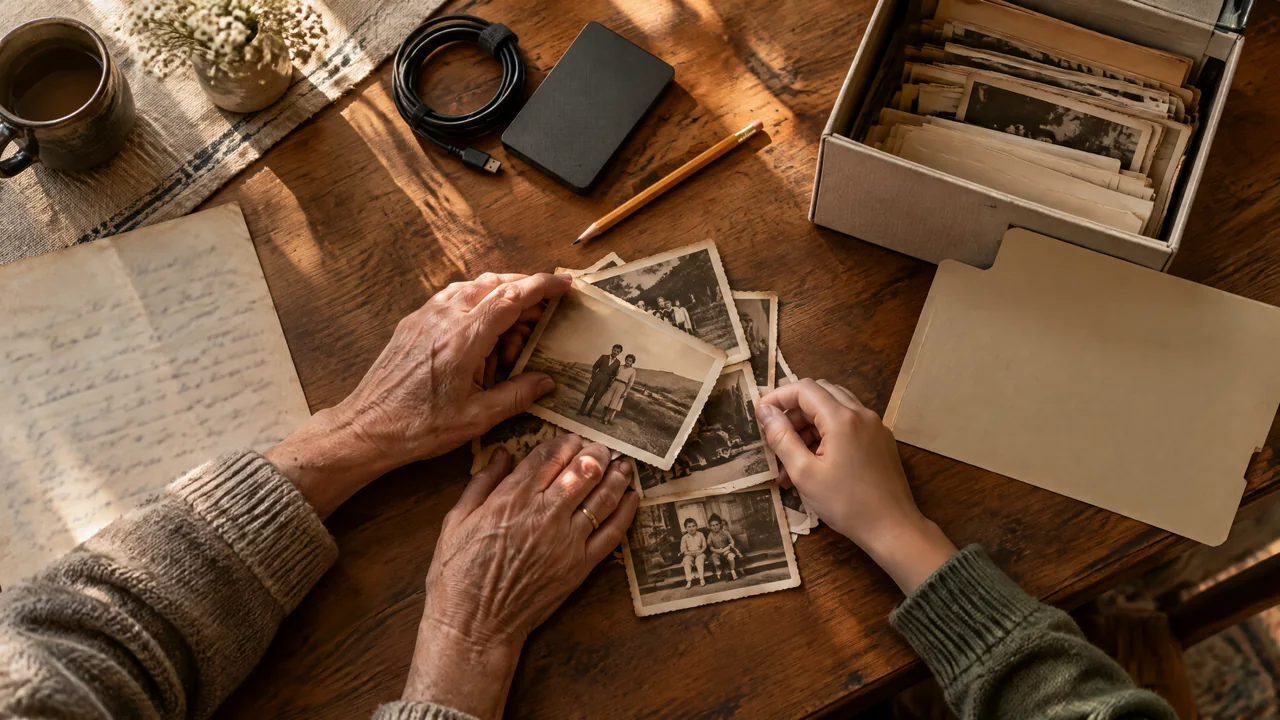
Use this before sending a photo, adding a memory, or inviting a contribution. It works on paper, in a phone note, or at a family meeting.
- What is it? Write one of: research record, oral story, unanswered question, photograph, or keepsake.
- Who is in it? List the people named, pictured or directly described. Circle anyone living.
- Which lane fits today? Choose: private working notes, family-only memories, or public heritage story.
- What needs checking? Note a source, a date, a name spelling, consent, or a missing point of view.
- What is the next respectful step? For example: “Ask Rosa if she wants this photo shared with cousins,” or “Keep this note private until the address is verified.”
For a gentle invitation, try this message:
I am collecting a few family memories and I would value yours. I have a story or photo that includes you. Would you be comfortable with me keeping it in our family-only notes, sharing it more widely, or not adding it at all? You are welcome to change the wording, add your own version, or pass.
Save the answer beside the item, with the date. That small habit helps the next helper understand what was agreed rather than guessing.
Treat access as a decision to revisit
A sharing choice made this year may not suit the family next year. Review private and family-only material from time to time, particularly before sending it to a new group or using it in a public setting. Ask whether the audience has changed, whether the facts have been checked, and whether the people involved still agree.
Archives make similar distinctions. The Society of American Archivists advises people considering a donation to discuss confidential material and possible limited access restrictions with the repository; it also notes that access and handling policies can change over time. 3 At home, the practical lesson is modest: write down your current understanding, avoid promises you cannot control, and keep the conversation open.
Make room for the future helper
The goal is not a perfectly polished tree. It is a trustworthy, welcoming working record. A cousin should be able to see what is documented, what was remembered, what remains unknown, and why some material is not being shared more widely.
When families choose audiences carefully, they protect relationships while still preserving the parts of the past that people want to carry forward. A short, well-sourced public story can be meaningful. So can a private note that keeps a question alive until the right person is ready to answer it.
When you are ready, you can optionally explore a family-tree project through MemContinuity’s Family Tree.