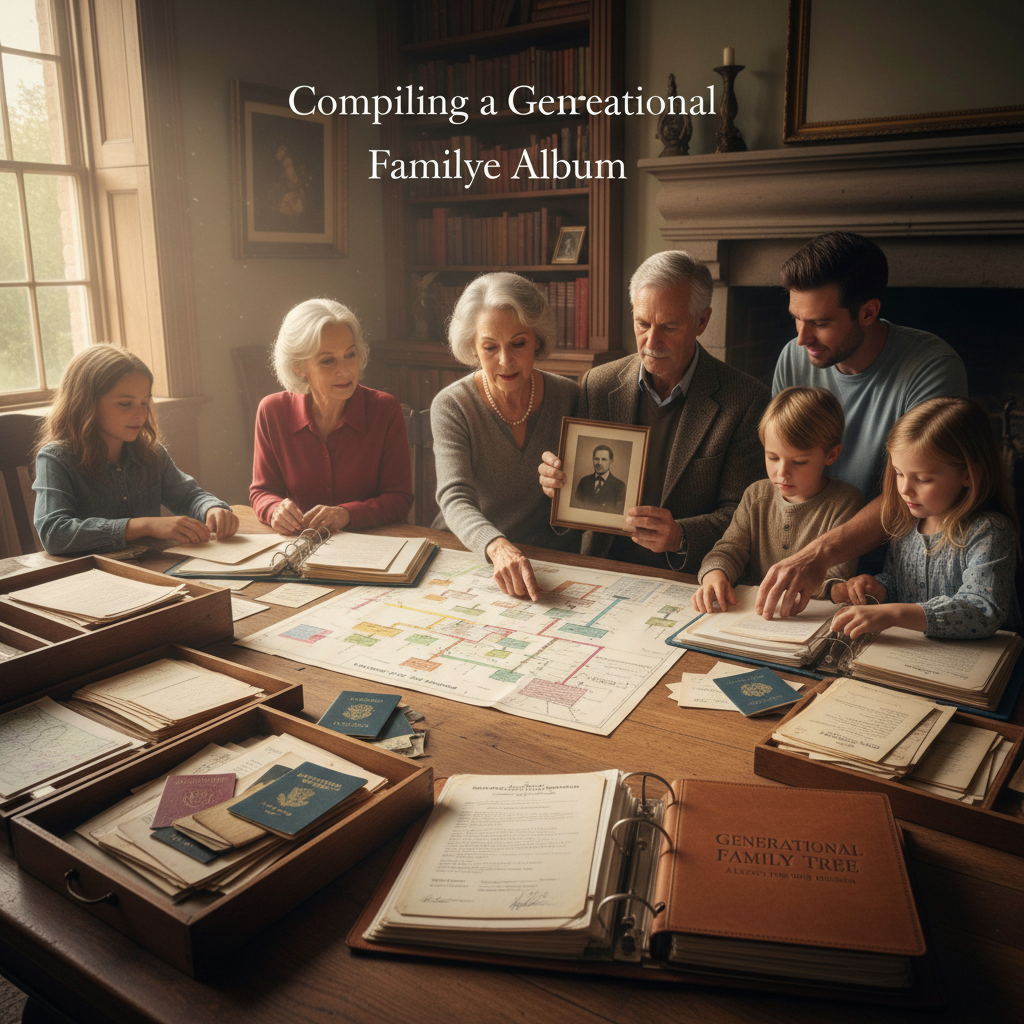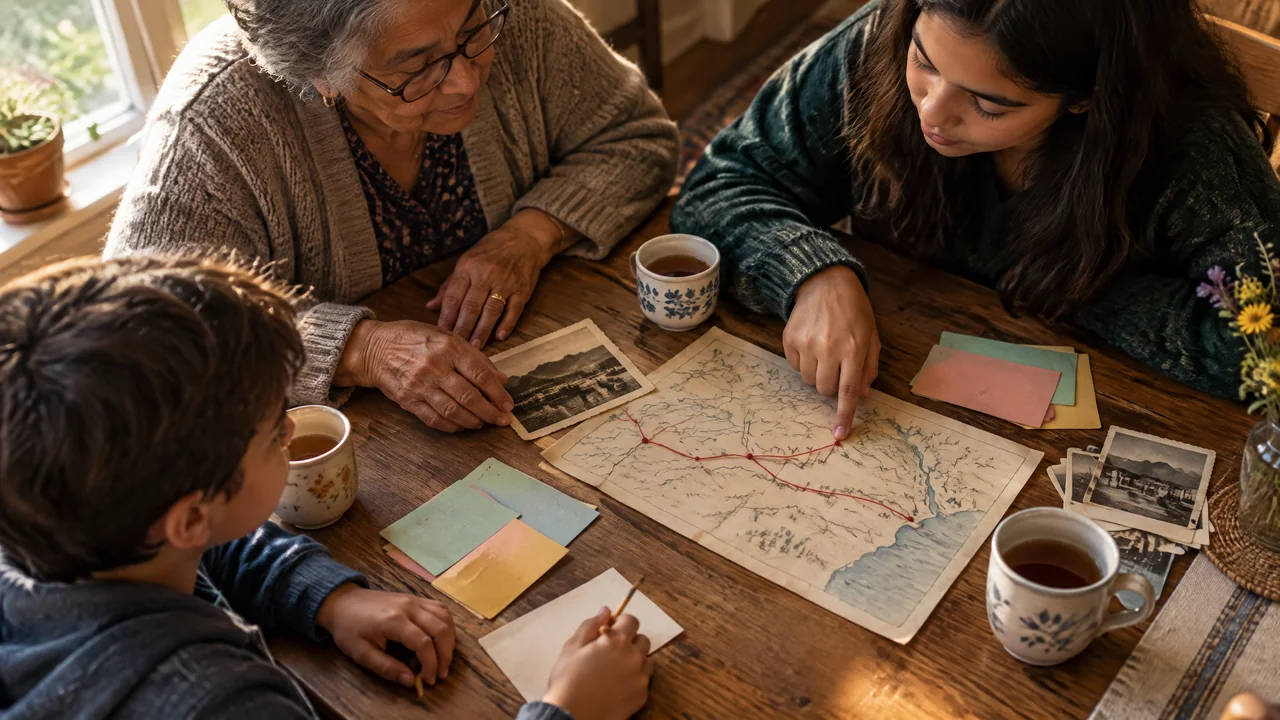
Invite younger relatives to make small, real choices—not to complete an assignment. A child might label one photograph, a teenager might pin a place on a map, and an adult grandchild might ask the question that sends everyone back to the records. Let every person choose a role that suits them, and let “not today” be a complete answer.
Give each person a useful piece of the work
A family tree becomes more welcoming when contribution means more than supplying names and dates. Give younger relatives a piece of work that changes the project: a caption that explains why a picture matters, a question that exposes a gap, or a map pin that connects a person with a place. Their perspective can make an older record easier for everyone to understand.
Keep the scope small. Instead of asking, “Can you work on the family history?”, try, “Would you choose the one photo from this album you would want future cousins to see?” A clear, limited invitation respects busy lives and makes a genuine contribution possible in a few minutes.
The National Archives offers children’s activities built around asking relatives questions, writing or drawing what they learn, comparing answers, and sharing the finished result with the people they spoke with. That is a helpful model: conversation first, a modest creative task second, and no expectation that every family member will participate. 1
Offer roles by interest, not by age alone
Age can suggest a starting point, but interest and confidence matter more. Offer choices rather than assigning a job.
A younger child might draw the route to a grandparent’s childhood home, choose a colour or symbol for a familiar place, or dictate a caption for a photograph. The caption can be simple: “This is the picnic where everyone brought a different cake.” Leave uncertain details as a question rather than tidying them into a fact.
A school-age child may enjoy being a question collector. Ask them to write three things they wonder about: “Who taught her to sew?” “Why did they move?” “Which language did he use at home?” A teenager might make a short map of moves mentioned in the family, transcribe a few minutes of an interview, or compare the names in a census-like record with a story they heard. An adult grandchild may be the person who checks a date against a document, scans a labelled photograph, or writes a source note.
Do not turn any of these into a test. There is no need to correct a child’s wording in the moment or reward the most productive relative. Thank the contribution, then allow a more experienced researcher to follow up where needed.
Keep records, stories, and questions in separate lanes
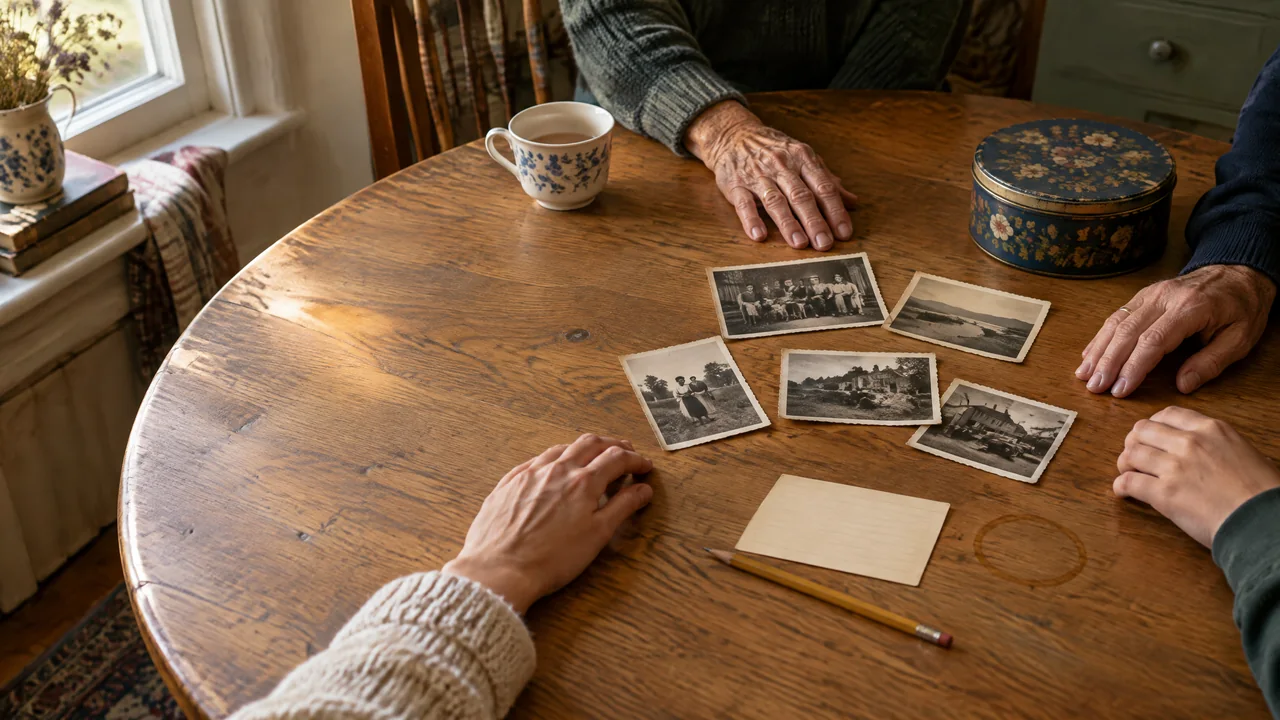
This simple habit gives every contribution a respected place. A research record is what a document, photograph, inscription, or other source actually shows. An oral story is someone’s memory or account, valuable in its own right but not automatically proof of a date or relationship. An unanswered question is a prompt for later, not a failure.
When a grandchild writes, “Grandad said the journey took three weeks,” label it as an oral story and add who told it and when. If a passenger list later gives a date, record that separately. If the two do not match, keep both and make a gentle note to investigate. This protects the narrator’s voice while showing future relatives how the conclusion was reached.
This distinction also gives young contributors a meaningful job. They can add one of three labels—“record says,” “family story,” or “question to check”—to each new note. The task is clear, and it teaches care without asking them to become historians overnight.
Use this 15-minute contribution card
Bring this mini-worksheet to a meal, video call, or quiet visit. One card per person is plenty. The point is to choose, not to finish every line.
My name or nickname: __________
Today I would like to:
- Caption one photo or object
- Put one family place on a hand-drawn map
- Ask one question about a person or event
- Listen to a short story and write one sentence from it
- Check one detail against a record already in the family papers
- Pass for now
My contribution: ____________________________________________
Label it: [ ] Record says [ ] Family story [ ] Question to check
Who or what is the source? __________________________________
May this be shared with the wider family? [ ] Yes [ ] Ask me first [ ] Keep it to this conversation
One follow-up I would enjoy—or someone else could do: __________
The card creates a gentle handoff. The person who asks a question does not have to solve it. The person who shares a story can set a boundary. The person coordinating the tree has enough context to avoid turning a memory into an unsupported fact.
Make interviews comfortable and voluntary
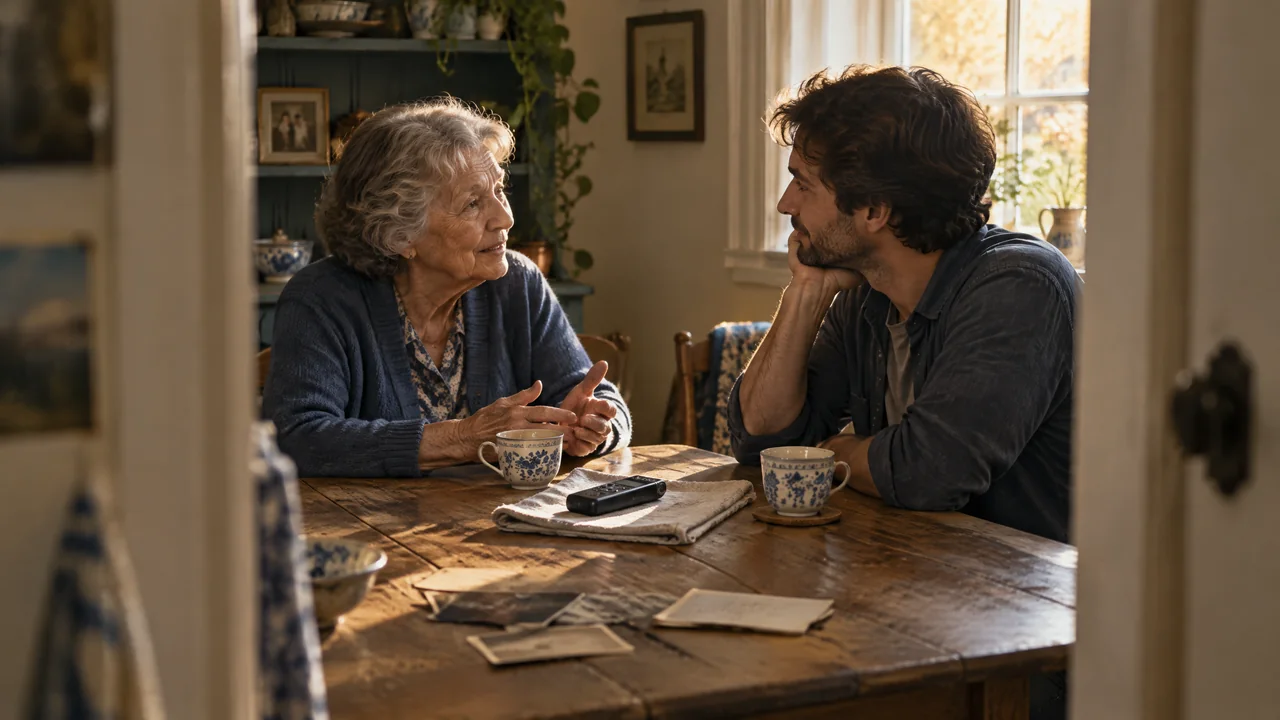
An interview can be a child’s contribution, but it works best as a conversation with choices. The Library of Congress advises young family historians to ask an older relative whether they may record the conversation; it notes that a phone or digital recorder can capture stories that may later be transcribed and shared. 2
Before anyone presses record, say what the conversation is for, whether it will be recorded, who might hear it, and whether the storyteller would like to review a transcript or summary. The Oral History Association likewise recommends explaining the purpose, recording process, review, access, and planned uses in advance. 3 Keep the first session short and choose open questions such as “What do you remember about that kitchen?” or “What did a normal Saturday look like?”
The storyteller remains in charge. They may skip a question, pause, or end the conversation. The Oral History Association’s participant guidance makes those choices explicit and advises people to discuss concerns before they take part. 4 Do not push for private details about living people. If a story involves someone else, ask whether names, images, or details should be left out before it is repeated.
Let young contributors see their mark—and keep their choice
At the next family gathering, show what changed because of each contribution: a photo now has a caption, a move has a place, or a question has been parked for later. Ask, “Would you like your words kept as written, shortened, or removed?” That small return visit shows that contributing has consequences and that ownership is not surrendered.
A living family tree does not need every relative to be a researcher, storyteller, or interviewer. A person may contribute once, contribute quietly, or opt out entirely. Respecting that choice is part of caring for the family record.
If your family would like an optional place to explore a family-tree project, see MemContinuity’s Family Tree.