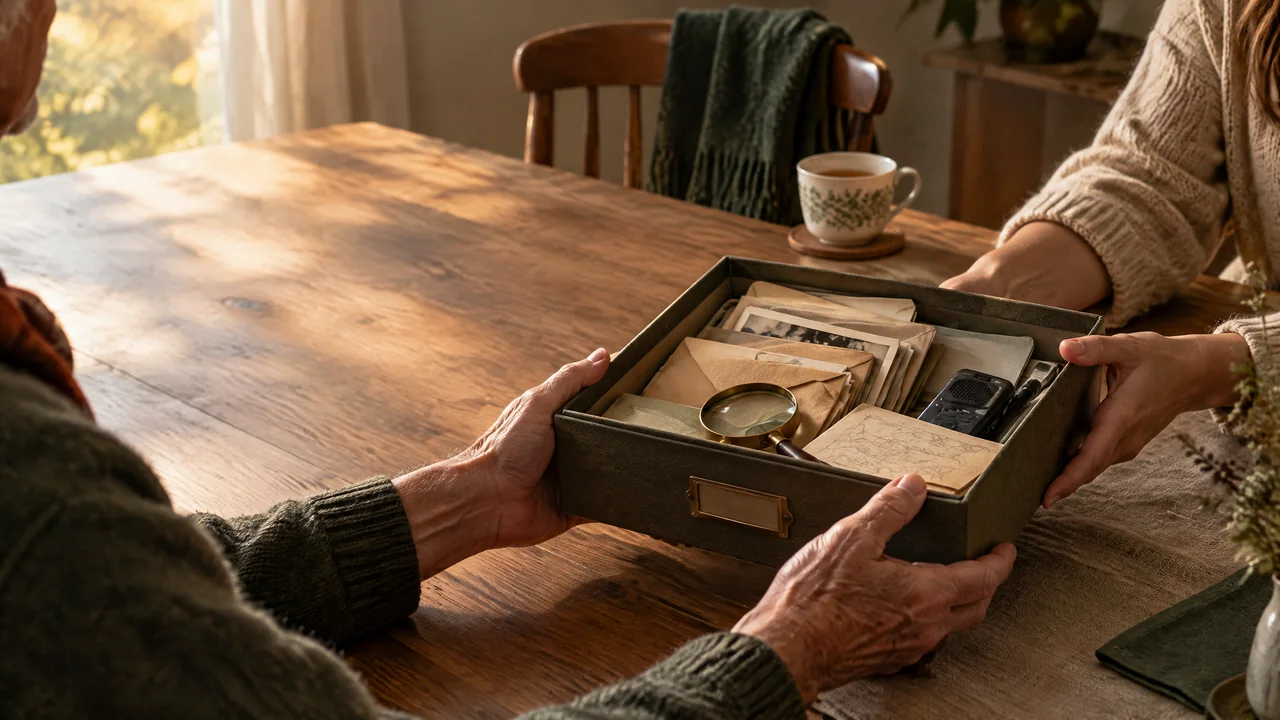
A family tree is easier to pass on when the next steward receives the reasons behind it, not only the names, files and passwords. Make a small, readable handover guide while the current keeper can still explain choices, introduce people and point out what remains uncertain. No one has to take the role alone, and it is all right for a relative to opt out.
Give the next steward a map, not a mystery
Start with a one- or two-page project guide in ordinary language. It can answer: What is this tree for? Which branches and time periods does it cover? Who has helped? Where do the original papers, photographs and digital copies live? Add the date it was last updated and the name of the person who can answer questions now.
The guide matters because family materials lose meaning when they are separated from their origin. Archivists use the idea of provenance: the creator and context of records are important, and records from different origins are not simply mixed together. 1 In a family project, that may mean keeping a cousin’s labelled photograph album distinct from a researcher’s later notes, even if both mention the same person.
Use three clear labels throughout the project. Research records are items that can be checked, such as a certificate image, archive reference, census entry or a note that says where a fact came from. Oral stories are memories or family accounts; record who shared them, roughly when, and whether the wording has been edited for clarity. Unanswered questions are leads to pursue, not settled facts. A simple “story”, “source seen” or “needs checking” label prevents a new steward from having to guess what they are reading.
Share roles without making one person carry everything
A handover works better when it is a small circle of willing helpers rather than a single grand appointment. Name a primary contact for routine decisions, an access helper who understands the records list, and perhaps a story contact who can introduce relatives who may wish to talk. One person may hold more than one role, and roles can change.
Keep a modest contact sheet with each person’s preferred way to be reached and the job they are comfortable doing. Ask before listing someone, especially when contact details or living people’s information may be shared. A relative may prefer not to be contacted, named, interviewed or included in a particular branch. Accepting that choice protects trust and keeps contribution voluntary.
Keep an access record that explains the route
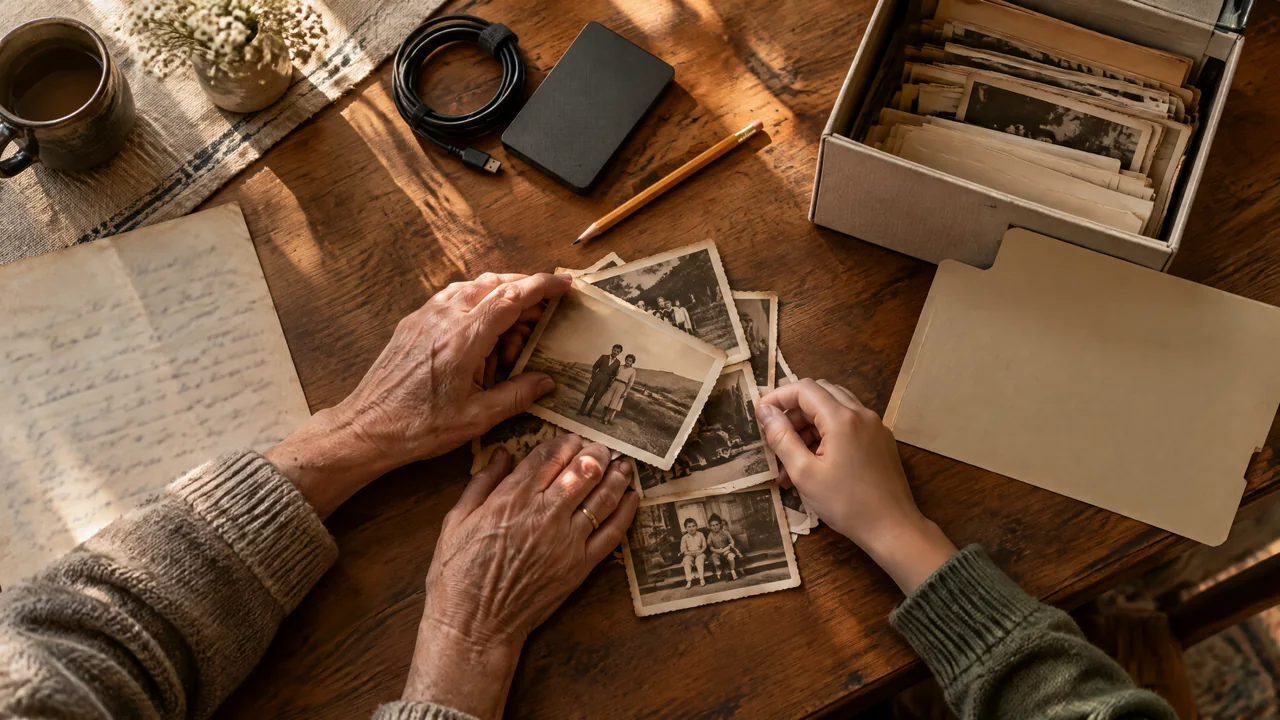
Make a separate access record for the people who need it. It should identify the locations that matter: the paper box or album shelf, external drives, email address used for correspondence, research subscriptions, scanning folder and any place where a copy has been deposited. Record the account holder, recovery contact if one exists, and the date the entry was checked. Do not put actual passwords in the handover guide; use the family’s preferred secure method for those.
This is also a good time to say what should not be circulated. Mark material involving living people, private correspondence, sensitive stories or uncertain parentage for a pause and a conversation before sharing. Do not assume an online service will always be available, or that uploading a file settles who should see it. Keep enough information for the family to locate important originals and explain how access decisions were made.
Write the principles that guide editorial choices
A brief set of editorial principles gives a successor permission to work carefully instead of feeling they must repeat every old decision. Keep it practical. For example: cite the item or person behind a factual claim; preserve the original wording of a story where possible; date changes; and leave a respectful note when relatives disagree. When evidence is thin, say so rather than smoothing it into a confident narrative.
For interviews and recorded memories, agree before recording or sharing what the conversation is for, who may hear it, whether the narrator would like a review, and any limits they want respected. The Oral History Association describes informed consent as a transparent, ongoing discussion that allows a narrator to decide whether to participate. 2 Its best-practice guidance also stresses documenting a project’s context and goals, and keeping related photographs, documents and descriptive information with the relevant interview. 3
Use these handover meeting prompts
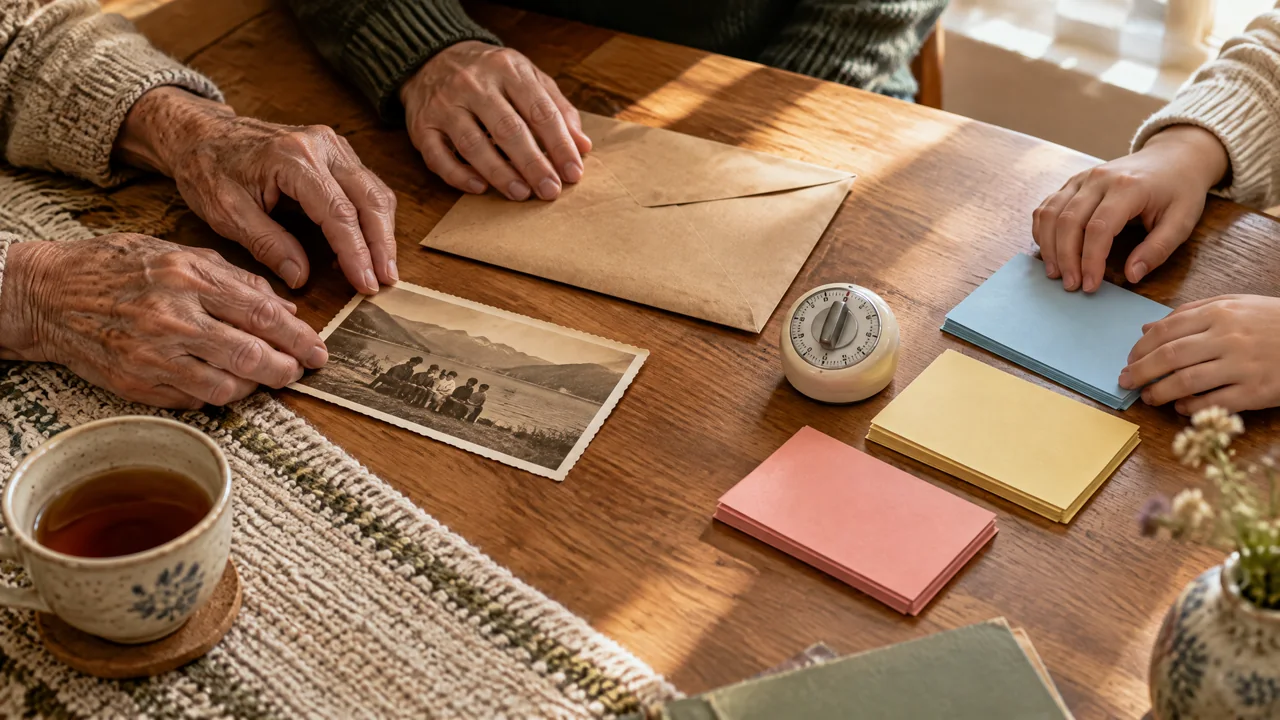
Set aside an unhurried conversation, in person or by phone. Bring the project guide, a few representative records and the access list. These prompts are meant to make the knowledge behind the tree visible:
- What do you hope this family tree will help people remember or understand?
- Which three records best show how you reached your most important conclusions?
- Which stories are precious but should remain labelled as memories rather than proof?
- What names, dates or relationships are still questions? Where should someone look next?
- Who may be happy to help, and who would rather not be contacted or included?
- What should be treated as private for now, and who should be asked before it is shared?
- Where are the originals, the working copies and the notes that explain them?
- If you were unavailable tomorrow, what is the first small task the next steward could safely do?
Write down the answers, then send a short recap to those who agree to receive it. The goal is not a perfect contract. It is a shared understanding that can be revisited as people, memories and preferences change.
Make the handover real with a small trial
Before responsibility changes, ask the incoming steward to find one record, understand why it is in the tree, and add a dated note or question. This friendly trial reveals gaps in file names, explanations and access without making anyone feel tested. Plan a check-in after a few months, when practical questions are more likely to surface.
Give the materials a basic preservation routine too. The Library of Congress recommends selecting and organising files, keeping copies on at least two storage media in separate physical locations, and moving saved copies to current media over time. 4 For scans, the U.S. National Archives advises adding basic “who, what, where and when” metadata so files can be found and identified later; it also recommends keeping backups. 5 Those modest habits make a future handover kinder.
Leave room for the project to change hands again
Good stewardship is not ownership of the family’s story. It is a willingness to explain what is known, protect what people have asked to keep close, and leave a clear path for the next volunteer. A calm handover can include mistakes, gaps and changing views. What matters is that the context travels with the material.
If your family would like an optional place to explore a shared project, visit MemContinuity’s Family Tree.