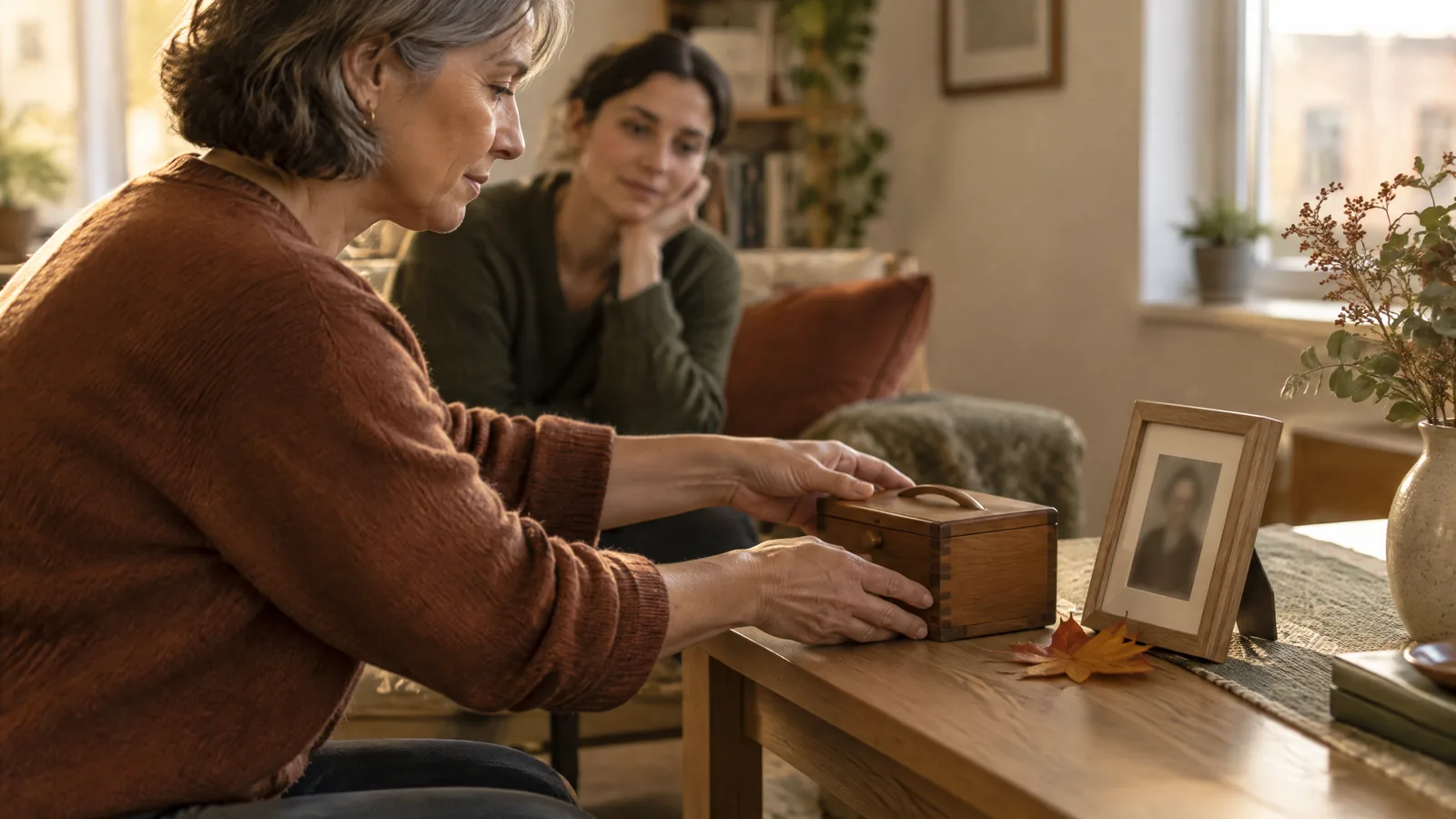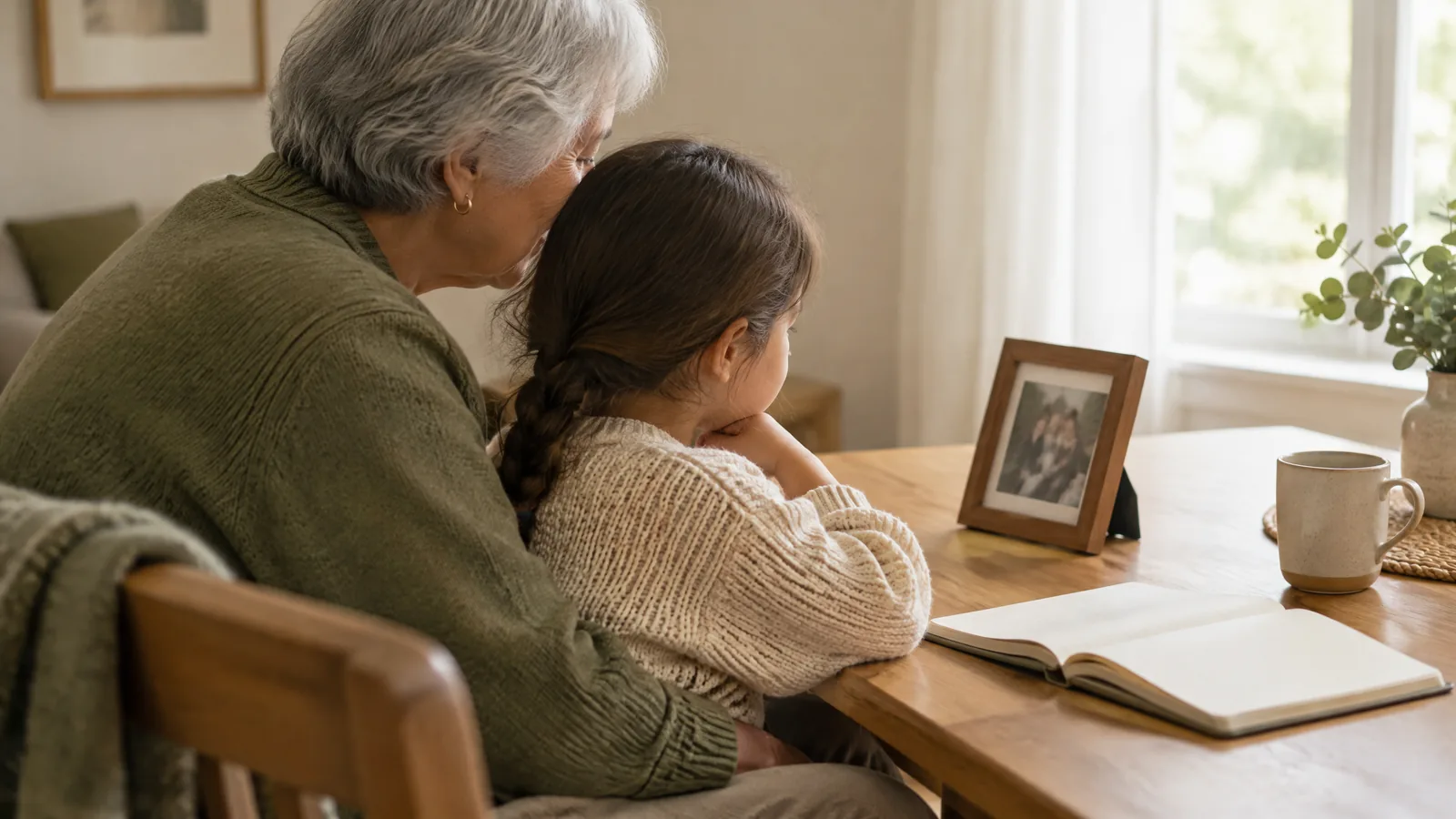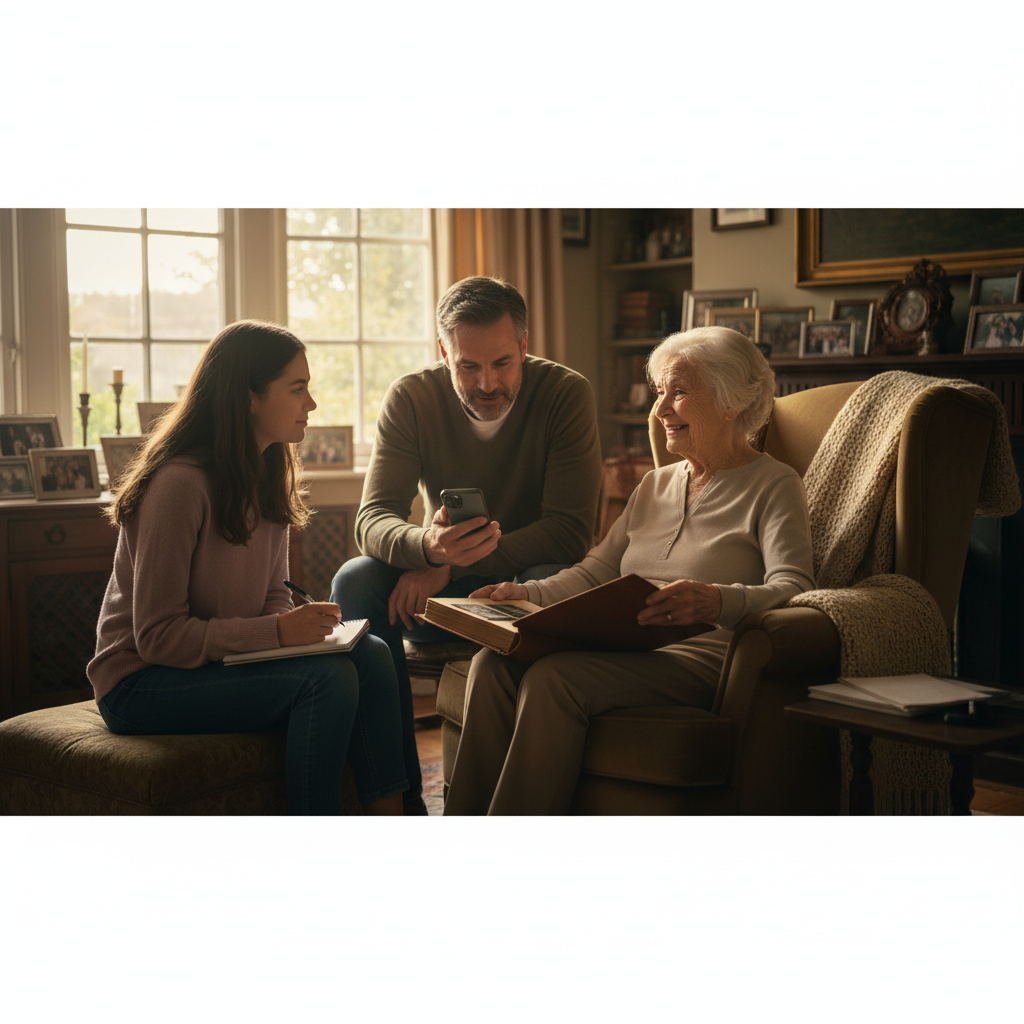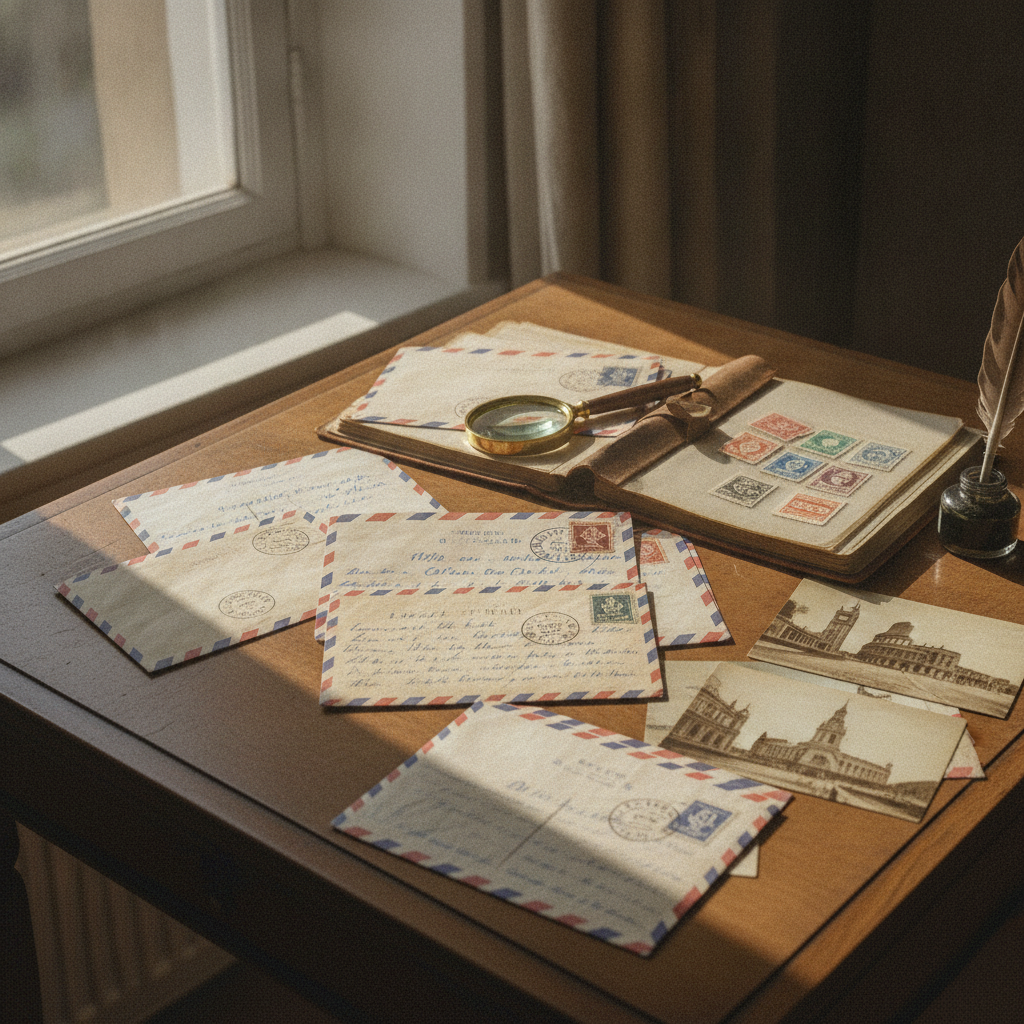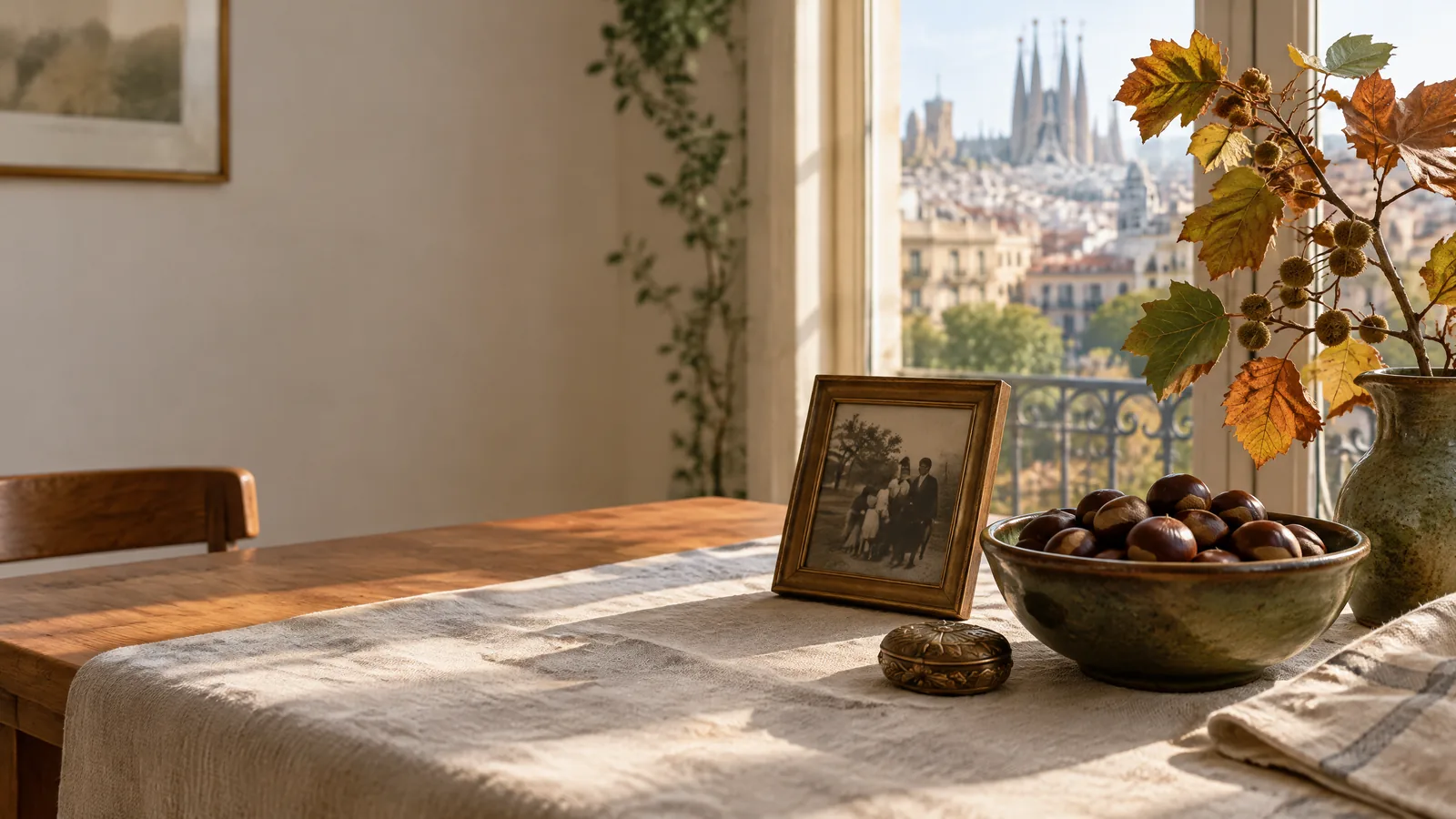
A home remembrance table can give All Saints’ Day a shape when a cemetery visit is not possible, when relatives live far apart, or when a family wants a quieter way to gather. It does not need to look ceremonial. Three objects and one true story are enough.
The first rule is that the table is for the people in the room, not for an audience. It does not need to be photographed, posted, or left in place for a prescribed length of time. It can be a corner of a kitchen table for half an hour. What gives it meaning is the attention it makes possible.
For Catholic households, the first day of November is the Solemnity of All Saints; the following day is the commemoration of the faithful departed.1 In Barcelona, Tots Sants is also a civic season of remembering the deceased, visiting cemeteries, taking flowers to ancestors, and sharing autumn foods.2 A home table can sit alongside those religious and cultural practices without replacing them. For a secular or mixed-faith family, it can simply be a place to tell one story and say one name.
Begin with a purpose, not an aesthetic
Before gathering objects, decide why you are making the table. Try one sentence:
- “We want the children to know who Rosa was.”
- “We cannot travel this year, but we want to mark the day together.”
- “We need a quiet place to remember Dad without organising a large visit.”
- “We want to keep one family story from disappearing.”
A clear purpose protects the practice from becoming another task on a crowded day. It also helps you choose what belongs on the table and what does not.
Choose three kinds of objects
The simplest arrangement uses one item from each of these groups.
A name or image
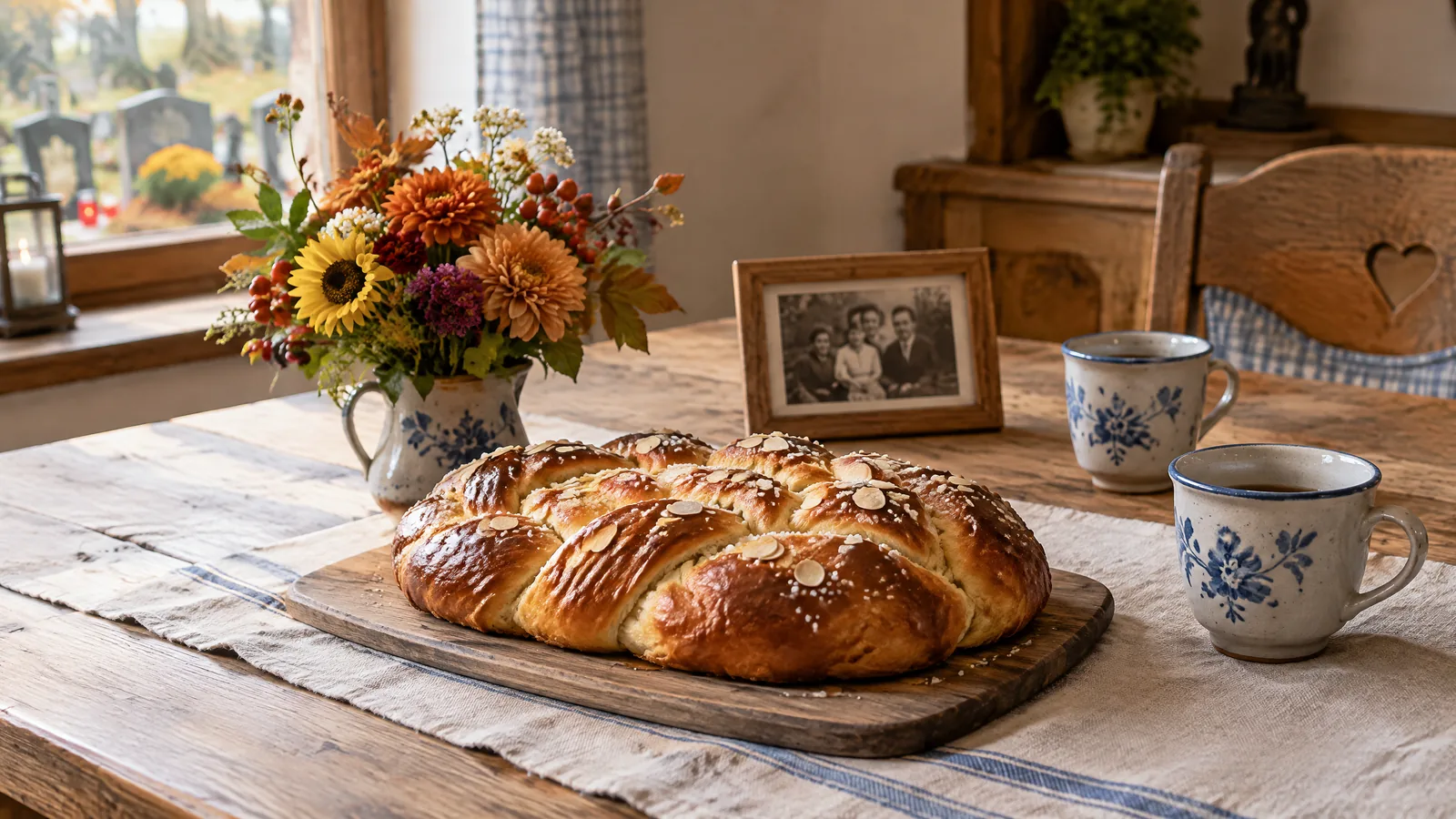
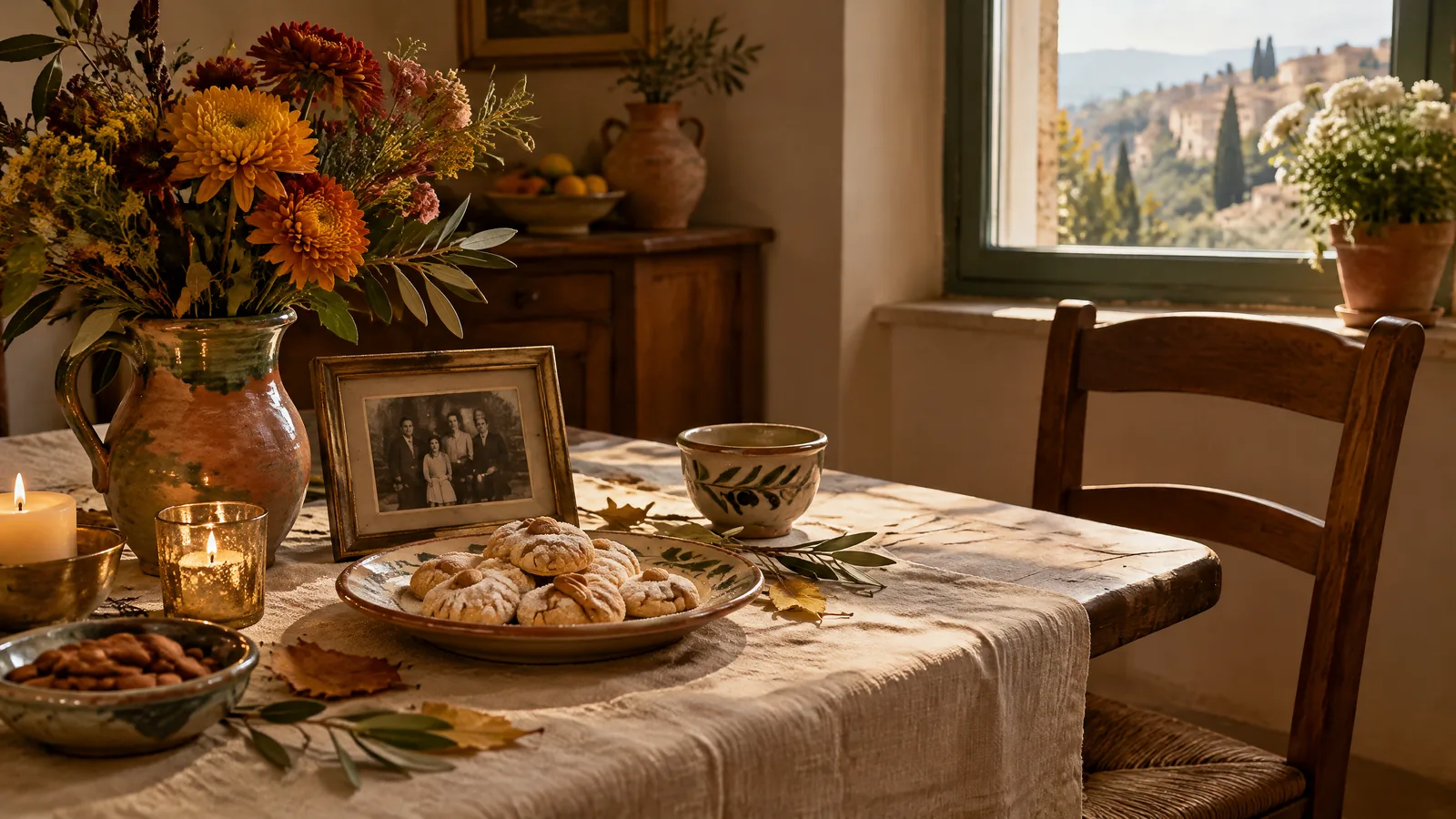
This can be a photograph, a handwritten name card, an initial, or an image of a place connected to the person. Use only what feels comfortable. Some families prefer a photograph; others find a name easier to sit with.
If you use an old photograph, write a note on the back or in a notebook: who is pictured, roughly when, and who identified them. A beautiful image without a name can become a mystery very quickly.
An everyday object
Choose something that speaks to a real life rather than a public version of a person: a wooden spoon, a gardening glove, a sewing measure, a football scarf, a recipe card, or a book with a familiar margin note. If you do not have an object, write down a habit instead: “He always carried sweets for the bus driver.”
The object does not need to be valuable. An ordinary object often gives a younger relative the most useful entry point. It says that a person had routines, skills, jokes, and preferences, not only a date of death.
A seasonal element
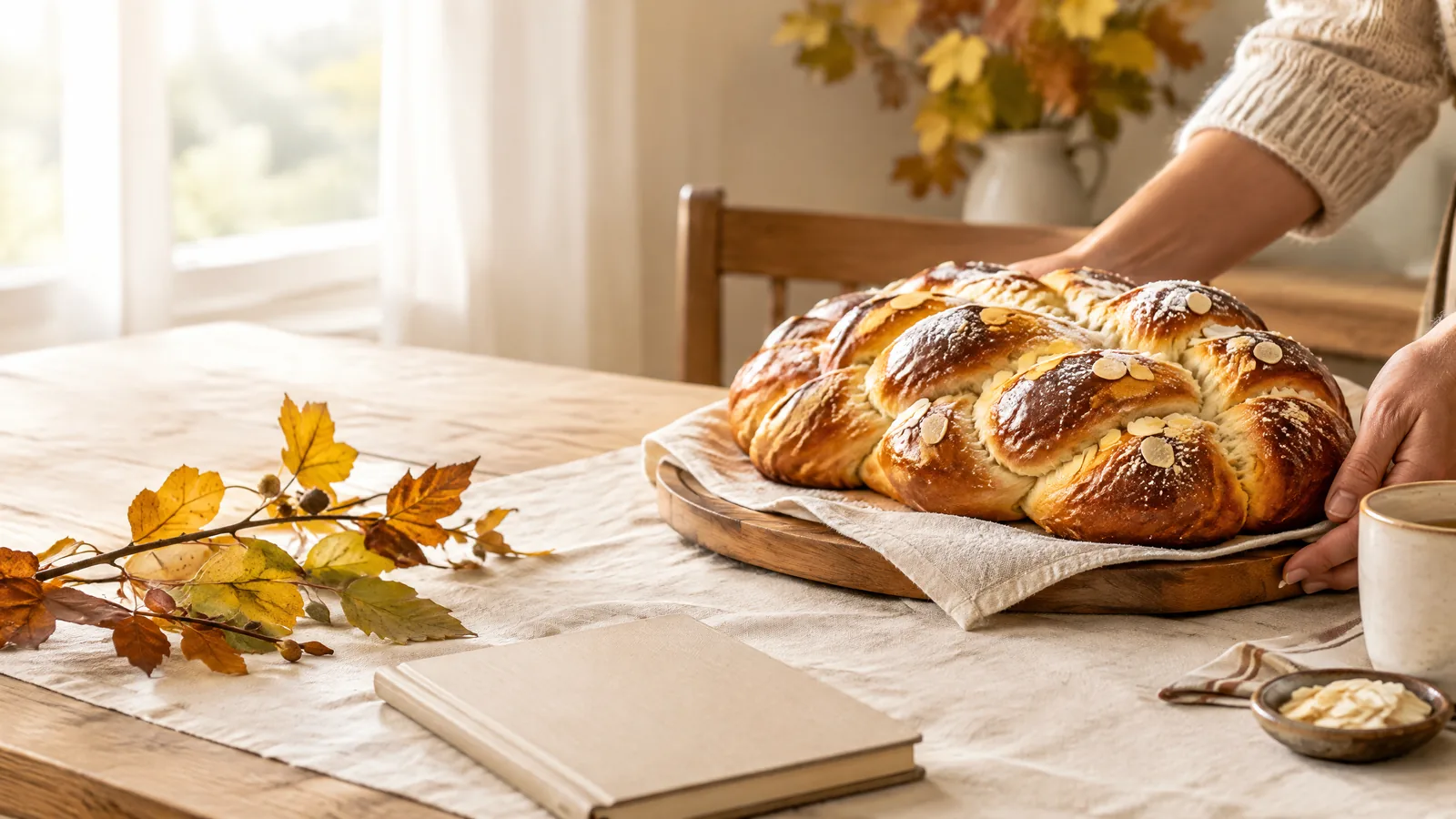
A small branch, a bowl of chestnuts, a plate for the family meal, or a simple autumn cloth can connect the table to the season. In Barcelona, chestnuts, panellets, and sweet potatoes are among the foods publicly associated with this time of year.2 Use what is available and safe in your home. There is no need to buy a special item.
Avoid leaving open flames or anything fragile where children, pets, or a busy household might knock it over. A table should make the day gentler, not create another worry.
Give everyone a way to take part
When people gather, explain that participation is optional. Someone may bring an object. Someone may tell a story. Someone may prefer to make tea and listen. Children can draw a picture, ask one question, or choose a family song to play later.
A helpful opening might be: “We have put these things here to remember Mum. You can say something, ask something, or just sit with us.”
This matters in families where grief is recent, relationships were complicated, or different beliefs sit side by side. Nobody should have to perform closeness to earn a place in the gathering.
Use one prompt that invites a real story
A home table becomes more than a display when it holds a conversation. Choose just one prompt:
- What did this person do that made a home feel like theirs?
- What did they teach you without realising it?
- What did they enjoy that a younger person might not know?
- What is one thing you want to keep doing because of them?
Let people answer in their own way. A child may describe the smell of a coat. An adult may remember a difficult moment. Neither answer needs correction. If an account is uncertain, note that gently for later: “We think it was her sister who taught her that recipe.”
If faith is part of the household, make space for it plainly
Catholic family members may want a prayer, a reading, a visit to Mass, or a moment of intercession. The Spanish Episcopal Conference describes All Saints as a celebration of known and unknown saints, with the following day focused on the faithful departed.1 If that language is central to your family, use it in the way your own parish or household practises it.
If others in the room do not share that belief, they can still be present without being asked to say words that are not theirs. A quiet minute, a personal reflection, or a simple thank-you for the person remembered can allow people to stand together without pretending to agree about everything.
Keep the record after you clear the table
The table may only be up for an hour. The record can last longer. Before putting things away, write a short note:
- Whose memory was held?
- What objects were used?
- What story was told?
- Who was present?
- What should be checked, labelled, or asked about next time?
Store the note with the photograph or in a shared family folder. You are creating a small bridge between the atmosphere of the day and the information someone may need later.
A short version
If the day is busy or emotions are close to the surface, use this shorter plan:
- Put down one name or photo.
- Add one ordinary object.
- Sit together for two quiet minutes.
- Invite one person to tell one memory.
- Write down one detail and put the objects away.
That is a complete remembrance. There is no prize for making it longer.
A home remembrance table is not a substitute for grief, faith, family history, or a cemetery visit. It is simply a small, adaptable place where memory can be given time. On All Saints’ Day, that may be all a family needs.