Todos Santos and T’antawawa in Bolivia: A Table Set for Memory
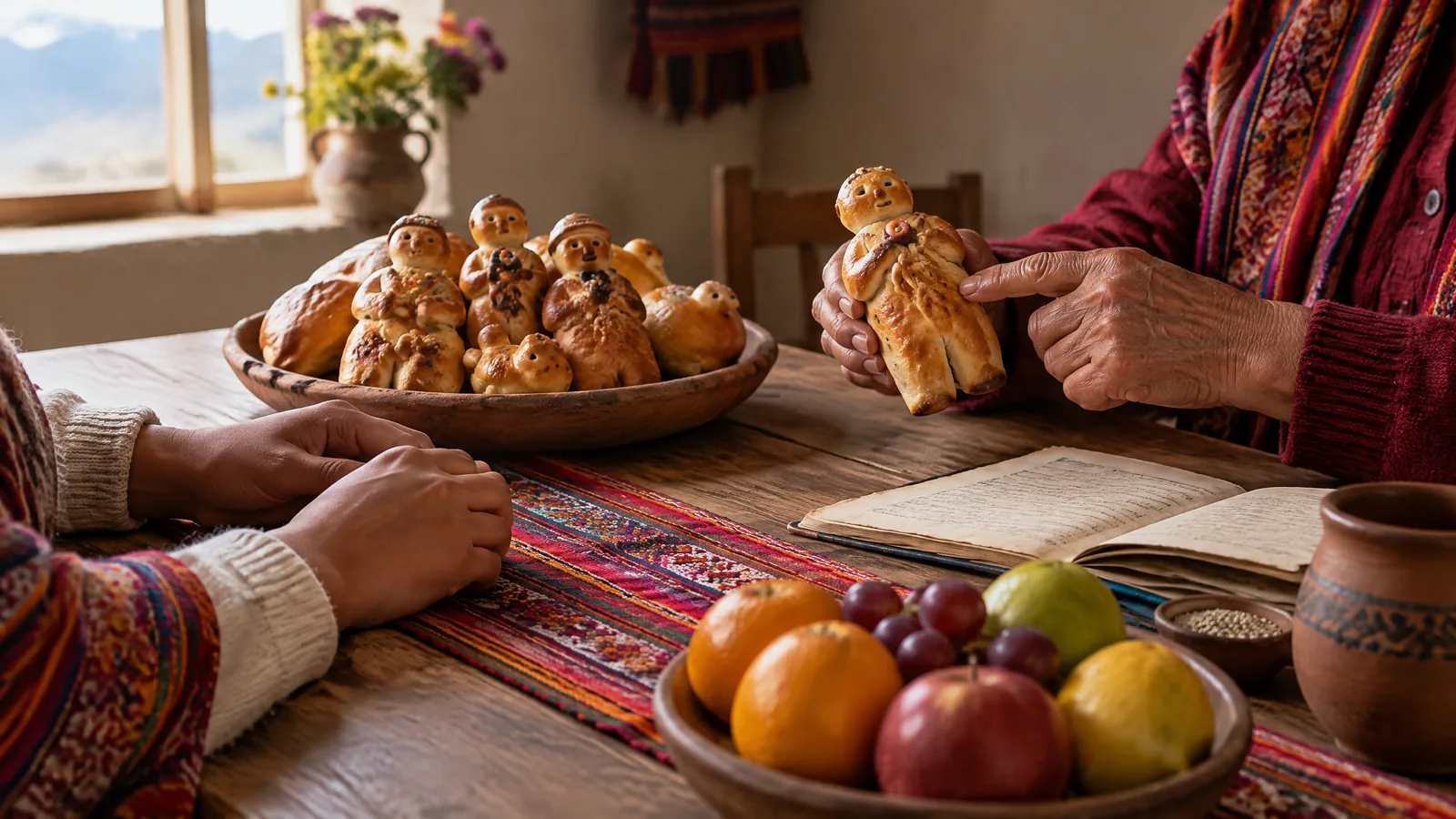
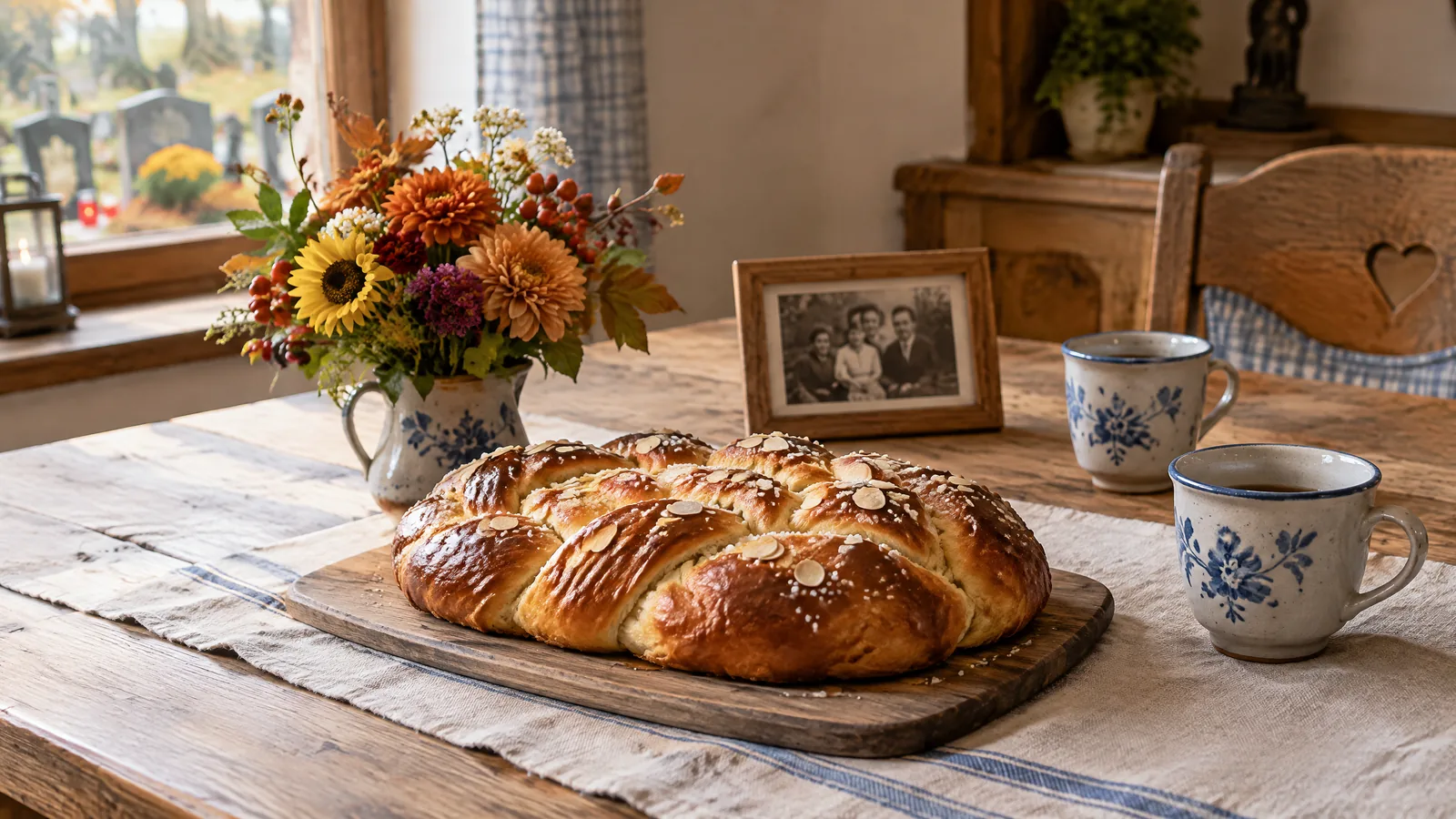
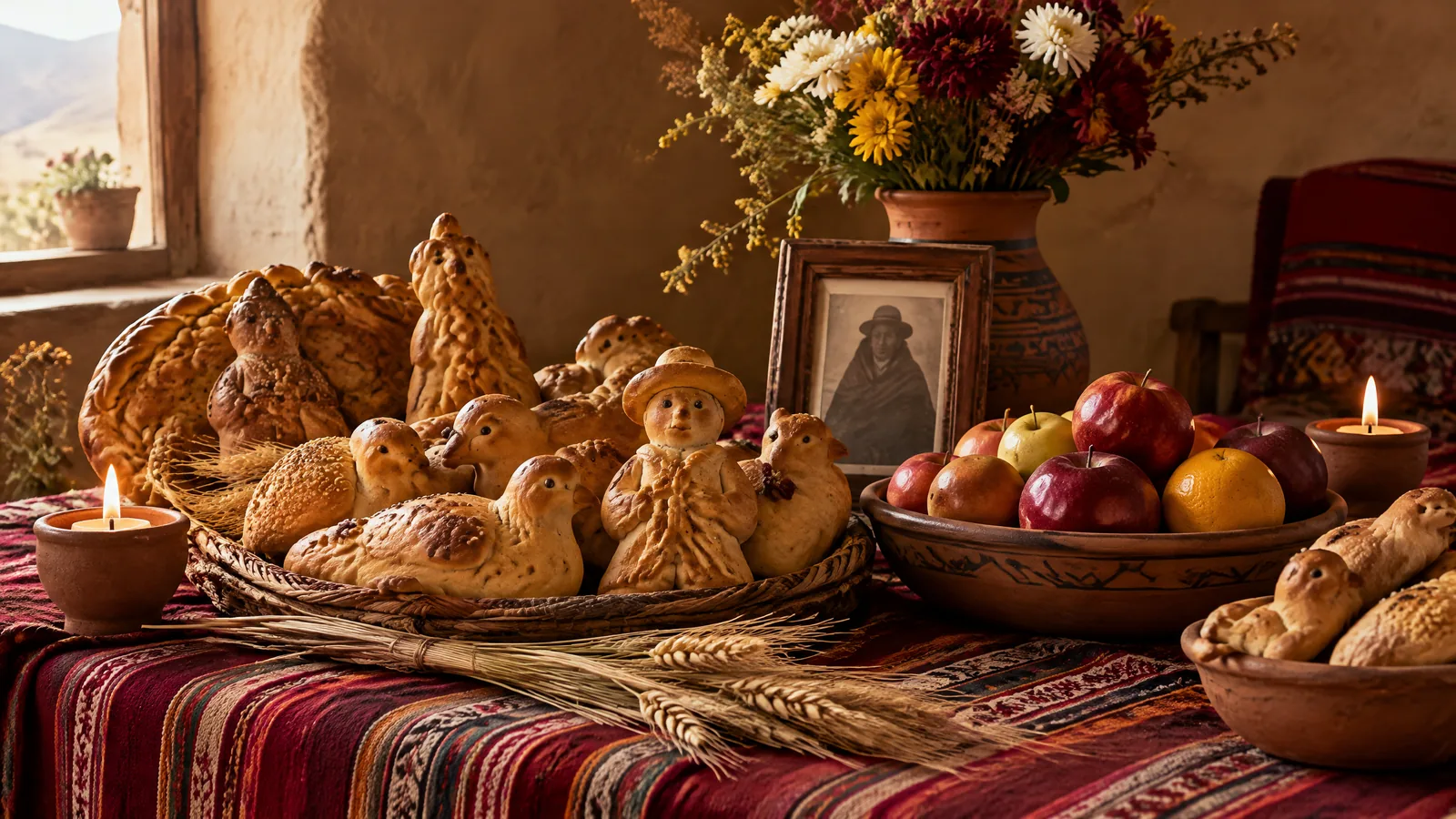
When families in Bolivia prepare for Todos Santos, remembrance can take the practical shape of a carefully arranged table. A photograph, bread, fruit, sweets, flowers, and favorite foods may be gathered as a mesa. In La Paz, municipal documentation describes tables placed at the General Cemetery as places for personal and collective remembrance, with framed portraits set among traditional baked goods and other offerings. 2
It is tempting to treat a familiar-looking table as if it had one fixed meaning. That misses the intimacy of the observance. Details vary by family, locality, language, religious practice, and the particular person being remembered. The account here focuses on practices documented in La Paz and on the Andean cultural vocabulary that helps explain the name and symbolism of the t’antawawa. It is an invitation to notice a living family practice with care, not a recipe for how every household in Bolivia observes the season.
A time to welcome memory
Todos Santos is observed around the first and second of November. In La Paz, the municipal cultural office describes a period beginning at midday on the first, when families understand the dead to return among the living, and continuing through the following day. 3 The occasion can include Catholic worship as well as family acts of welcome and farewell. At the General Cemetery, a celebration of Todos Santos began with Mass before participants gathered around a large mesa de difuntos. 2
This setting matters because it keeps the focus on relationship rather than spectacle. A mesa is not simply decoration for an autumn date. It is a place where grief, gratitude, faith, stories, and household knowledge can meet. The foods and objects placed there need not carry the same significance in every home. A family may choose items because they recall someone’s taste, work, affection, or everyday presence. That choice makes remembrance specific: the person is approached through the marks they left in the lives of others.
The season also brings people into shared spaces. Cemeteries, markets, kitchens, bakeries, and family homes each have their own rhythm. Yet an observant visitor should not assume that every visible table is public or available for inspection. Some are an offering within a family’s prayer and mourning. A respectful approach begins with permission, an unhurried manner, and the understanding that the most important part of the observance may be a conversation that is not meant to be recorded or repeated.
Reading the mesa with humility
A mesa can hold familiar foods alongside forms with symbolic force. The City Government of La Paz identifies the horse, the t’antawawa, and the ladder as elements that evoke the arrival of the dead. It also notes that families fill offering tables with things their loved ones liked. 3 These details are best approached as invitations to learn from the people who make the table, rather than as a universal codebook.
The ladder is one of the clearest examples. In an explanation given at a La Paz exhibition, it was associated with movement between alaxpacha, understood there as a place of sacred spirits, and akapacha, the earthly world. The same explanation connected the t’antawawa’s child form with remembrance and a hope of renewal. 4 Such words are rooted in a particular interpretive setting. They should be shared with attribution and care, not detached from the people and places that sustain them.
Food gives the mesa warmth and texture. A municipal account of a cemetery table lists t’antawawas, maicillos, bananas, sugar cane, alfajores, and other foods around a mother’s framed photograph. 2 The point is not abundance for its own sake. The table makes a home-like gesture of welcome. It allows a family to hold sorrow alongside generosity and to express affection through preparation, flavor, and memory.
The meaning held in bread
The t’antawawa is among the most recognizable offerings of Todos Santos in Bolivia. The word deserves careful spelling and explanation. A study held by the repository of the Universidad Mayor de San Andrés notes that t’ant’a means bread and that wawa refers to a child; it glosses the combined form as bread shaped like a child. The same study cautions that dropping the apostrophe changes the word: tanta means meeting, while t’ant’a means bread. 1
This is more than a typographic detail. It offers a small lesson in listening across languages. Writing t’antawawa with care recognizes that the bread belongs to a living linguistic and cultural setting. In family tables, the child-shaped bread may serve as an offering and as a powerful image of the person remembered. A municipal explanation in La Paz links it to a cycle in which a loved one is remembered through the image of return and renewed childhood. 4
T’antawawas may be shaped and decorated in many ways, and household methods can be handed down through baking days together. Their presence joins craft with memory. The dough must be prepared, forms made, faces or details considered, and bread baked in time for the table. For a family, that work can create room for elders to explain names, memories, and meanings while younger relatives learn with their hands.
Visiting and participating with care
If you are welcomed into a Todos Santos gathering in Bolivia, let the hosts set the pace. Ask before photographing a mesa, a cemetery visit, or a person at prayer. Do not touch food, objects, or pictures without an invitation. Listen before asking for an explanation, and avoid treating a mourning practice as a display. These simple choices honor both the dead and the living relatives who have prepared the space.
When speaking about the season, precise language is also a form of respect. Say that a custom is observed by a particular family or in a particular place when that is what you know. Refer to the bread as t’antawawa when using the Aymara-derived form, and recognize that a translation can illuminate only part of its meaning. Above all, allow the mesa to remain what it is: a personal act of welcome, memory, and continuing care.
Family heritage that remains personal
Todos Santos in Bolivia shows how heritage survives through ordinary, attentive actions. Someone chooses a photograph. Someone remembers a favorite food. Someone bakes bread, sets out fruit, lights a space for prayer, or tells a child why a particular object belongs on the table. The result is not a museum piece frozen in time. It is a seasonal practice shaped anew by the family that keeps it.
That is why the most respectful way to encounter the t’antawawa is not to reduce it to a symbol alone. Notice the skilled labor in its making, the language in its name, and the relationships gathered around it. In the context of Todos Santos, bread can carry memory with unusual tenderness: something made by hand, shared with intention, and placed where the living make room for those they still love.