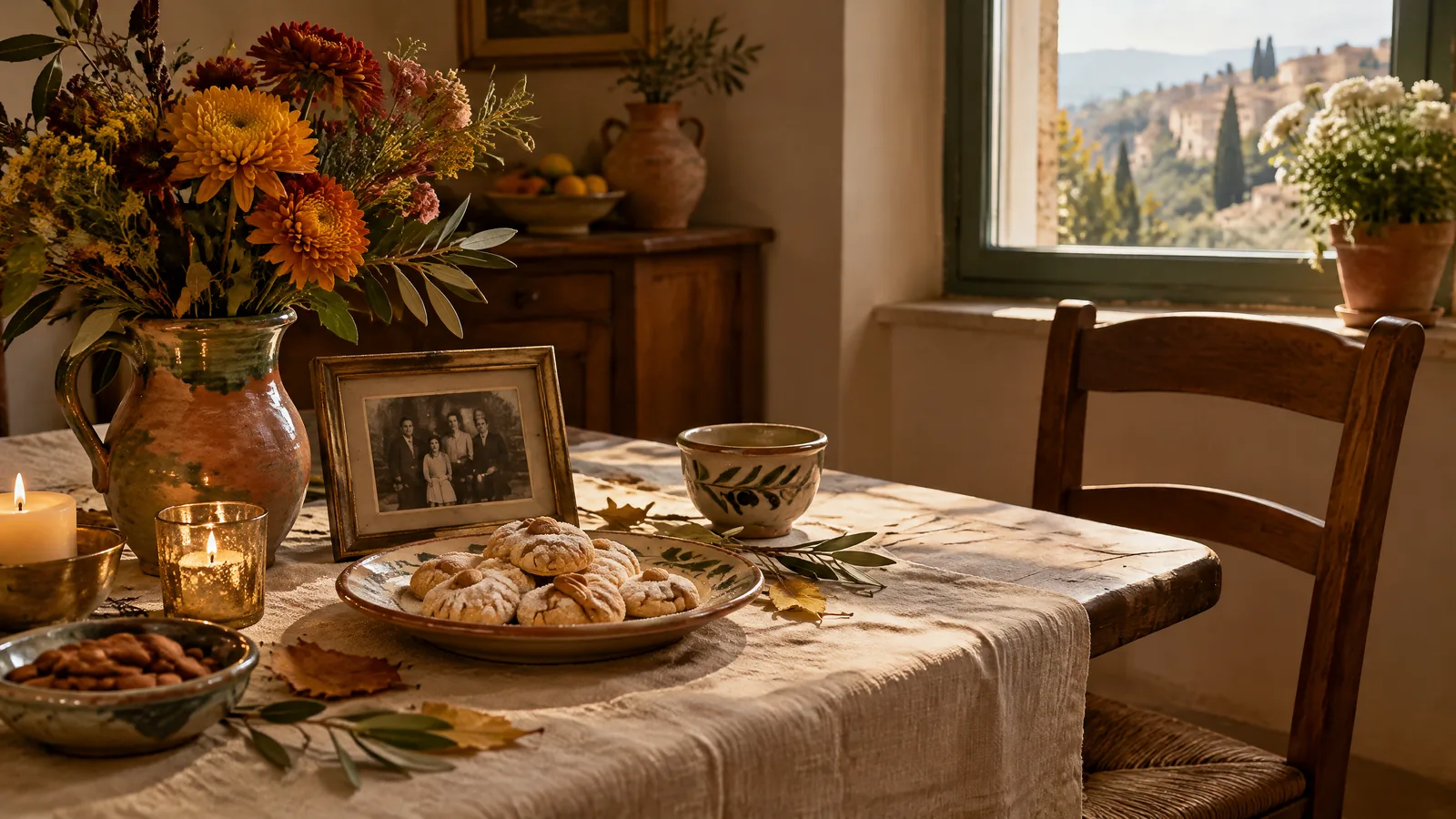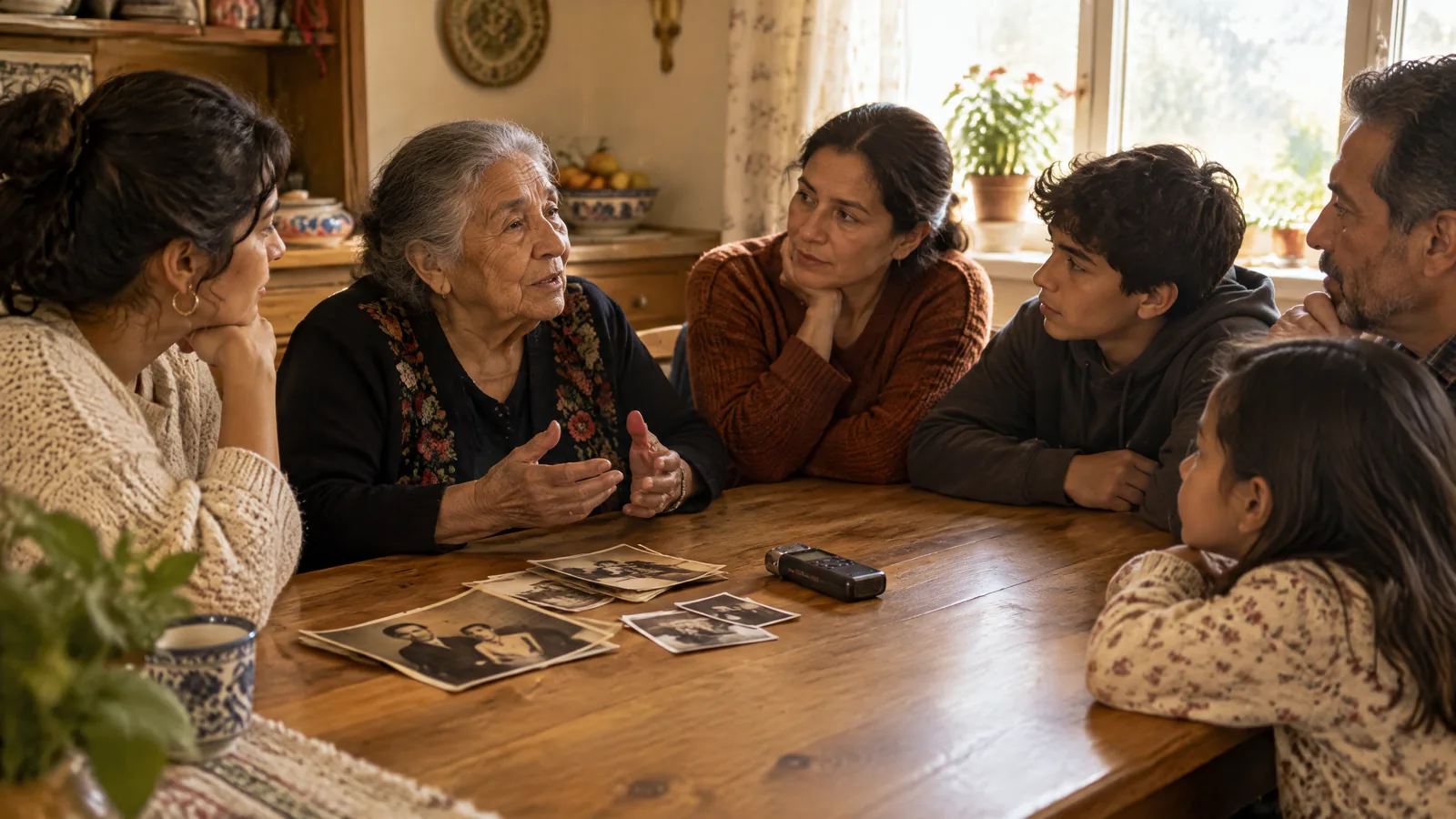
All Saints’ Day can be a good moment to ask a family question that is too easy to postpone: “What do we know about the people who came before us?” You do not need a studio, a formal archive, or a perfect family tree to begin. One unhurried hour, a few open questions, and a clear agreement about what will be kept can be enough.
In Barcelona, Tots Sants is publicly marked as a season of remembrance for the deceased, alongside family and seasonal traditions.2 A story circle fits naturally into that season because it turns remembrance into something living people can do together. It also gives younger relatives a chance to hear a voice, a phrase, or a vivid ordinary detail that may not exist in any document.
The goal is not to extract a complete biography. The goal is to listen with care.
Call it a conversation, not an interview
The word “interview” can make people feel examined. For a family gathering, begin with simpler language: “Would you be comfortable telling us a few stories about Mum?” or “Could we ask about what the village was like when you were young?”
Give the person a genuine choice. They may be happy to talk but prefer not to be recorded. They may want to answer only one question. They may ask that a story stay within the family. Accept those boundaries without trying to persuade them.
The Oral History Association treats preparation, interviewing, preservation, and access as linked parts of responsible oral-history work. Its guidance puts informed agreement and clear expectations before recording or sharing.1 For a family story circle, the principle is simple: explain what you hope to do, ask permission, and keep your promise.
Prepare a small, welcoming setting
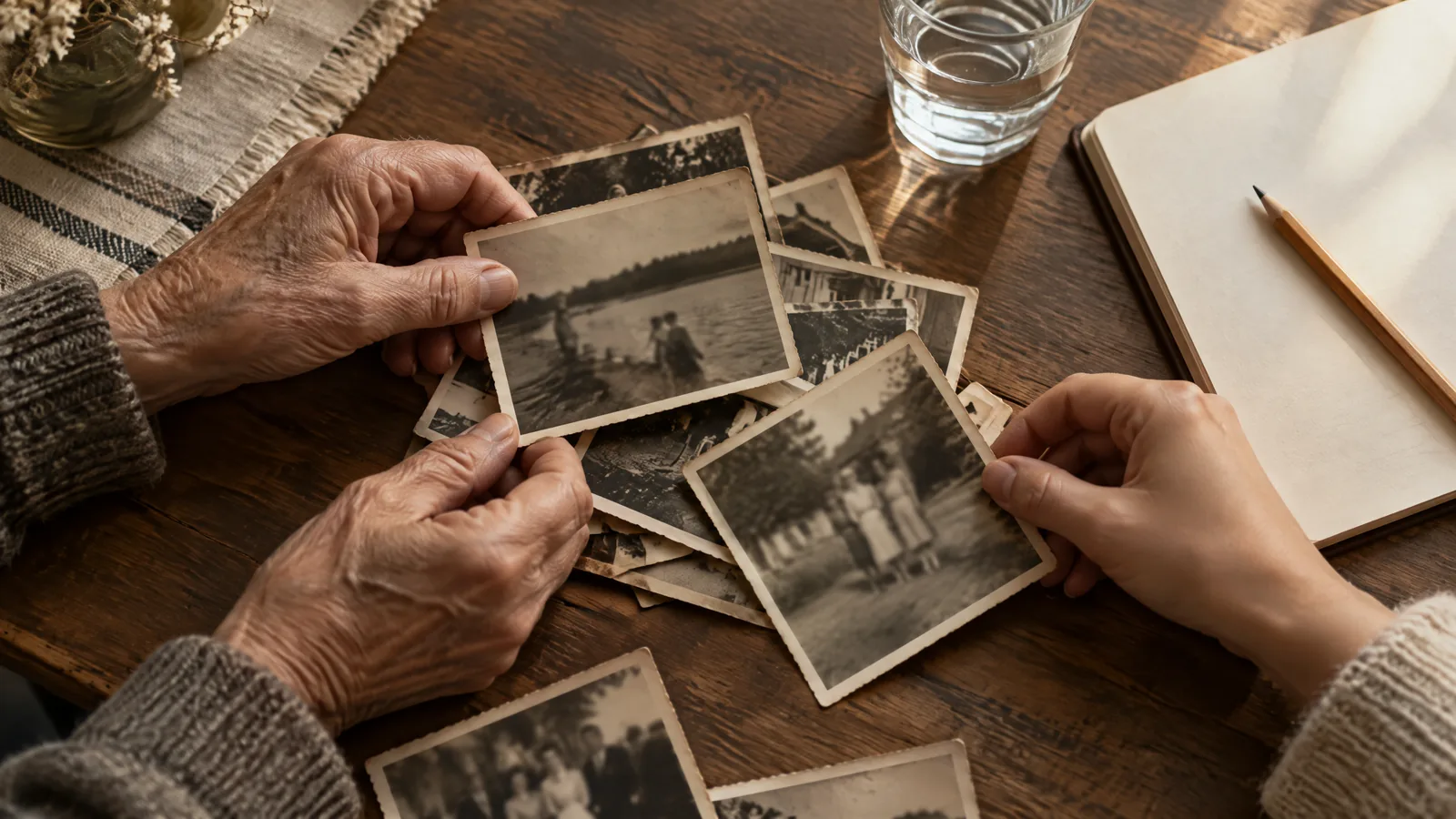
Choose a place with comfortable seating and as little background noise as possible. Put phones on silent unless one is being used to record. Have water or tea available. If photographs or objects might help, set out only a few. A crowded table can make the past feel like homework.
Before the conversation begins, say what will happen. For example:
We would like to spend about an hour hearing stories about our family. You can skip any question. We will not record unless everyone is comfortable. If we do record, we will keep it in the family folder and ask before sharing it more widely.
This introduction creates trust. It also lets a narrator correct the plan before emotions or memories are already in motion.
Ask questions that invite scenes
Questions that begin with “What was it like…?” usually produce richer answers than questions that ask for a verdict. Avoid asking a person to summarise an entire life. Ask for a moment, a place, a sound, or a routine.
Try these prompts:
- What do you remember first about the home where you grew up?
- Who taught you something useful, and how did they teach it?
- What happened on an ordinary Sunday in the family?
- Was there a food, song, saying, or object that seemed to belong to one person?
- What do you wish the younger generation understood about that time?
Follow the narrator’s lead. If they mention an aunt who mended clothes, ask what her hands looked like or where she kept the sewing tin. If they mention a move, ask what they carried with them. A single specific follow-up can turn a general memory into a story that younger listeners can picture.
The Oral History Association recommends open-ended questions, active listening, and follow-up questions that invite clarification and reflection.1 In a family setting, that does not mean pushing for disclosure. It means staying curious without demanding more than someone wants to give.
Allow memory to be uncertain
Family stories are not court transcripts. Dates can blur. Two siblings can remember the same room differently. Someone may say, “I think it was in the late sixties,” while another says, “No, it was after the move.”
Keep both the story and the uncertainty. You might write: “María remembers the event as happening in the late sixties; Carlos places it after the family moved to Badalona.” That note is more valuable than choosing a winner on the spot.
When a claim matters for a family tree or public history, verify it later through documents. During the story circle, let people finish their memories first. The purpose is to preserve perspective, not to cross-examine it.
If you record, make the agreement clear
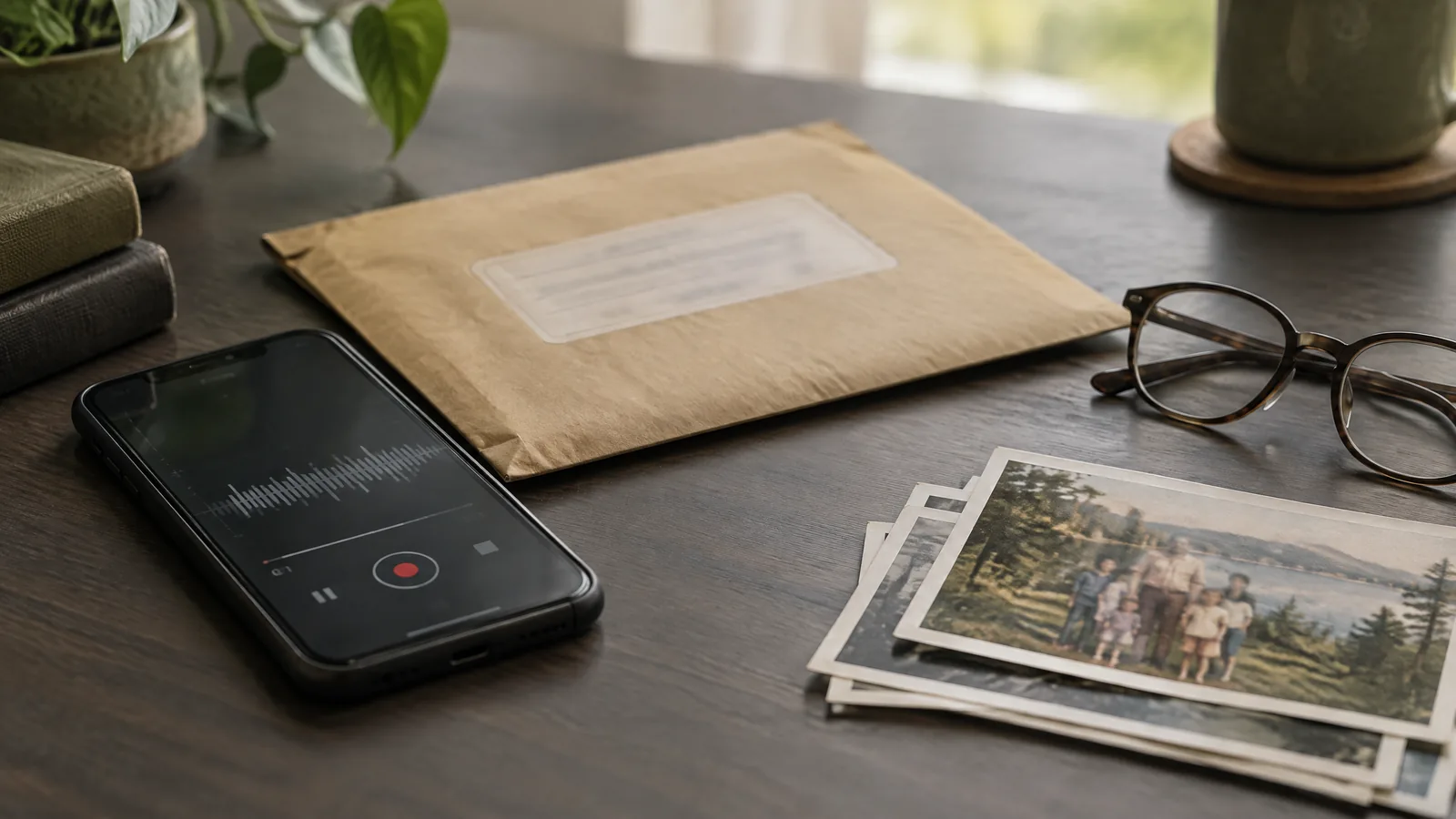
A phone voice memo can be enough for a family record, but recording changes the conversation. Ask explicitly before pressing start. Name the date and broad location at the beginning, without giving out a private street address. Say who is speaking and the general subject.
For example: “This is a family conversation recorded on the first day of November at Ana’s home in Barcelona. Pilar is sharing memories of her father, Joaquín. The recording is for private family use.”
Afterward, ask again what may be kept, copied, or shared. If someone changes their mind, respect it. Do not upload a recording, photograph, or quotation to social media just because it feels meaningful. A family story can be precious without being public.
Make a simple preservation plan
A recording is only useful if future relatives can find it. Save it with a clear name, such as “November-family-conversation_Pilar_Memories-of-Joaquin.m4a”. Add a short note with the speakers, themes, and any restrictions. Keep a copy in at least two places that the family can access, such as a shared folder and an external drive.
The Oral History Association advises planning for care and storage from the beginning and making redundant copies after an interview.1 For an ordinary family project, that does not need to be complicated. It means avoiding the situation in which the only copy is left on one person’s phone.
End before the room is exhausted
An hour is plenty. Near the end, ask one gentle closing question: “Is there anything you would like future family members to remember?” Thank the person who spoke. Do not immediately turn to paperwork or a long list of follow-up tasks.
You may choose one small next step for another day: scan two photographs, label a recipe, ask for the spelling of a place name, or schedule another conversation. The family archive grows through repeatable acts of care, not a single intense session.
A story-circle worksheet
Write these details down while they are fresh:
- Date and broad location of the conversation
- Names of people present
- Whether recording was agreed, and who may access it
- One story worth preserving
- Names, places, dates, or spellings to check later
- One follow-up question for the next conversation
A story circle is a modest offering to the future. It says: this person’s ordinary life contained details worth carrying forward. Around All Saints’ Day, that can be a meaningful act of remembrance in its own right.