Ma’nene Among Toraja Communities: Care, Kinship, and Continuing Memory
In Indonesia, Ma’nene is a deeply local practice associated with some Toraja communities in South Sulawesi. It is often described through the careful cleaning and reclothing of deceased relatives who have been laid in family burial places. That brief description can sound startling when separated from its setting. Within the communities that observe it, however, Ma’nene is bound to kinship, obligation, affection, and the continuity of family memory. A University of Indonesia account presents the practice as a way families honour those who have died and renew enduring ties with them. 1
It is important to begin with scope. Ma’nene is not a single practice for all people in Indonesia, nor does it follow one fixed script among all Toraja families. A study focused on the Toraja context identifies it as an ancestral legacy connected with Aluk To Dolo, while also noting that it continues in some Christian communities in North Toraja and is approached differently within those communities. 2 That diversity matters. The most responsible way to understand Ma’nene is to listen for the particular family, locality, and belief context in which it is being discussed.
Care made visible
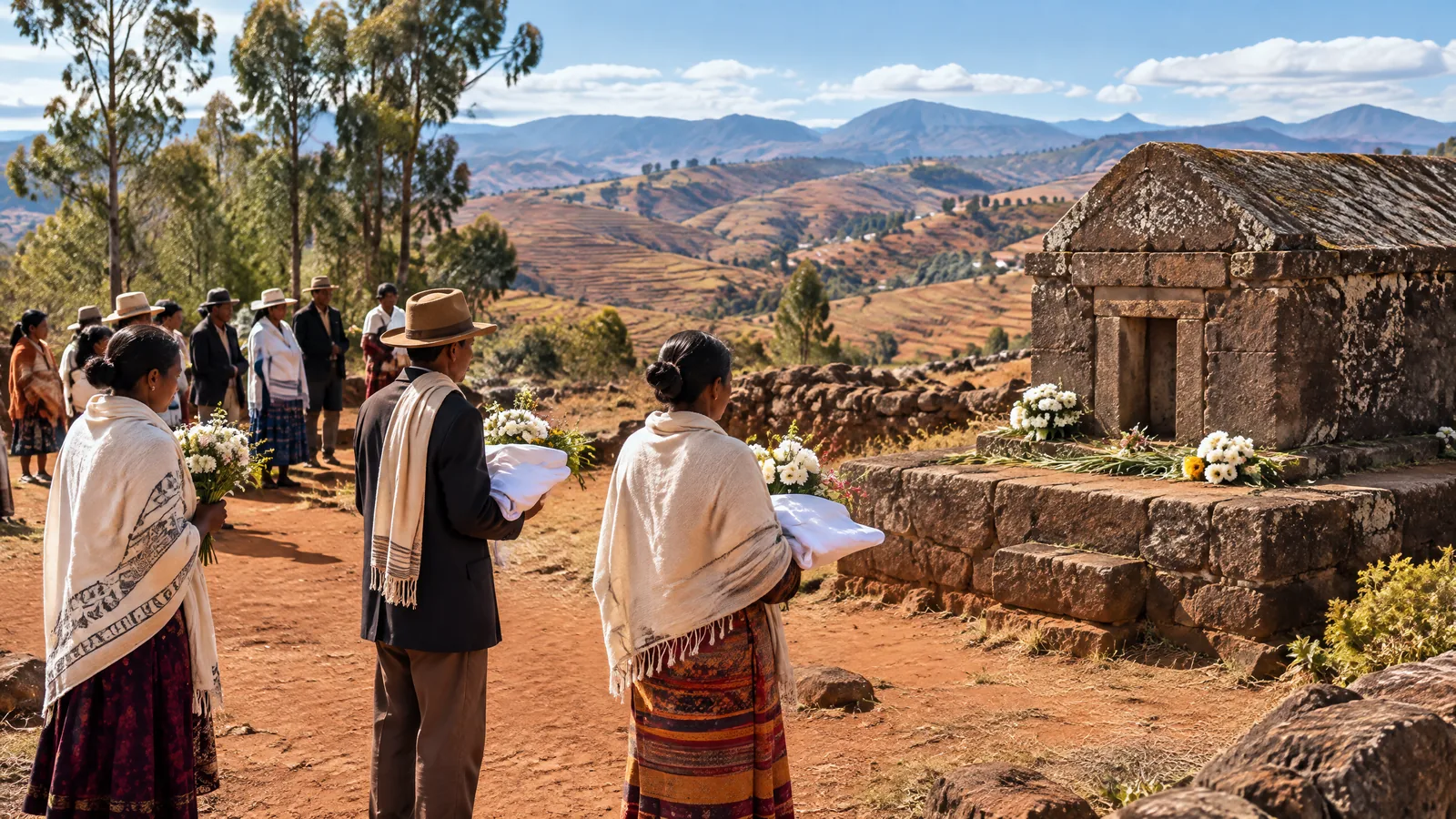
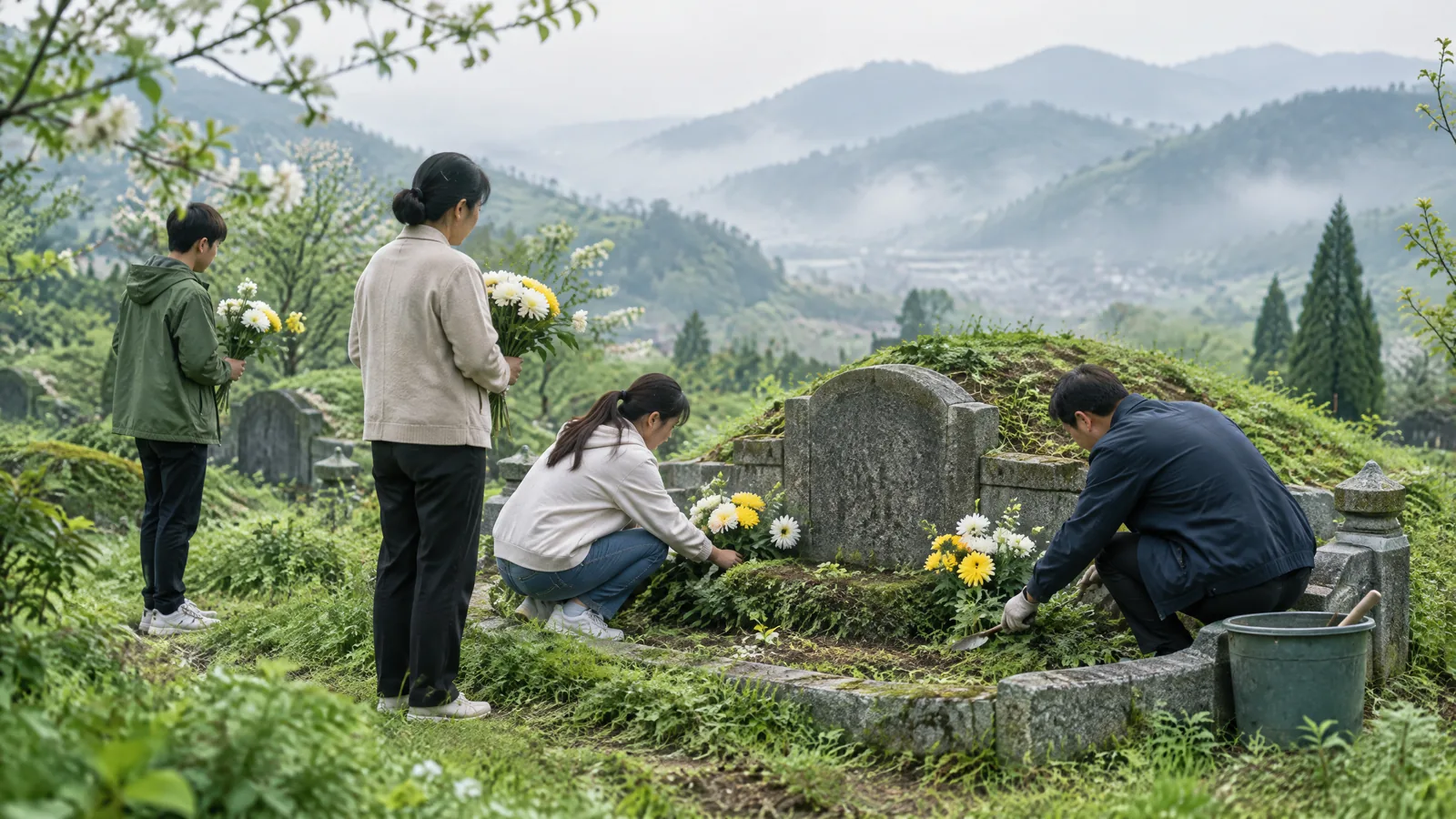
The actions associated with Ma’nene are forms of deliberate care. The University of Indonesia account describes relatives gathering at family graves, bringing out the coffin with attention, removing dust, and placing fresh cloth or clothing on the deceased before returning the coffin to its resting place. 1 The physical work is not incidental. It makes a relationship visible through attentiveness, coordination, and time given by living relatives.
For families, the preparation can be as meaningful as the moment at the grave. Relatives may travel home, arrange clothing, share responsibilities, and reconnect across generations. Elders can explain names, relationships, and the histories attached to a burial place. Younger relatives can see that remembrance is not only a private feeling. It can also be a family task carried through practical care. The same University of Indonesia account describes Ma’nene as a gathering that strengthens ties among relatives across generations. 1
This does not make grief simple or uniform. Every family has its own memories and its own emotional boundaries. Yet the practice shows how care for the dead may also involve care for the living: people make room for one another, share work, and keep a family history present. It is better understood in those terms than as an unusual image detached from the people for whom it has meaning.
A practice within a wider Toraja setting
Ma’nene belongs within a wider landscape of Toraja social and mortuary life, but it should not be used as a catchall label for every tradition involving death. A provincial government journal describes Ma’nene and Rambu Solo as distinct Toraja rites that illuminate the place of the deceased in family and community life. 3 The point is not to flatten those rites into one event. It is to recognize that relationships, ritual responsibilities, and remembrance can extend beyond a funeral itself.
The scholarly study also provides a useful caution against easy assumptions about belief. It records different responses among Christian Toraja people and considers an interpretation in which Ma’nene is not ancestor worship or a request for blessing, but an ethical act of respect for the body and the deceased. 2 This does not settle what every participant believes. Rather, it shows why broad claims about religion, purpose, or spiritual meaning should be avoided. Community voices and family choices deserve more weight than a simplified explanation.
Details can vary as well. Clothing may be customary or contemporary, and the roles taken by relatives are shaped by family knowledge and local practice. 1 A respectful account therefore avoids declaring one timetable, one set of objects, or one interpretation to be universal. The core lesson is not spectacle. It is the seriousness with which people sustain a bond of care.
Respecting family authority and privacy
Ma’nene concerns deceased relatives and living families. It is not an open performance, and outsiders should never presume a right to enter a burial place, observe a ceremony, take photographs, or ask relatives to explain intimate loss. Any access must come through a clear invitation and the guidance of the host family or relevant local authority. If that invitation is absent, the respectful choice is to keep distance.
When the practice is discussed in writing, in a classroom, or in conversation, language matters. Avoid labels that make families sound strange, frightening, or frozen in the past. Avoid treating a person’s remains as an object for curiosity. Say where the practice is rooted, acknowledge that participation and belief are not uniform, and remember that the people involved are someone’s parents, grandparents, siblings, or children. These basic choices protect dignity and make room for Toraja people to speak about their own heritage.
What continuing memory can mean
Ma’nene offers a clear reminder that remembrance can be active rather than abstract. Its meaning lies not in copying a practice outside its cultural home, but in noticing the values it makes visible: careful attention, shared responsibility, and a willingness to carry family stories forward. Families elsewhere may find their own respectful ways to name relatives, preserve photographs, record an elder’s memories, care for a grave, or pass down the history of an object. Those choices should arise from their own relationships and beliefs.
For Toraja communities and families who observe Ma’nene, the practice can keep kinship present across the boundary of death. It asks for labour, memory, and regard. Seen with that context and restraint, Ma’nene is not a curiosity about mortality. It is a locally rooted expression of family care, sustained by the people to whom it belongs.