Famadihana in Madagascar: Remembering Ancestors Through Family Care
Famadihana is often rendered in English as the turning of the bones. It is a form of secondary burial in which families may reopen an ancestral tomb, tend to the remains of relatives, renew their shrouds, and return them to the tomb. The practice is rooted in relationships among living kin, ancestors, place, and family history. It deserves to be understood as more than a striking image: it is work of remembrance carried out within particular communities and family obligations.
No single account of Famadihana can speak for all people in Madagascar. A major historical study describes secondary-burial practices as fluid and regionally varied, with Famadihana especially associated with highland Madagascar. 1 An anthropological account similarly identifies the practice among most Merina communities of the central highlands, while a Yale cultural summary records a Famadihana among Betsileo communities. 3 4 These are important boundaries. Meaning, timing, ritual detail, and the people responsible for a ceremony are shaped by kinship, locality, faith, resources, and family decision.
A practice with a regional history
Famadihana has a history, not a fixed script from an unchanging past. Research published by the American Society for Ethnohistory traces transformations in highland secondary burial during the nineteenth century. It describes the renewed importance of moving remains across distance and transferring them between tombs as kin established new stone sepulchres. The same research notes that these ceremonies required considerable time, energy, and resources, and could reinforce local networks of loyalty and authority. 1
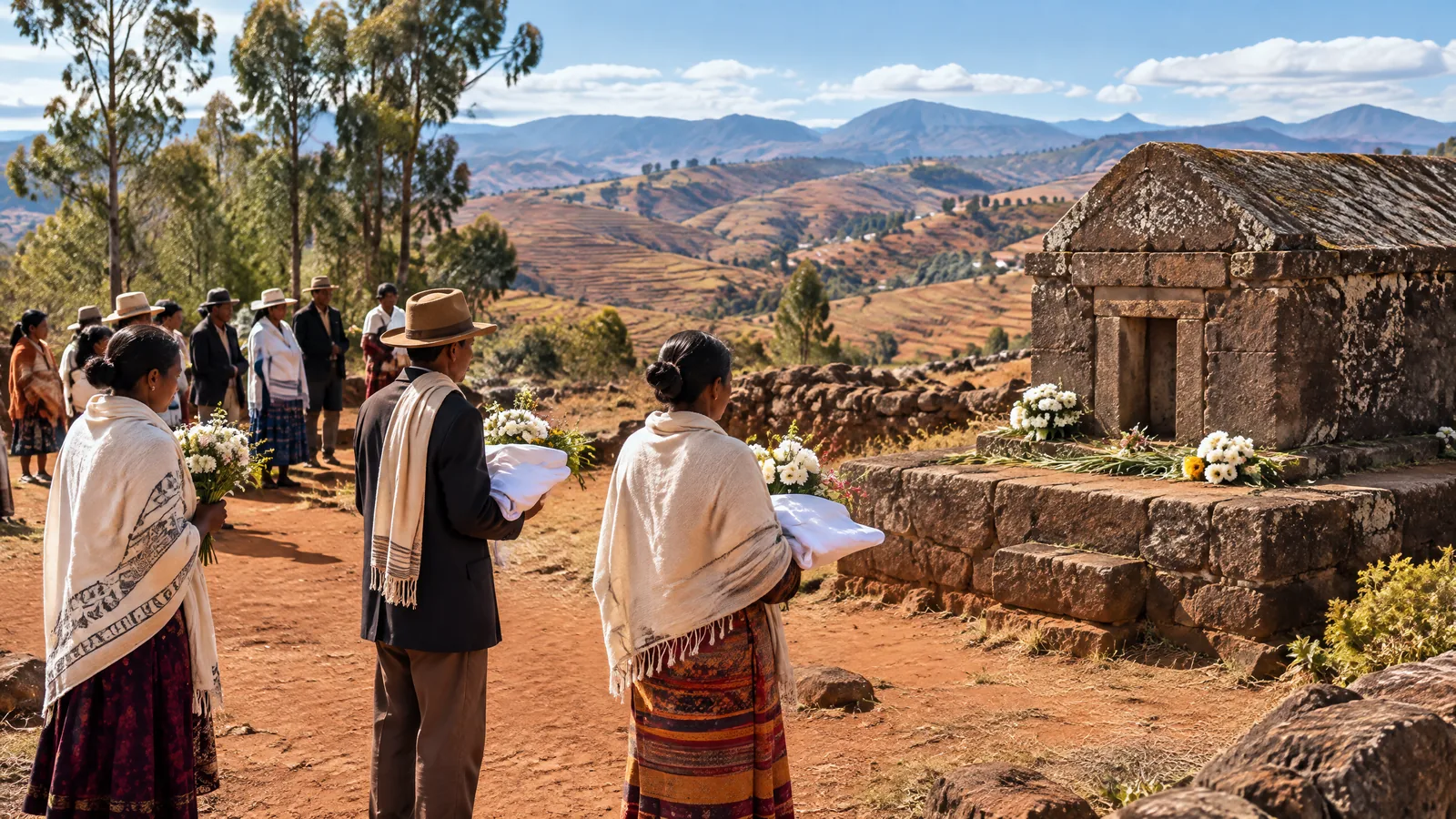
That history helps explain why a tomb is not merely a background setting. It can be a family place where belonging, responsibility, and lineage take material form. The choice to hold a Famadihana may involve many relatives and careful preparation. It is not an event that can be reduced to a timetable or assumed to occur in the same way from one household to the next. A family may decide when the obligations of remembrance, the condition of the tomb, and the gathering of kin make a ceremony meaningful and possible.
Renewal at the ancestral tomb
Accounts of the practice describe relatives’ remains being brought from the family tomb, wrapped in fresh shrouds, and returned after ceremonies held in their honor. 2 The Yale summary of Betsileo life likewise describes Famadihana as an occasion to enter tombs, remove, and rewrap remains; when a new tomb is inaugurated, remains may be carried there from older tombs. 3 These actions should not be treated as a spectacle. They are part of a family’s relationship to people who have died and to the resting place that connects generations.
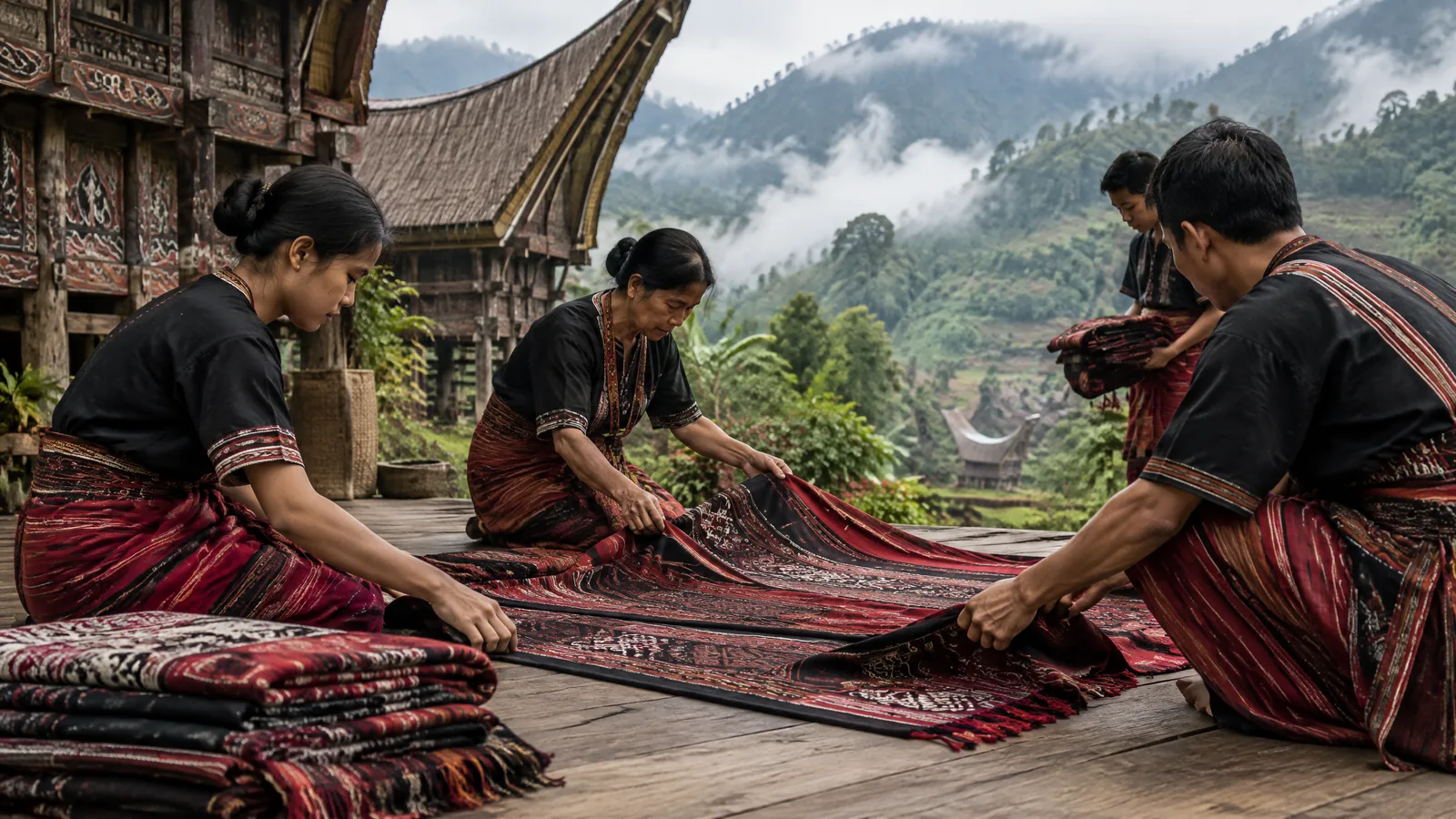
Shrouds carry practical and ceremonial weight. The Yale summary notes the historical importance of raw-silk coverings known as lamba, used as mantles for the living and as funerary shrouds for the dead in Betsileo communities. 3 Fresh cloth, careful handling, and the return to the tomb can express continuing responsibility rather than a break with the deceased. Where music, movement, food, or a large gathering are part of a ceremony, their meanings remain within the context set by the family and community.
Kinship, memory, and the work of gathering
The living do not remember alone in Famadihana. Relatives may travel, coordinate expenses, prepare food, repair or clean a family place, and share accounts of those named in the tomb. The gathering can therefore give younger family members a chance to learn names, relationships, and stories that may not appear in a written family record. The remembrance is active: it asks people to show up for one another, to recognize shared obligations, and to renew a connection to ancestors through collective care.
University of Southern Mississippi research describes razana, ancestors, as central to Malagasy ideas of social relations and notes Famadihana among most Merina communities of the central highlands as a way people remember those who came before through present action. 4 This is a useful frame, so long as it is not expanded into a claim about every household or community. Ancestors and tombs have different histories and meanings in different Malagasy settings. Careful language respects that diversity rather than flattening it.
Learning without turning ceremony into display
A respectful approach begins with restraint. Famadihana concerns the dead, the living relatives who care for them, and the communities whose customs give the ceremony meaning. It is not a public performance for outsiders. No one should presume a place at a private family observance, take photographs, touch objects, or ask relatives to explain intimate practices in the moment. An invitation and the guidance of the family are essential; even then, quiet attention is more appropriate than directing or documenting the occasion.
Historical images and descriptions also need care. The University of Southern California record that describes Famadihana belongs to an archive of missionary collections. The archive explains that such materials document missionary work and reflect missionaries’ experiences of communities abroad. 2 That context does not make the record useless, but it does mean readers should avoid treating older outsider language as the final word on Malagasy life. Community knowledge and scholarly accounts that name their specific setting offer a firmer starting point.
Remembering with specificity
Famadihana is best approached through the people and places at its center. It may involve the opening of a tomb, the renewal of shrouds, a return to ancestral ground, and a gathering of relatives. Yet its deepest significance cannot be detached from the family that undertakes it. To speak carefully about Famadihana is to recognize that remembrance is not abstract. It is made through kinship, labor, stories, and responsibility, renewed in forms that belong to particular highland communities and households.