A new record should lead to a clear update, not a family argument. Keep a note of what the tree said before, say what the new record changes, and explain what still needs checking. That approach respects the relative who shared the earlier information and helps everyone see that a family tree is a working account, not a final verdict.
A correction can be a sign of care
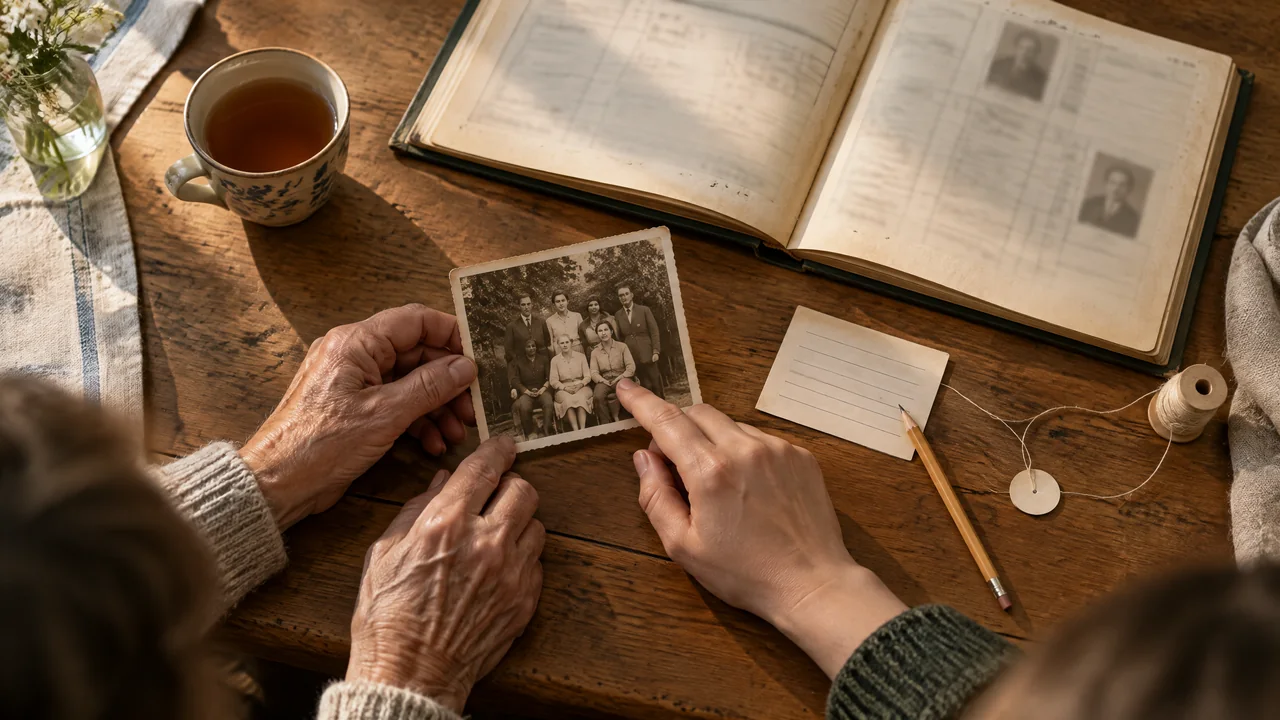
A newly found certificate, census entry, parish register, letter, or photograph may alter a date, a name, or a relationship. It can feel unsettling, especially if an older relative gave the original information with love and confidence. Yet the earlier entry was not necessarily careless. It may have been the best answer available at the time.
Think of the update as adding context, rather than taking something away. A record might show that two people with the same name were different individuals, that a household included a step-parent, or that a reported birth year needs a wider range. The relationship people lived and felt can still matter even when the research description becomes more precise.
Professional genealogy guidance calls for source citations, careful assessment of evidence, and resolution of conflicting evidence before drawing a sound conclusion.1 In family work, this does not mean every relative must become a specialist. It means treating a correction as a reason to show your reasoning kindly.
Keep the record, the story, and the question in separate places
A helpful family tree distinguishes three useful kinds of information. First is the research record: what a particular document, image, or register says, together with enough detail to find it again. The National Archives’ genealogy guidance points researchers to citation practices for textual, microform, audiovisual, electronic, and online records.2 A source note is not a decoration; it helps another family member understand what was actually consulted.
Second is the oral story: a memory, a family saying, or an interview. Oral stories can preserve detail that no document carries, such as a nickname, a move, or the atmosphere of a household. They should be identified as recollections, with the speaker and date if the person is comfortable being named. Oral History Association guidance also advises users to recognise the subjectivity of interviews and, where possible, verify information presented as factual.3
Third is the unanswered question. Write “parentage under review” or “possibly the same person,” rather than quietly turning a possibility into a fact. This leaves room for a later record and prevents a temporary guess from becoming family lore.
Use a small change log every time
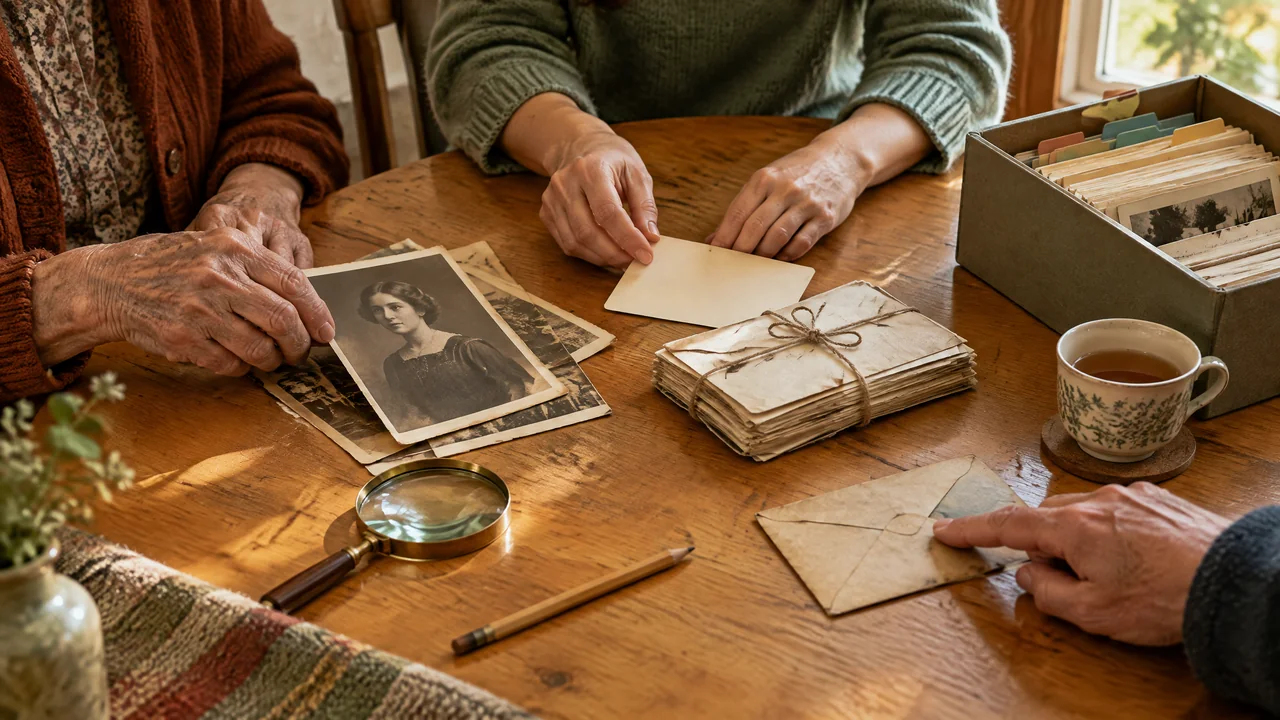
A change log is simply a short note beside the update. It gives future readers a fair account of why a conclusion changed. It also saves you from having to reconstruct the decision months later. The old conclusion need not remain in the main display, but it can remain in the working note as “previously listed as …” with its basis.
Use this original Family Tree Update Card whenever a record changes something important:
- Person or relationship affected:
- What the tree said before:
- What is being updated now:
- New record or information: include title, date, place, and where it was found.
- What the record says: copy only the relevant detail in your own words.
- Why this changes the conclusion: name the link between the record and the update.
- Confidence and remaining uncertainty: supported, possible, conflicting, or needs review.
- Oral stories connected to this update: who recalled them, if they agree to be named.
- Next check or open question:
- Date and name of the person making the note:
Keep the wording modest. “A 1911 census entry supports this household arrangement” is clearer and gentler than “the old tree was wrong.” If two records disagree, record both. A conclusion may change again after more evidence appears; that is normal research, not a failure.
Correct a relationship without judging anyone
Relationship corrections deserve extra care. A record may change how a biological, legal, social, or household connection is described. Before making a broad announcement, pause and ask what the evidence establishes and what it does not. A document can support one piece of the story without explaining every personal circumstance around it.
Use neutral language: “The newly located record names …” or “We are updating this connection because …” Avoid assigning motives, repeating private speculation, or turning a research finding into a judgement of a past generation. If the change concerns a living person, ask before sharing identifying details or a sensitive story. The Board for Certification of Genealogists’ code calls for informed consent before publishing personal, genealogical, or genetic information disclosed by someone, and for sensitivity about information concerning living people.1
Not every relative will want to discuss an update. Someone may prefer not to be named, may want a story left out, or may opt out of the conversation altogether. Accept that choice. It is possible to preserve the research question without asking anyone to disclose more than they wish.
Tell relatives early, briefly, and without blame
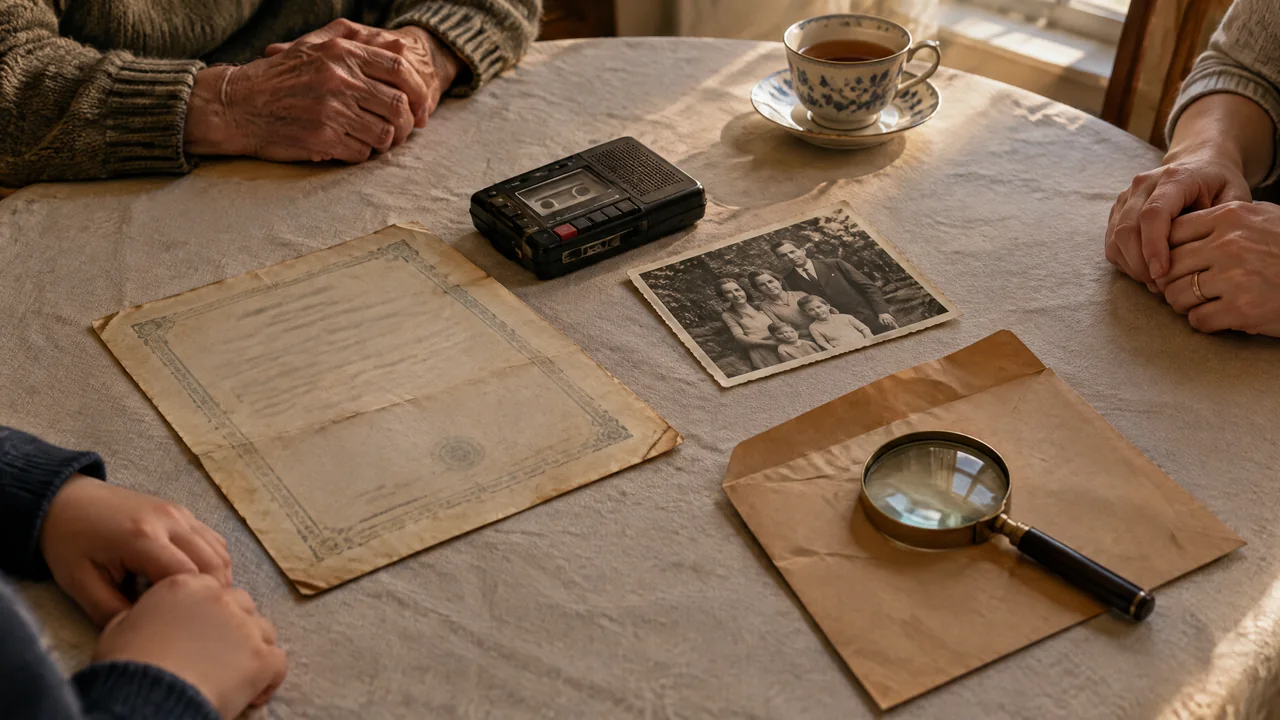
Silence can make a small revision seem mysterious. A short, private message often works better than a dramatic reveal. Invite a relevant relative to look at the source before you describe the update more widely. For an oral story, agree in advance on what may be repeated and how it will be labelled. Oral history best practices emphasise explaining the process, documenting informed consent, and respecting an interviewee’s choice to refuse topics or restrict access.3
You might send this message:
Hello [name], I found a record that may change how we describe [person or relationship] in our family research. I have attached or described the source and added a note showing what is certain and what still needs checking. This is not a judgement on anyone or on the information shared earlier. Would you like to look at it before we update our shared notes? It is completely fine if you would rather not take part.
This wording makes the invitation voluntary. It also gives the recipient a clear role: review the record, offer a memory, suggest another source, or simply decline.
Let the tree show honest confidence
A living family project benefits from simple, consistent flags. You might use “recorded in a source,” “family recollection,” “conflicting evidence,” and “question for future research.” The goal is not to make the tree look unfinished. It is to make its confidence visible.
When an update is complete, thank the contributor who found the record and the person who shared the earlier story. Both may have moved the research forward. A good revision leaves a trail that says, in effect: this is what we knew, this is what we learned, and this is what we are still respectfully asking.
If you would like an optional place to explore a collaborative family-tree project, visit MemContinuity’s Family Tree.