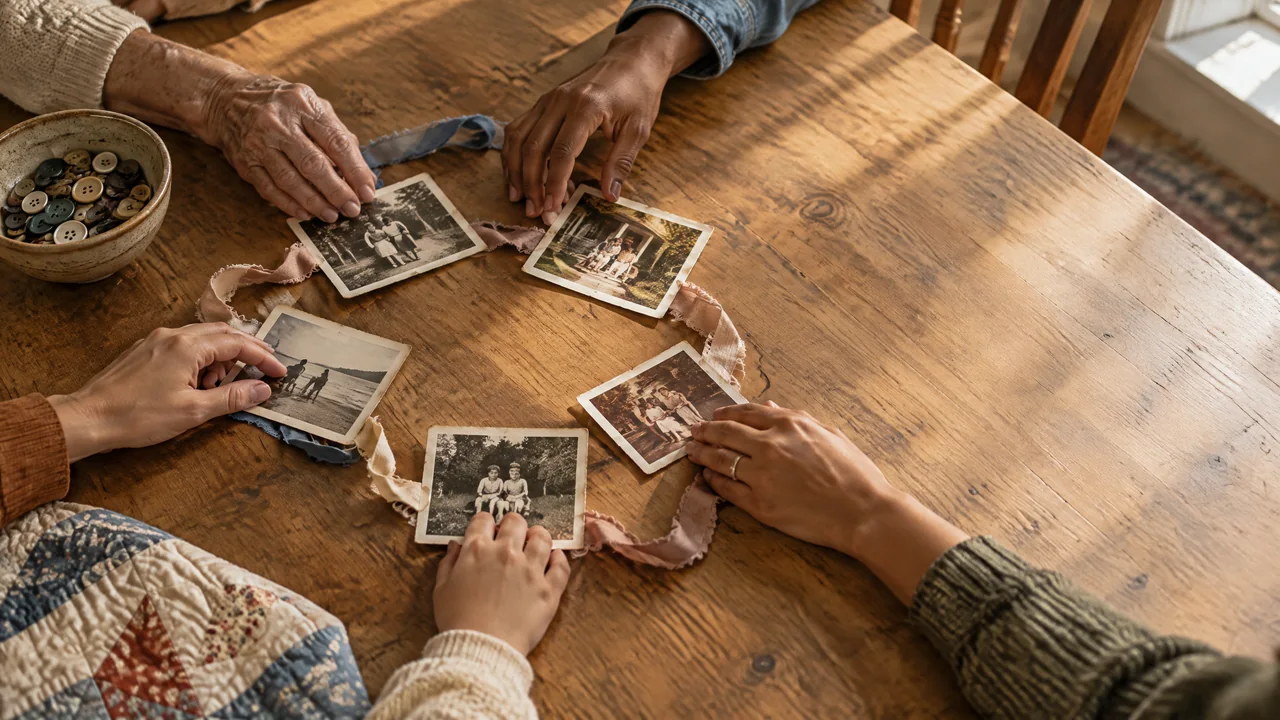
A living family tree can include chosen family by recording the relationship as the people involved describe it, alongside—not instead of—any known biological or legal facts. The aim is not to make everyone fit one label. It is to leave an honest, kind record of who mattered to whom.
Begin with the person’s own words
Chosen family may include a friend who became a daily companion, a neighbour who raised the children next door, a mentor, a former partner who remains family, or a godparent-like presence without a formal title. What matters is the relationship’s meaning, not a traditional branch.
Start with an invitation, not an assumption. Ask, “Would you like this connection included?” Then ask what words feel right. One person may say “my chosen sister.” Another may prefer “lifelong friend,” “auntie by love,” or simply a name with a short note. If they do not want a label, do not add one for convenience.
This is especially important for living people. The National Genealogical Society advises family historians to have evidence of consent before assuming a living person agrees to further sharing or publication, and to share identifying information only as the person has expressly agreed. 1
Record connection without overwriting context
A thoughtful entry can hold more than one kind of truth. Keep a relationship description separate from research facts. For example, a note might say, “Mara described June as her chosen grandmother; they met through the neighbourhood garden in the 1980s.” If a birth, marriage, guardianship, adoption, or other documented relationship belongs elsewhere in the family history, retain the source-backed wording there. This is about clear family memory, not deciding anyone’s legal status.
Avoid making a close relationship sound biological when it is not, and avoid treating biological connection as the only kind that deserves space. A short explanation is usually better than a forced category. It lets future contributors understand both the relationship and its context.
When a story involves several living people, ask each person separately where practical. They may remember a friendship differently, or one may want no note. A respectful tree can say less. It does not have to settle every disagreement.
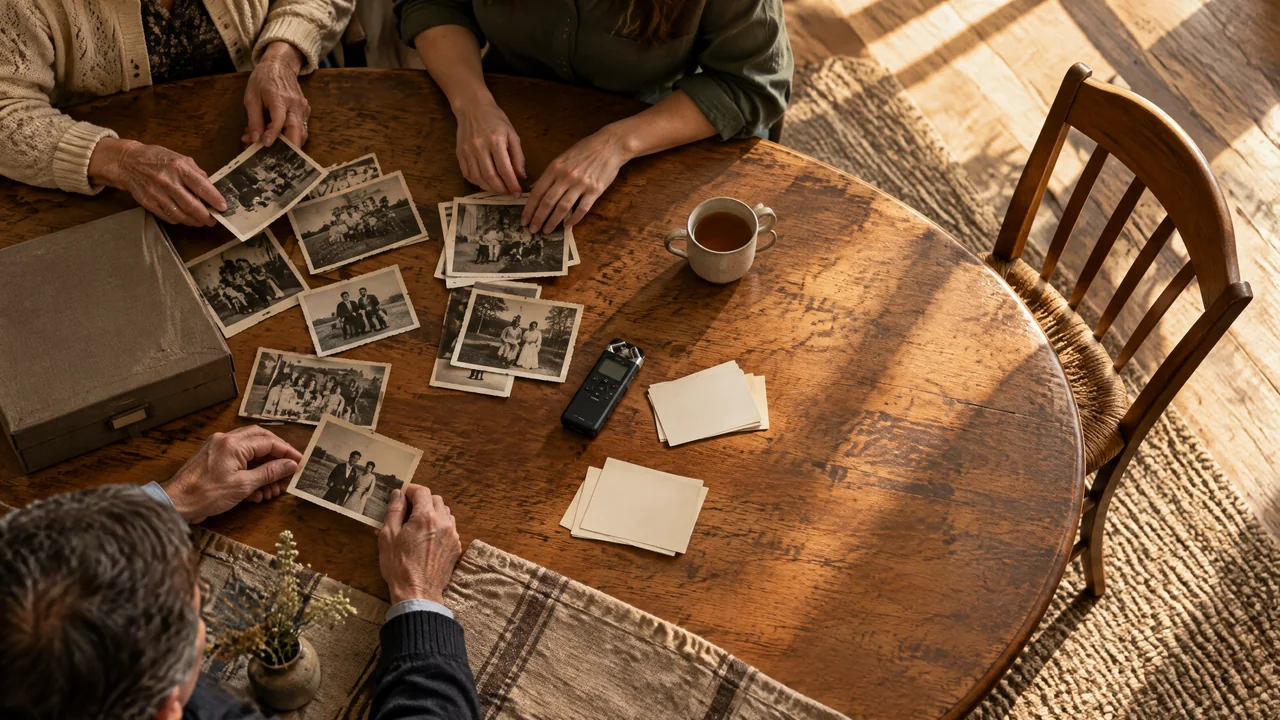
Use this gentle relationship-entry worksheet
Use only welcome parts. Contributors may change their minds, ask for fewer details, or opt out.
- Name to display: What name should appear, if any?
- Words for the connection: “How would you describe this relationship in your own words?”
- Role in everyday life: What did this person mean or do? For example: shared holidays, school pickups, advice, music, care, or companionship.
- Time and place: When did the connection begin, if known? A decade or place can be enough; exact dates are optional.
- What supports this note: Is it a research record, an oral story, a personal memory, or an unanswered question? Add the source, speaker, or date of conversation.
- Names and details to leave out: Are there names, locations, photographs, or personal circumstances that should not be included?
- Who may see it: Is this for a small family conversation, a private working copy, or not for sharing beyond the contributor? Do not promise privacy or permanence that you cannot personally control.
- Review point: “May we read this wording back to you before we keep it?”
The Oral History Association recommends that people discussing an interview agree in advance about its purpose, recording, review, preservation, access, and likely uses. It also says narrators’ expectations should be part of that conversation. 2 Even for a short family note, use that model: explain what you are making and let the contributor decide whether to take part.
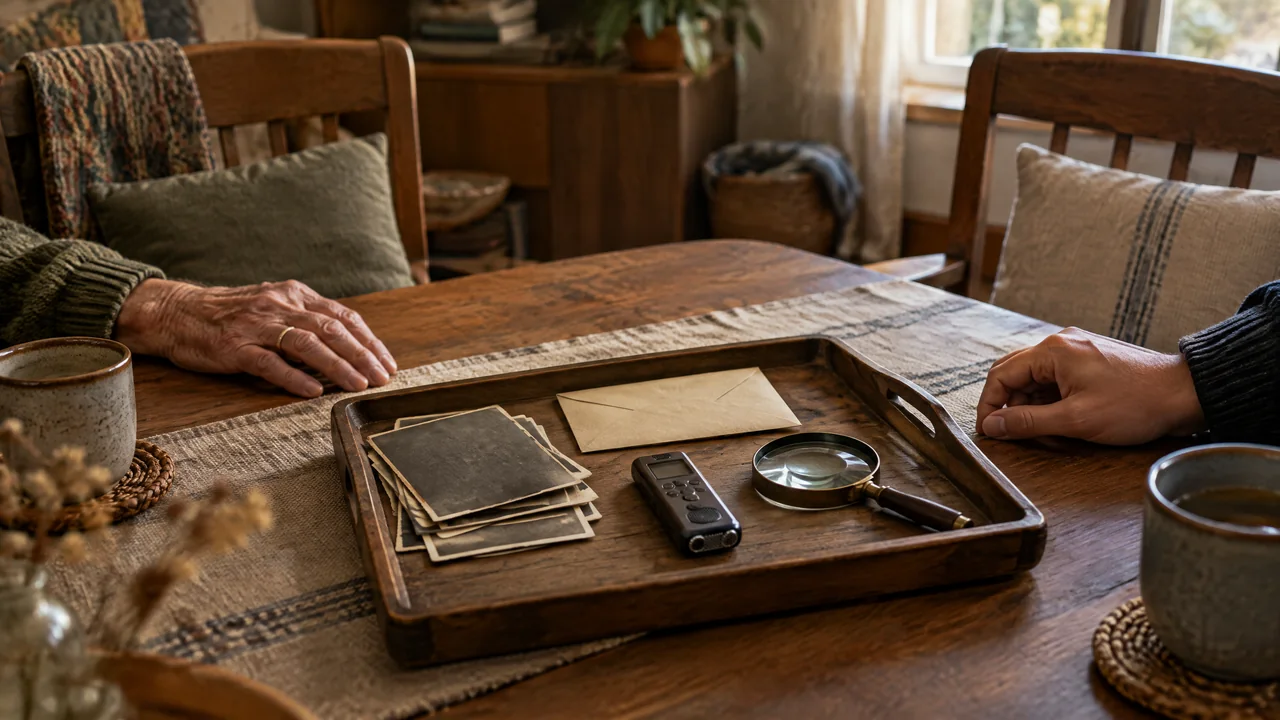
Keep records, stories, and questions distinct
A living tree becomes more trustworthy when it shows what kind of information each note represents. A research record might be a cited letter, a dated photograph, or an official document. An oral story is a person’s recollection, told from their point of view. An unanswered question is simply a question, not a fact waiting to be repeated.
Try a small set of plain markers: Record, Story, and Question. Under a story, name the storyteller and the date it was shared: “Story told by Elias, 2026.” Under a question, write what would help answer it: “Ask whether Lena wants this connection named.” This protects both accuracy and dignity. Oral-history guidance likewise asks users to recognise the subjectivity of interviews and, where possible, verify information presented as factual. 2
Do not turn a memory into a verdict. “We often spent Sundays at Ana’s home” is different from “Ana raised us.” Both may be meaningful, but the first may be the only point everyone agrees on. If later records or another person’s account add context, keep the earlier note and date the update rather than quietly rewriting the past.
Ask for consent as the relationship changes
Consent is a continuing courtesy, not a single box checked long ago. Before adding a photograph, a full name, a location, or a sensitive part of a story, pause and ask again. Be clear about the wording you plan to use and who may read it. “No,” “not yet,” and “please leave that out” are complete answers.
Professional archival ethics also place privacy alongside access and call for appropriate, documented restrictions, particularly for people who did not have a voice in a collection’s creation or use. 3 Your family project can follow the same spirit: do not make someone’s life more visible than they have asked for.
If a contributor is no longer living, sensitivity still matters. Consider whether a detail could expose, embarrass, or hurt someone who is living. You can preserve a private note, use a general description, postpone the entry, or leave a gap. A gap is not a failure. It can be an honest sign that the family is choosing care over speculation.
Let the tree stay open to revision
Chosen-family entries do not need to be permanent declarations. Language and relationships change; a person may later prefer a different name or less detail. Put a review date on a note when that would help. Invite corrections without demanding explanations.
This approach makes the family tree more useful over time. It holds biological, legal, and chosen connections in their proper contexts, while making room for the people who made a life feel like family. It also gives future relatives a better example: listen first, cite what can be checked, label memories as memories, and leave room for what is not yet known.
Optional next step: If you would like an optional place to explore a family-tree project, visit MemContinuity’s Family Tree.