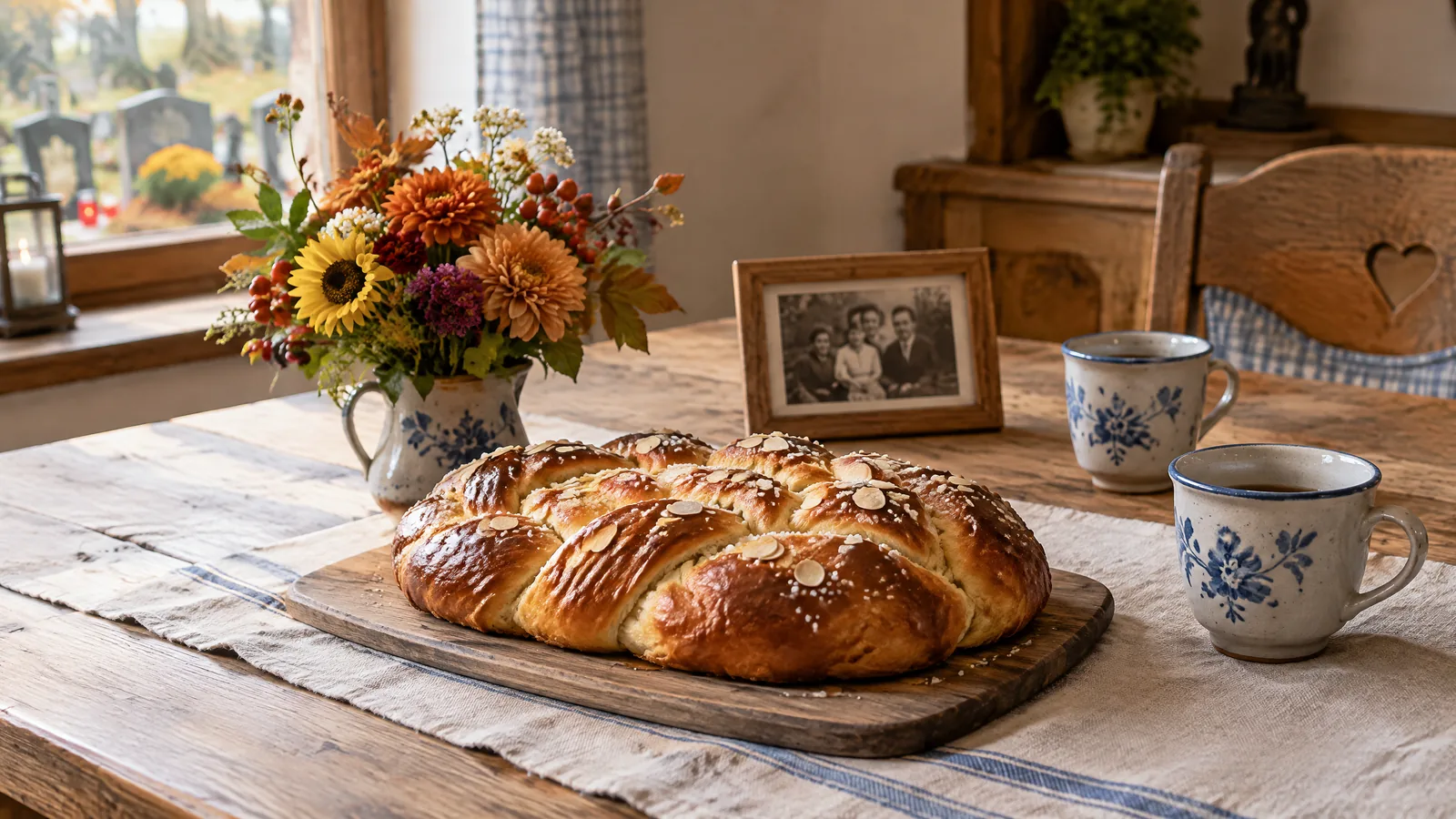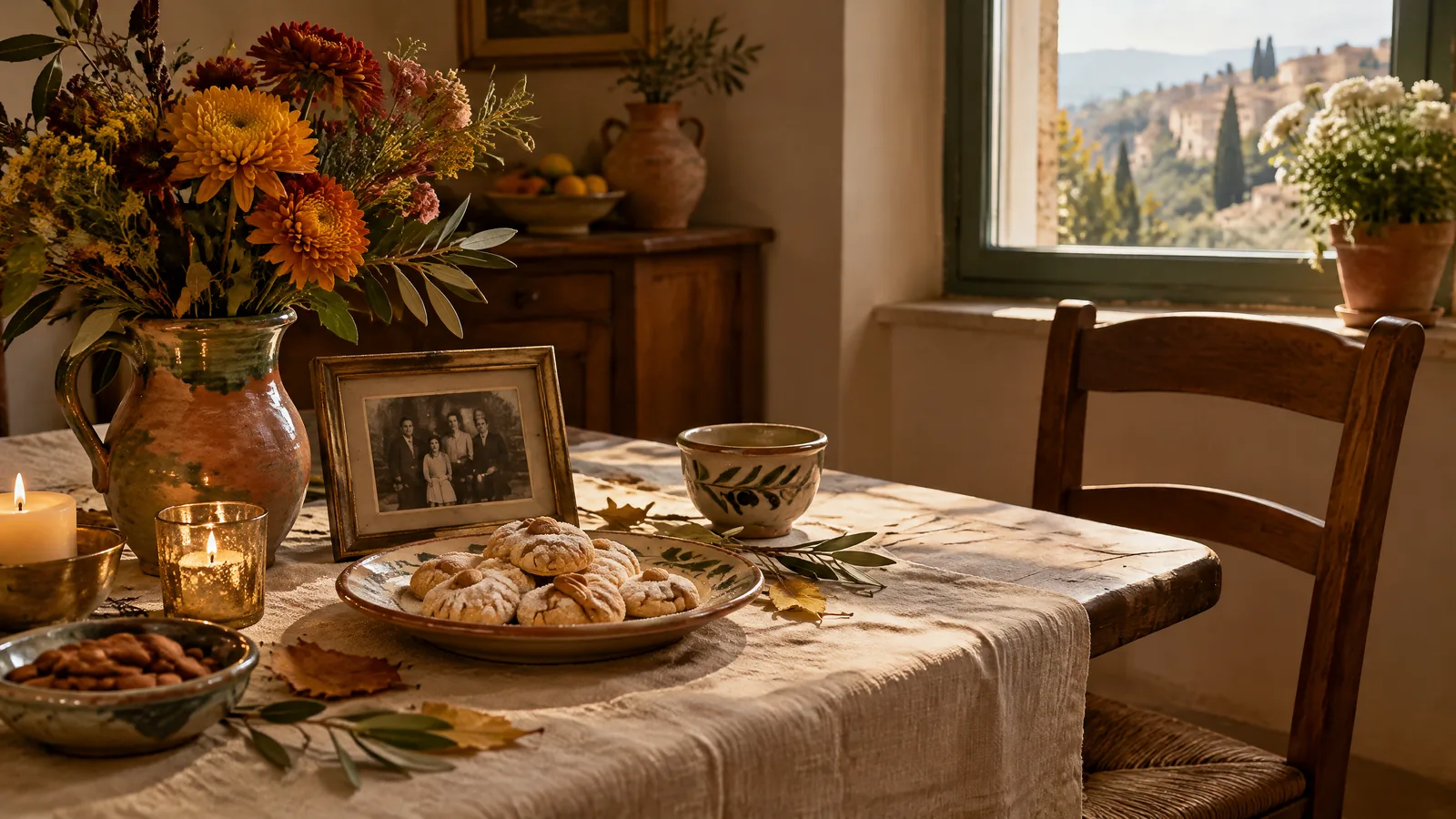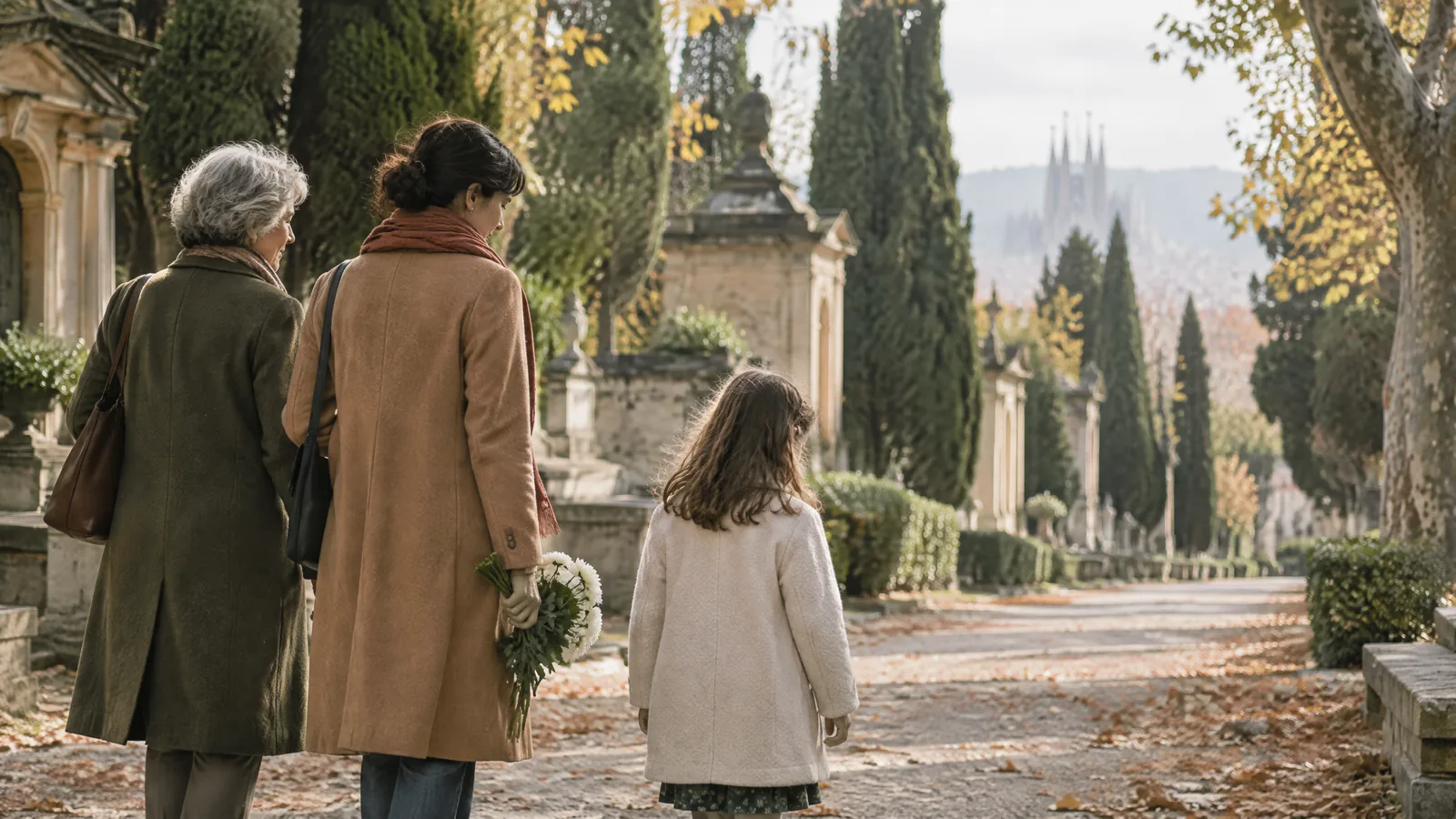
Día de Todos los Santos does not need to become a full day of perfect remembrance. A family can mark the first day of November with one visit, one shared story, and one small moment of quiet. The point is not to perform grief or prove devotion. It is to make room for people who mattered, in a way that feels honest to the people who are here now.
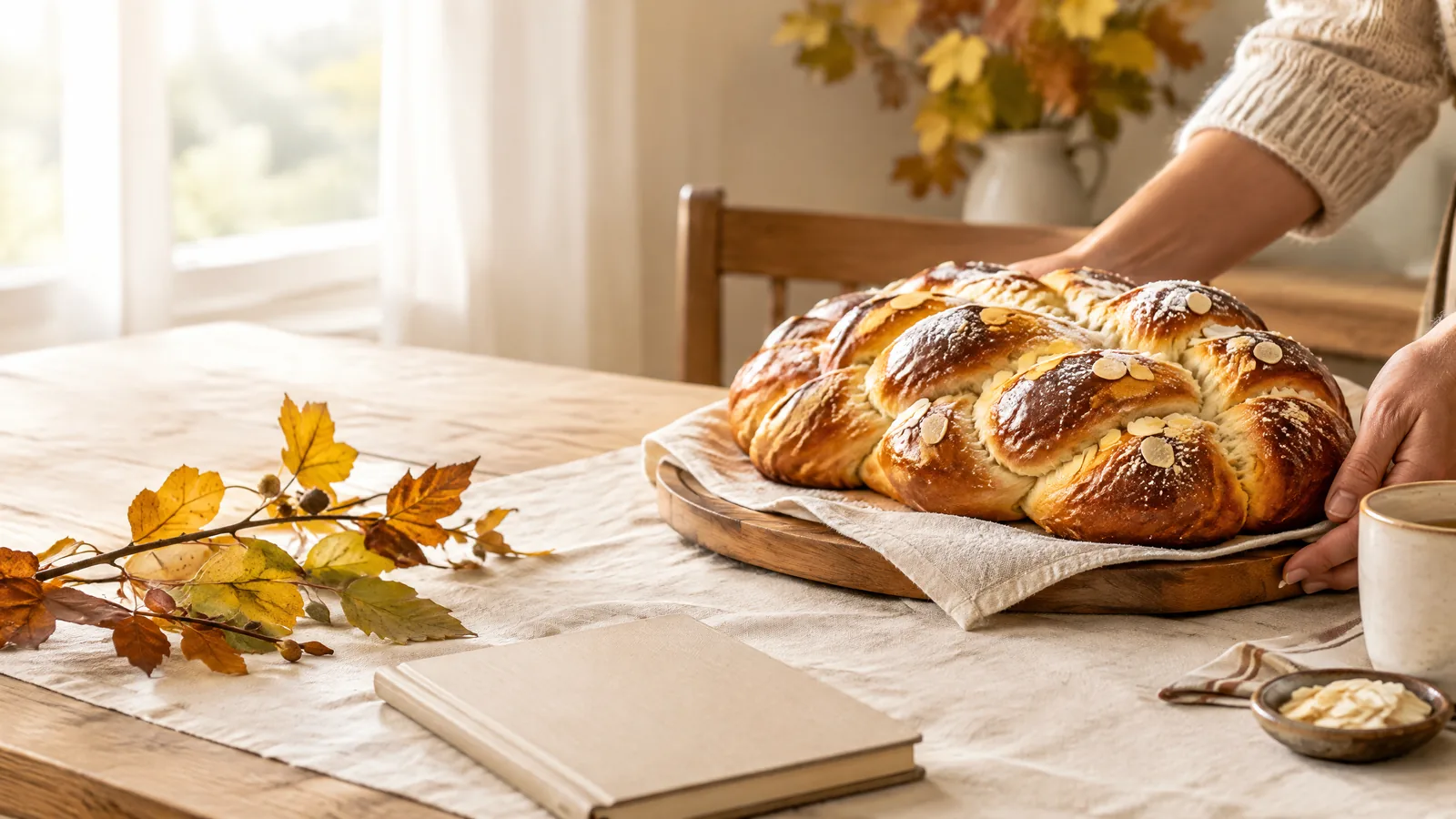
In Spain, the first day of November is the Catholic Solemnity of All Saints. The following day is the commemoration of the faithful departed. The Spanish Episcopal Conference describes them as distinct celebrations, even though family cemetery visits and flowers often happen around both dates.1 In Barcelona, Tots Sants is also a public season of remembrance, cemetery visits, flowers, chestnuts, and panellets.2
That context can help a family name what it is doing. It is not necessary for every relative to share the same beliefs or the same memories. A thoughtful plan gives people more than one way to take part.
Start with one shared intention
Before setting a time, ask a simple question: what would make this day feel worthwhile for us? The answer might be visiting a grave, attending Mass, making a seasonal food, looking through photographs, or checking in with someone who finds the date difficult.
Choose one intention rather than a long list. A household with young children may want a gentle introduction to a great-grandparent they never met. Siblings may want time to tend a grave without trying to solve old disagreements. A person who is grieving a recent loss may prefer a short visit and no formal gathering afterward.
A useful invitation is: “On the first day of November, I would like us to remember Grandad in a way that feels manageable. Would you prefer a visit, a story at home, or both?” The wording leaves room for a real answer.
Keep the two dates clear without making the day rigid
For a Catholic family, the distinction between All Saints’ Day and the commemoration of the faithful departed may guide prayer, Mass, or a cemetery visit. The Episcopal Conference notes that cemetery visits are often associated with the first day of November in Spain because it is a public holiday, even though the following day is specifically devoted to the faithful departed in the Catholic calendar.1
For a secular or mixed-faith household, the distinction can still be useful cultural context. It is fine to say, “Today we are taking time to remember the people who came before us,” without adopting words or practices that do not belong to the family. A good remembrance does not require everyone to use the same language for loss.
A simple family plan
The plan below can be shortened. It is deliberately modest, because a plan that people can actually complete is more valuable than an elaborate one that creates pressure.
Begin by gathering one name and one object
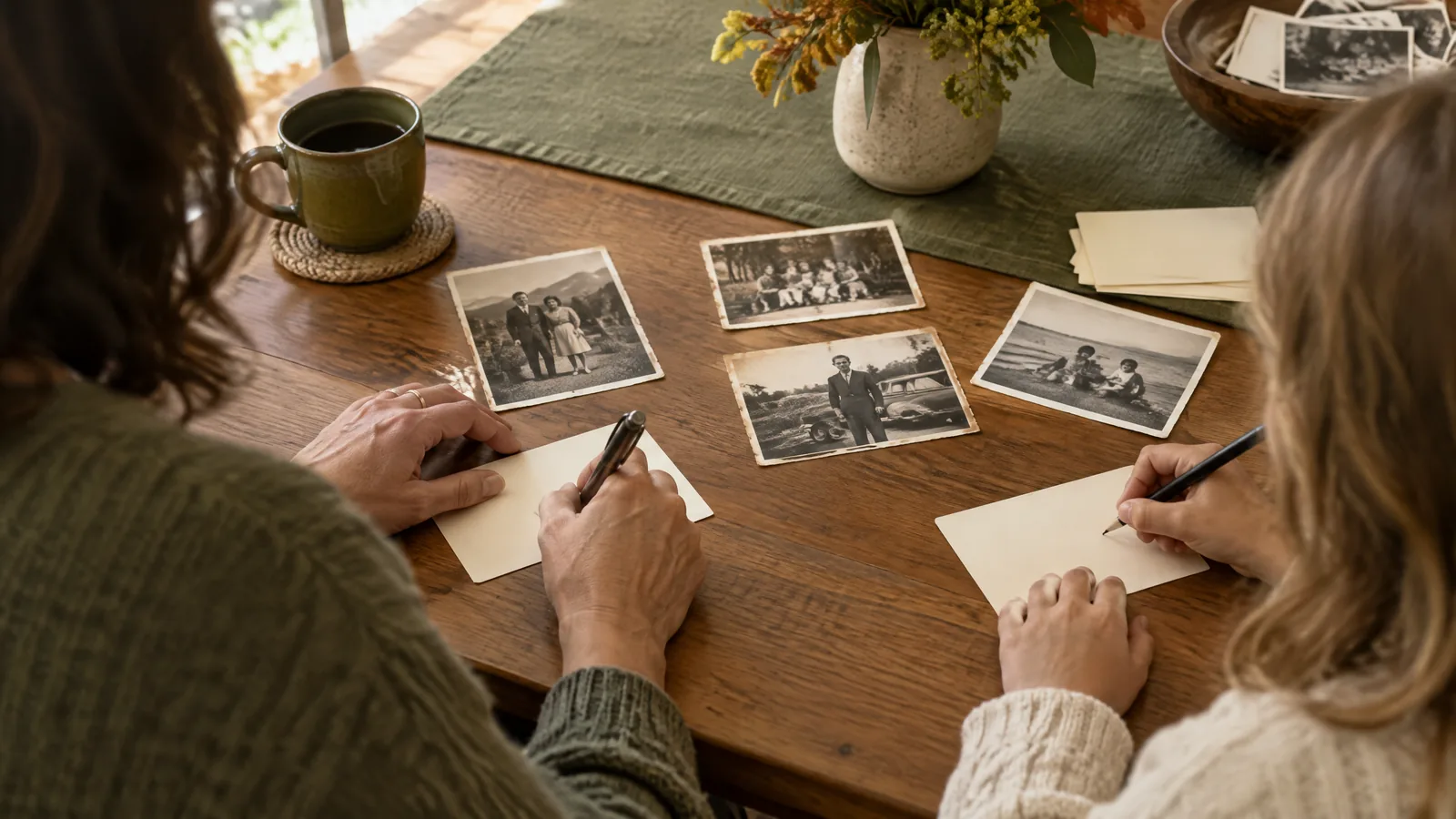
Invite each person to bring, choose, or name one thing connected to someone who has died. It might be a photograph, a recipe card, a tool, a scarf, a favourite song title, or simply a written name. Do not insist on an object. Some people carry a memory more privately.
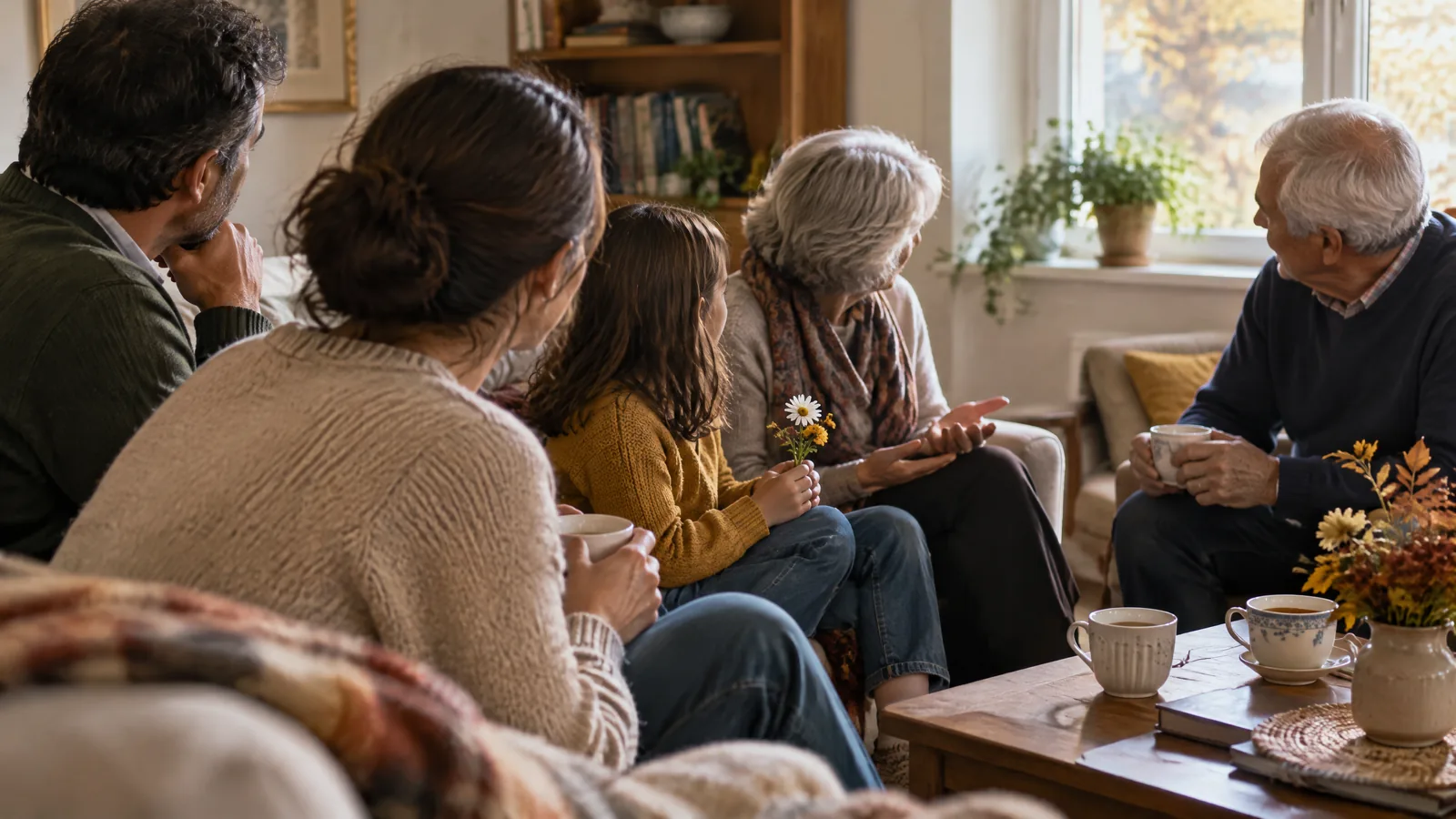
Place the names or objects together for a few minutes. Ask each person to say only what they wish to say. A child might share one fact. An adult might remain silent. Both are valid forms of participation.
Then visit, walk, or sit together
If the family is visiting a cemetery, decide beforehand whether the visit will be quiet or conversational. If a visit is not possible, take a slow neighbourhood walk, sit in a garden, or gather around a table at home. The location matters less than the attention given to the time.
Barcelona’s public cultural programme describes the season as one in which people remember the deceased and bring flowers to ancestors at the cemetery.2 That tradition may be meaningful to your family, but it is not a requirement. A visit without flowers, a home gathering, or a phone call to a relative can carry the same care.
Make space for one story at a time
Use a prompt that asks for a real memory rather than a general verdict. Try one of these:
- What did this person make, mend, cook, grow, or care for?
- What small habit of theirs do you still notice in the family?
- When did they make you laugh?
- What do you wish a younger member of the family knew about them?
Let stories be ordinary. A remembered way of folding towels or a saying repeated at the breakfast table may become the detail that makes a person feel present to someone who never met them.
Finish by leaving a gentle record
Before everyone disperses, write down three things: the person’s name, one story, and who told it. Add the date. A notebook page, a shared family document, or the back of a printed photograph is enough.
Do not try to settle every fact in the room. Mark uncertainty kindly: “Aunt Rosa remembers this happening when she was young; we can ask more next time.” Family memory is more useful when it preserves both the story and its limits.
Make room for different kinds of grief
A date of remembrance can bring gratitude, anger, relief, longing, and numbness into the same room. Avoid assigning roles such as “the strong one” or “the person who is taking it hardest.” Do not ask a bereaved person to explain their feelings for the benefit of the group.
It can help to offer an easy exit: “You are welcome to join for any part of this, or skip it altogether.” This is especially important for children and for relatives whose relationship with the person who died was complicated.
If a conversation becomes painful, return to the practical present. Offer a cup of tea. Suggest a pause. Plan another time for a more difficult story. Remembrance is allowed to be unfinished.
Let the day lead to a smaller next step
The most sustainable family ritual is often the one that creates a next step without demanding it. You might label five old photographs, ask a relative for the spelling of a grandparent’s name, copy one recipe, or arrange to visit again next year.
Día de Todos los Santos can be a day of faith, a day of cultural tradition, a day of family memory, or a combination of all three. What matters is that the plan fits your people. One name spoken with care can be enough to begin.
A pocket checklist
- Choose one intention for the day.
- Ask rather than assume how people want to participate.
- Keep any cemetery or home gathering short enough to feel manageable.
- Invite one true story, not a perfect tribute.
- Write down one detail before it is lost to the afternoon.
- Leave space for silence and for people to step away.