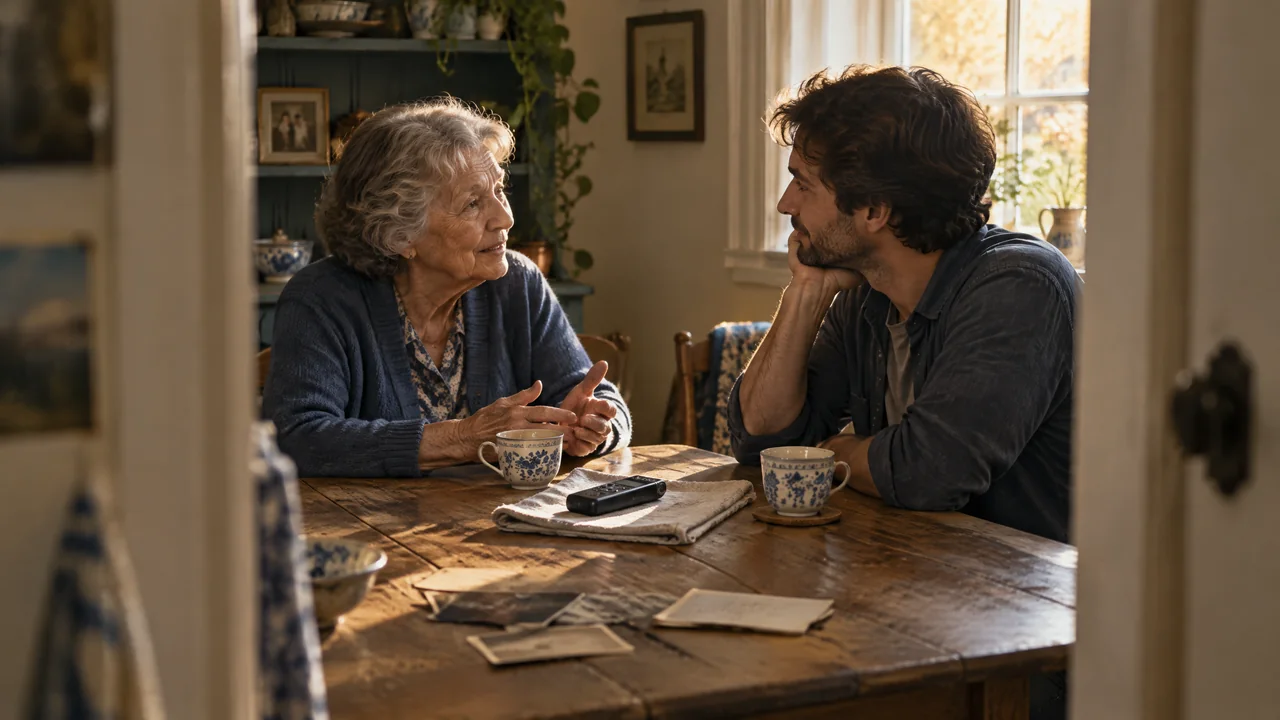
Record one small family story at a time, with the storyteller deciding what is comfortable to say, record, transcribe and share. A clear invitation, a pause option and a chance to check the result will make it useful to future relatives.
Begin with an invitation, not an expectation
A good family interview starts before the recorder is switched on. Ask whether the person would enjoy contributing a story, and make a genuine “no, thank you” easy. Someone may prefer a ten-minute conversation, a written memory, a voice note, or no contribution at all. Opting out is completely acceptable.
Explain the small project in ordinary language: why you hope to gather the story, who may hear or read it, whether you plan to make a transcript, and whether it might be shared beyond the immediate family. Informed consent means a contributor has enough information to decide whether to participate, including the purpose and possible uses of the recording. 1 The Oral History Association likewise recommends discussing the recording method, review process, possible uses, preservation and access before recording begins. 2
A pre-interview chat can be as simple as a telephone call or a cup of tea. It lets the storyteller name subjects they would rather avoid and helps you prepare questions that fit their experience.
Make room for the storyteller’s own path
Bring a short list of open questions, but do not treat it as a test. Questions beginning “Tell me about…,” “What do you remember about…,” or “How did that feel at the time?” invite a fuller answer than questions that need only yes or no. Smithsonian interview guidance also recommends one question at a time, allowing silence for thought, and welcoming unexpected subjects suggested by the interviewee. 3
Start with an easy memory: a room, a meal, a journey, a favourite relative, a first job, or a family custom. Photographs or a familiar object can help a memory arrive naturally. Listen without rushing to fill gaps. If a subject becomes uncomfortable, say plainly, “We can pause, skip that, or stop here.” Then follow the answer rather than pressing for the story you expected.
A useful interview is not a hunt for perfect facts. It is a person’s account of what they experienced, noticed and felt. Keep research records—such as certificates, letters, census entries or dated photographs—separate from oral stories and label each clearly. Keep unanswered questions separate too: “Which school was it?” is a helpful prompt for later research, not a fact to quietly add to the family history. Oral-history guidance notes that personal recollections offer a distinctive perspective, while information presented as factual may need checking where possible. 2 3
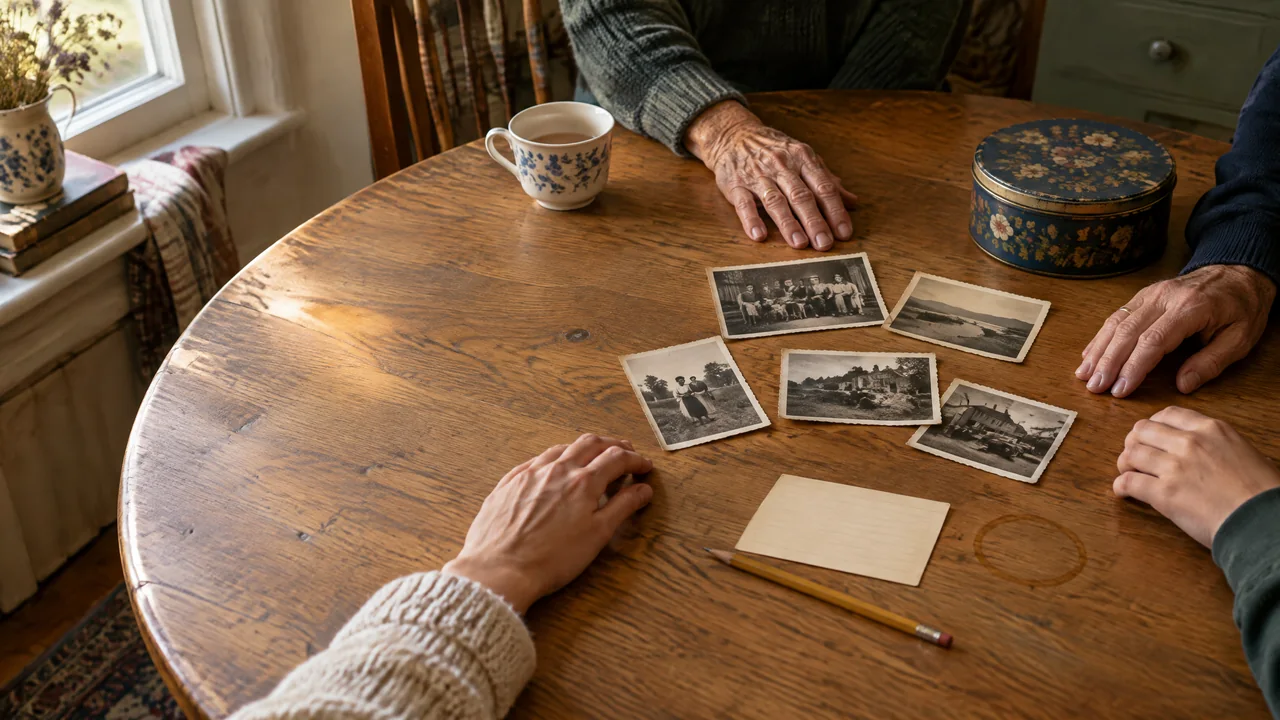
Use this one-page story agreement
Before a short interview or a written contribution, talk through this original checklist together. Write down only what the contributor is comfortable recording.
Family Story Card
- Storyteller: ____________________ Date: ____________________
- The story or topic I want to share: ______________________________
- My preferred form: spoken recording / written note / photographs with captions / other
- People who may hear or read it: just me and the storyteller / named relatives / wider family group / to be decided later
- Topics to skip or handle carefully: ______________________________
- During the conversation, I may: pause / take a break / ask to turn off recording / leave a question unanswered
- Before it is shared as agreed, I would like to: review the transcript / review a short summary / approve only names and dates / not review
- Context I want future relatives to know: __________________________
- I understand I can choose not to contribute today.
Read the card aloud at the start if that feels useful, then ask, “Are you still happy to continue?” A recorded consent statement or a simple written agreement can document what was understood; Boston Public Library describes these as ways participants can express consent after being informed about the project and its uses. 1
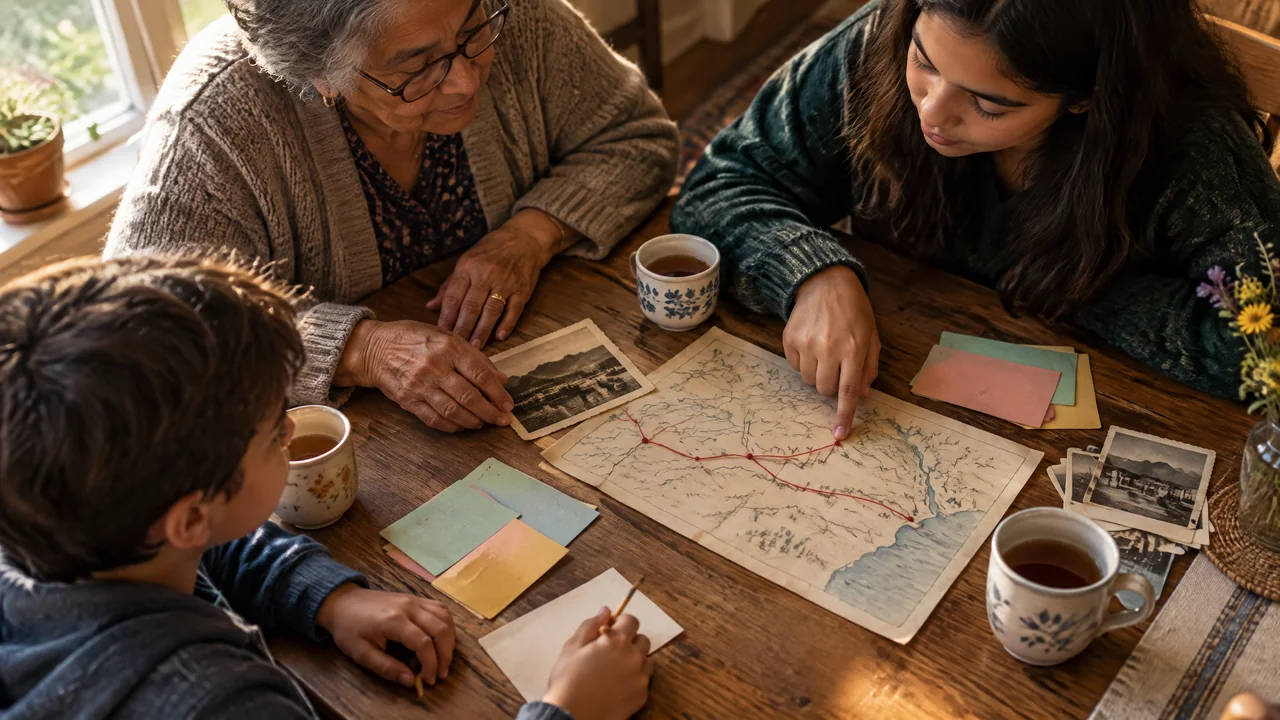
Add context while the details are fresh
At the beginning of a recording, say the storyteller’s chosen name, the interviewer’s name, the full date, a general location rather than a private address, and the subject of the session. The Oral History Association recommends this kind of session lead-in. 2
Afterward, make a short companion note. Include the main themes, names and places mentioned, any photographs or objects discussed, words whose spelling needs checking, and questions left open. Note whether a detail is “storyteller’s recollection,” “supported by a record,” or “to research.” This respects both the voice of the speaker and the needs of a future family researcher.
Name files plainly, for example, with the storyteller’s chosen name, date and session number. Keep the original recording as well as any transcript. A transcript helps relatives scan and search an interview, but it cannot carry every part of a voice recording, such as tone and expression. 4
Offer a gentle review, not homework
A review can be a gift of control, but it should not become a burden. Ask how the storyteller would like to review: listening together to a short extract, checking a one-page summary, or reading a transcript. Give a realistic time frame and an easy way to say, “Please share it without review,” or “I would rather not continue.”
If you make a transcript, identify speakers and mark uncertainty instead of guessing. Do not silently rewrite speech into formal prose. The Library of Congress advises making clear when a transcript differs from the recording, and notes that narrators can spot transcription errors or add memories during review. It also recognises that reviewing a transcript can feel burdensome. 4
When a change is requested, record what changed and when. If the storyteller asks for a section not to be shared, honour that request within the arrangement you made. Before passing a story to more relatives, return to the agreed audience rather than assuming a family connection is automatic permission. Do not promise that any device, website or service will keep a recording private or available forever; speak only about the sharing choice you can make now.
Let short contributions build a fuller picture
Not every relative wants an interview. Invite small contributions with a low-pressure message: “I’m collecting a few memories for future relatives. If you would like, could you send a voice note or two sentences about a family meal, saying, place or person? It is entirely optional, and you can tell me what may be shared.”
A collection of modest, clearly labelled stories can show how different people experienced the same family. Leave room for disagreement and silence. The aim is not one official version of the past. It is a respectful record of voices, context and questions that relatives can understand and care for over time.
If you would like an optional place to explore a shared family-history project, visit MemContinuity’s Family Tree.