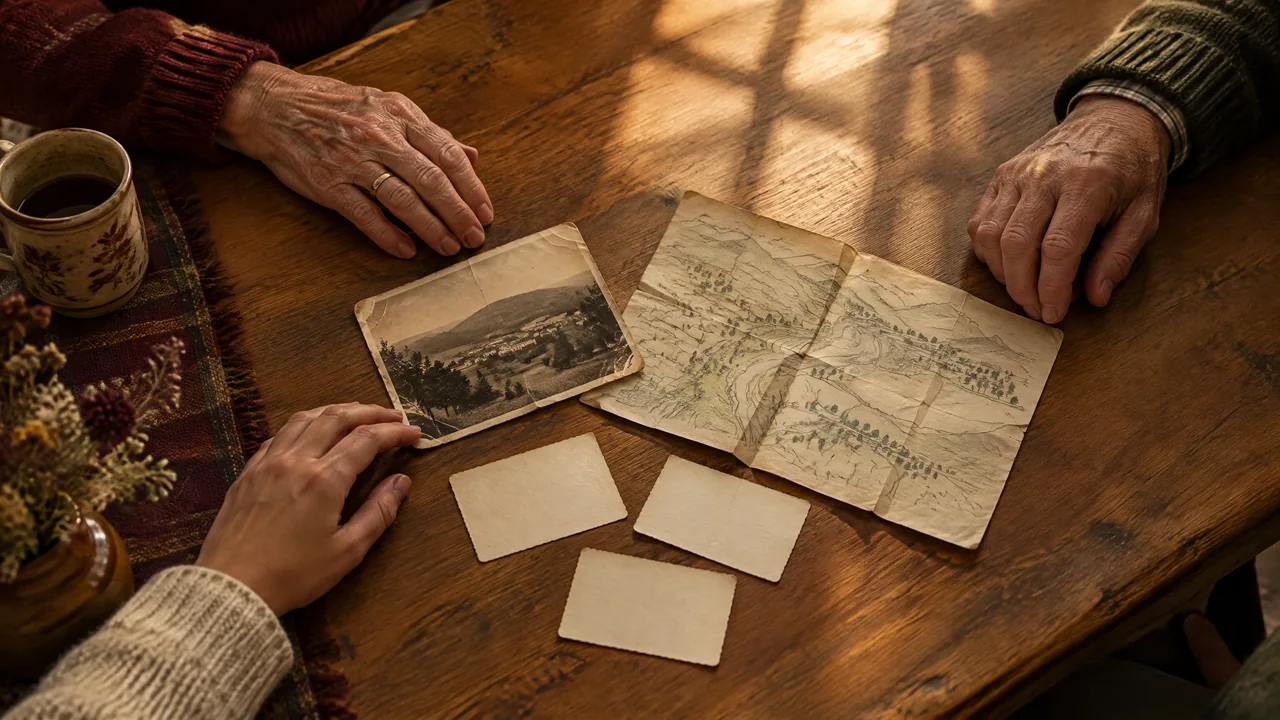
You do not have to choose a winner right away. When relatives remember an event differently, keep each account with care, show what supports it, and leave the question open when the evidence does not settle it.
Begin with curiosity, not a verdict
A disagreement can feel personal. In a family-history project, it can be more useful to treat it as a clue. Two people may have been different ages, in different places or carrying different feelings about the same moment.
Thank each person for sharing. Say that the purpose is to preserve what they know, not to make anyone defend a memory. You can record one account without declaring it the whole story.
This does not mean every claim has equal support. It means being clear about what is known, remembered and uncertain. Professional genealogy assesses conclusions with sources and reasoning; no genealogical source is considered infallible. 1
Give each kind of knowledge its own label
Neutral labels prevent a note from becoming more certain than it is. Keep three different kinds of entry:
- Research record: an item you can identify and revisit, such as a certificate, letter, census entry, photograph inscription or diary. Note where it came from and what it says.
- Oral story: a person’s memory, family saying or interpretation. Name the speaker and when you heard it: “Told by Aunt May during a phone call, April 2026.”
- Unanswered question: a point that remains unresolved. For example: “Why did James use his uncle’s surname in 1948?”
These labels do not rank people. An oral account may lead to an important document, while a document may omit the reason that mattered most. Oral-history guidance asks users to recognise an interview’s subjectivity and, where possible, check information presented as factual. 2
Avoid turning a memory into a fact by removing its owner. “Grandad said he left school at fourteen” is more honest than “He left school at fourteen” when you have not found supporting records.
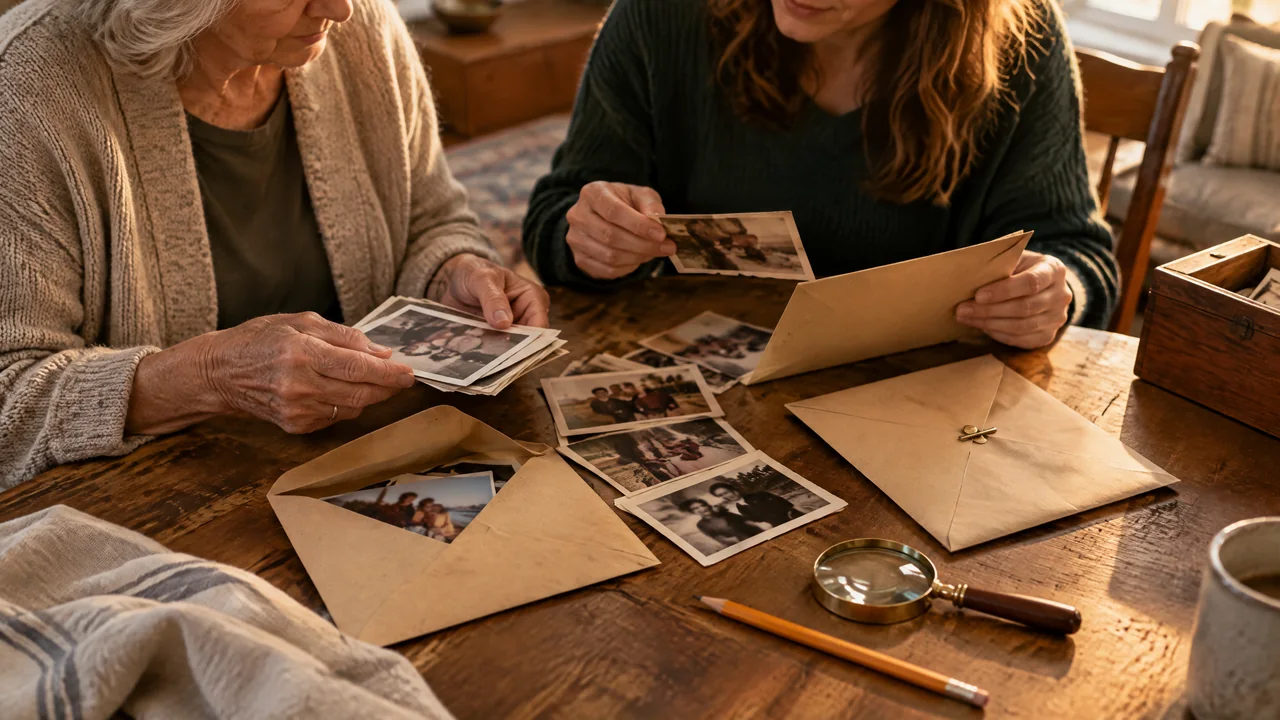
Compare sources without putting relatives on trial
For a disputed detail, make the question small. Instead of asking, “Who is right about the marriage?” ask, “What year did they say they married, and what does each source show?” Then place the items side by side.
Look at when an item was created, who supplied the information, its purpose, how close it was to the event and whether you are seeing the original or a later copy. A copied family tree may point to a useful lead without proving it.
Write down agreements as well as differences. Two accounts might agree on the town and season while differing on the year. Genealogy guidance recommends identifying sources, considering independent origins and known informants, and setting aside information that is unreliable or does not answer the question. 1
Use this neutral-note worksheet
Use one sheet or note for one disputed point. Its job is to make the next step visible, not to force agreement.
Question: What exactly are we trying to understand?
Account A: Who shared it? What did they say, in their own words or a careful summary? When did they share it?
Account B: Who shared it? What did they say? When did they share it?
Records located: List each item, its date, creator or informant if known, and where it can be found.
What matches: Which details appear in more than one account or record?
What differs: State the difference plainly, without words such as “mistaken,” “dramatic” or “unreliable.”
Current note: Choose one: “Both accounts retained”; “Evidence currently leans toward …”; or “Unresolved—more information welcome.”
Next gentle step: Ask permission for one follow-up question, look for one relevant record, or decide to pause.
“Two cousins remember different reasons for the move; neither account has been independently confirmed” may be more accurate than a polished sentence that hides the disagreement.
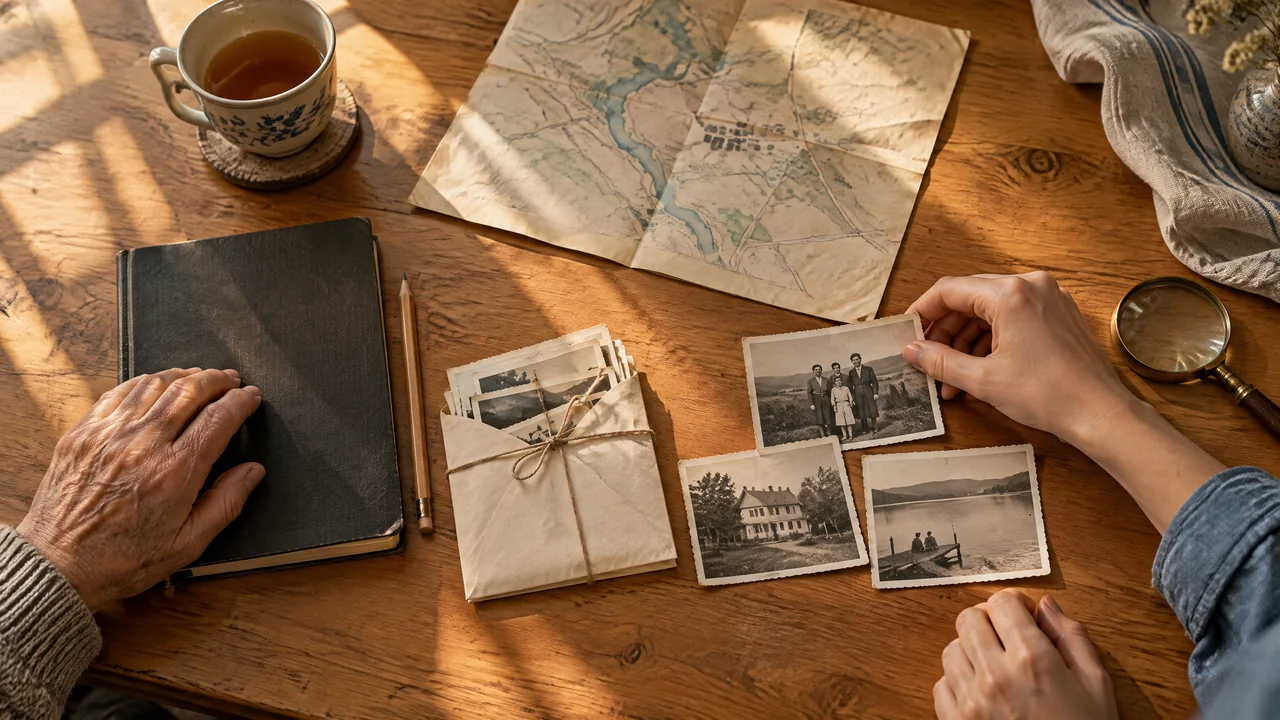
Invite conversation, but do not demand it
If people are willing, a short conversation can add context. Set a ground rule: each person speaks about what they recall, not another person’s motives. Ask, “What makes this detail stand out for you?” or “Is there a letter, photograph or another person who might help with the timing?”
Let contributors choose their level of involvement. Someone may correct a date but not discuss a painful event, or prefer not to be named. Choosing not to contribute, answer a question or revisit a story is acceptable.
It is fine to stop when a conversation becomes hurtful. You can say, “Thank you both. I am going to note that there are different accounts and leave this open for now.” A pause can protect relationships while preserving the possibility of later research.
Set boundaries before a story travels
Before recording, circulating or adding a living person’s story to a shared family project, explain what you hope to do with it. Ask what they are comfortable having remembered, who may see it and whether details should be left out. Do not promise that a group, file or service will remain private forever; be honest about the intended audience and use.
Oral History Association guidance calls for documented informed consent, advance discussion of recording, review, preservation and access, and respect for a narrator’s refusal to discuss a subject or wish to restrict access. 2 Boston Public Library likewise describes informed consent as participation after people understand a project’s purpose and a recording’s potential use and storage. 3
For a story naming living people, keep the invitation gentle: “I am collecting family memories. Would you be comfortable with me keeping this note for the family? You can leave out anything you do not want included, and you can say no.” If the answer is unclear, do not treat silence as permission. If it is no, thank the person and move on.
Leave a clear path for future contributors
A good family history can hold a provisional note without turning it into a permanent argument. Date the note, name the source where appropriate and say what might clarify it. Later relatives may bring a letter, a different memory or a record you have not seen.
The goal is a fair working record that lets people see the evidence, the voices and the remaining questions without being pushed into disclosure or agreement.
Optional next step: If you would like a place to explore a collaborative family-tree project, visit MemContinuity’s Family Tree.