Use three plain labels: Record, Story, and Question. They let a family keep evidence, memory and uncertainty together without pretending that they are the same thing. The result is clearer for today’s relatives and kinder to the people who may add to it later.
Give every note a job
Family knowledge often arrives in a mixture. A birth certificate may sit beside a remembered nickname. A cousin may recall a move across town but not the year. An old photograph may be carefully dated, while the identity of one person is unknown. All of these can belong in the family’s working history. They simply need different labels.
Use Record for information taken from a specific item: a certificate, letter, diary, newspaper notice, family Bible, photograph caption, census entry or another source. The U.S. National Archives suggests beginning with what is already known and looking at material held at home, including letters, photos and certificates; it also notes that relatives’ stories can provide leads for further research. 1
Use Story for a person’s recollection, a tradition repeated in the family, or an account handed down by someone else. A story is not lesser because it has not been checked against a document. It may carry voice, feeling, humour, place and meaning that a formal record cannot show. The label simply tells the next reader what kind of knowledge they are reading.
Use Question for anything unresolved: a possible connection, an uncertain date, a phrase such as “we think,” or a detail that needs another look. A visible question is more useful than a confident-looking guess. It gives someone else a clear, respectful way to help.
Mark facts with their evidence
A Record label should show both the claim and the trail back to the item. Write what the source actually says before adding an interpretation. For example: “Record — Marriage certificate dated 1948 names Rosa Bennett and David Hall.” If the record is a copy, image or transcription, say that too. Add where the item came from, who supplied it if appropriate, and enough detail that another relative can find it again.
This is not about making every family note formal. It is about preventing a useful clue from becoming a fact merely because it has been repeated. The Board for Certification of Genealogists advises researchers to cite facts that are not common knowledge, separate comments from source information, assess evidence and resolve conflicts before drawing conclusions. 2
When records disagree, keep both. A baptism entry, an obituary and a remembered birthday may each add something. Rather than choosing quickly, write: “Question — Why do the 1927 and 1928 dates differ?” A later researcher may find the explanation. Until then, the family can see the uncertainty instead of inheriting it as a mistake.
Keep stories in the speaker’s voice
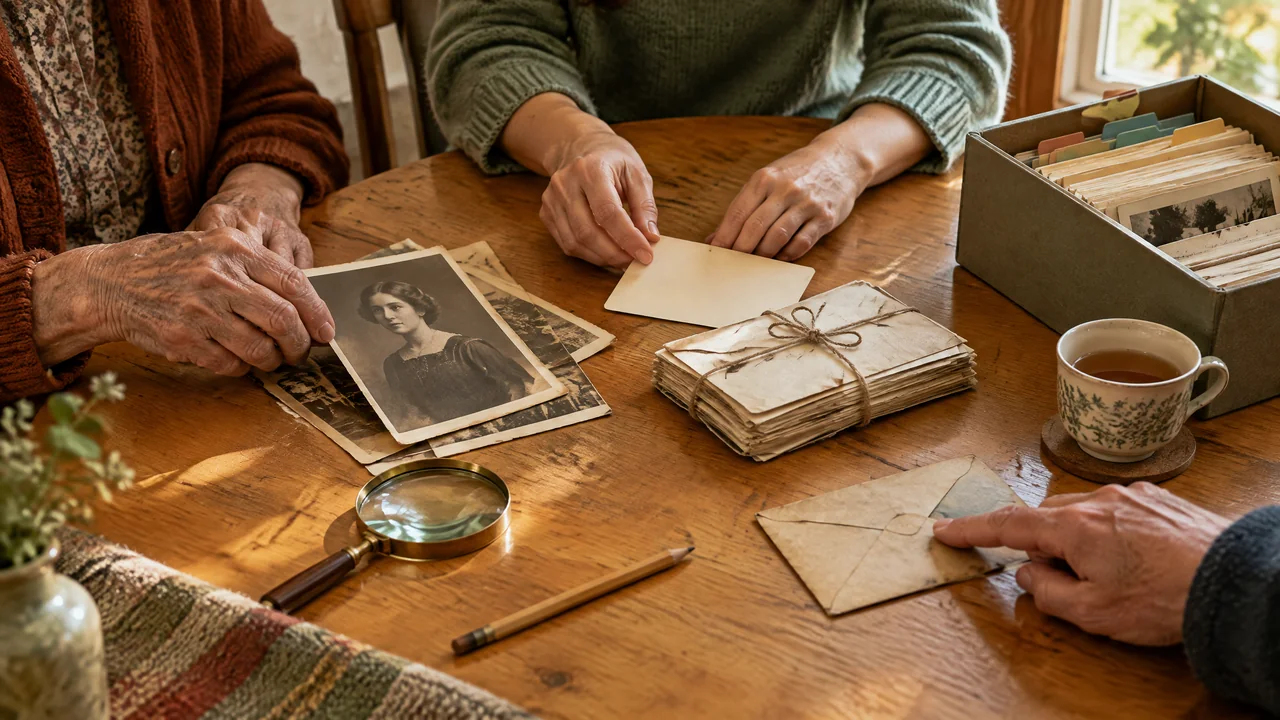
Stories deserve careful recording, not a silent promotion to proof. Capture the source of the story: “Story — Aunt Mina recalled in a 2018 conversation that her father played violin at local dances.” If Mina said she heard it from her mother, add that detail. Also note when and where the conversation happened, and whether it was recorded, written down at the time, or recalled later.
If the storyteller is happy to be named, their name makes the account more useful. If not, a gentle description such as “a grandchild who asked not to be identified” may be enough. Do not force a memory into exact dates or polished language. A pause, a different version of a well-known event, or “I am not sure” can be part of the story’s value.
Professional oral-history guidance treats the narrator’s perspective with respect while recognising that an interview is subjective and that information presented as fact may need verification where possible. 3 In a family setting, that suggests a generous habit: preserve the telling, identify it as a recollection, and connect it to a Record only if the record supports the particular detail.
Let questions stay open
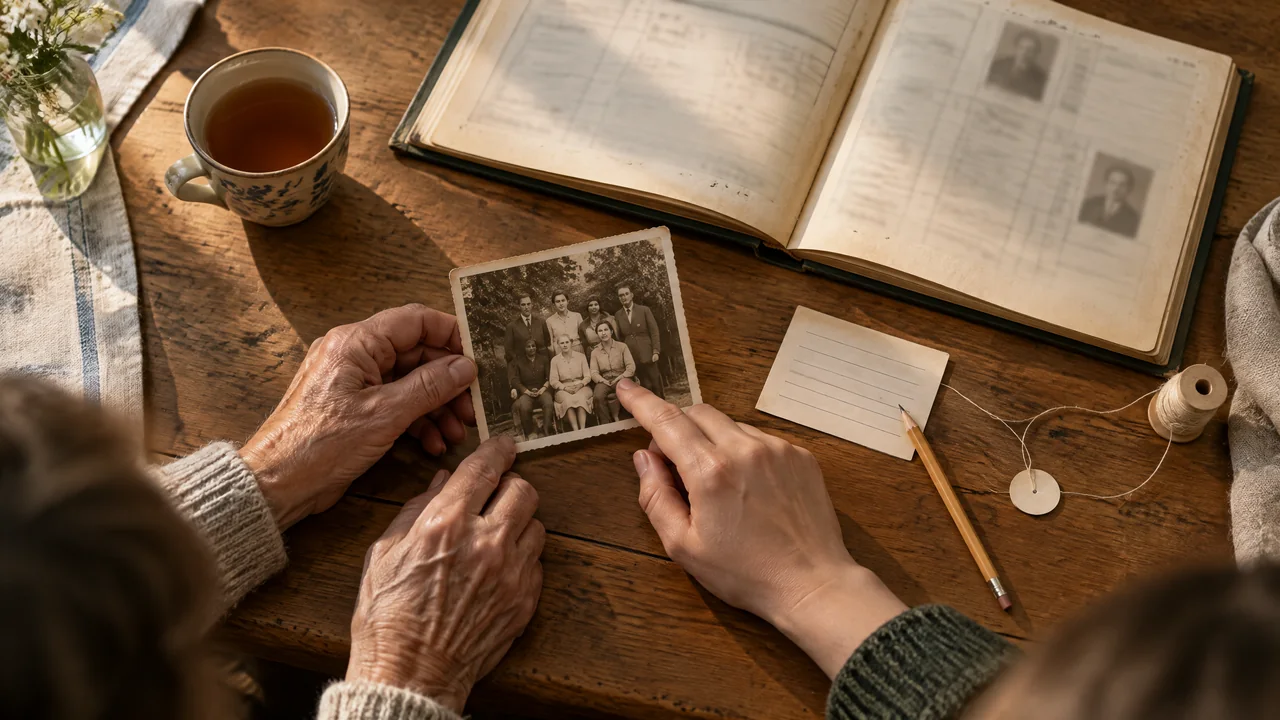
A Question label is not a failure. It is an invitation to future care. Keep questions specific enough that another person can respond: “Question — Was the woman in the 1962 seaside photograph Eleanor’s sister, Ruth?” is easier to work with than “Who is this?”
Questions are also a good place for differing family views. You might write: “Question — Two relatives remember the farm being sold before the war; one recalls it happening after.” This avoids setting relatives against one another. It records the difference honestly and leaves room for a record, a new conversation or no final answer at all.
A three-label worksheet for a family conversation
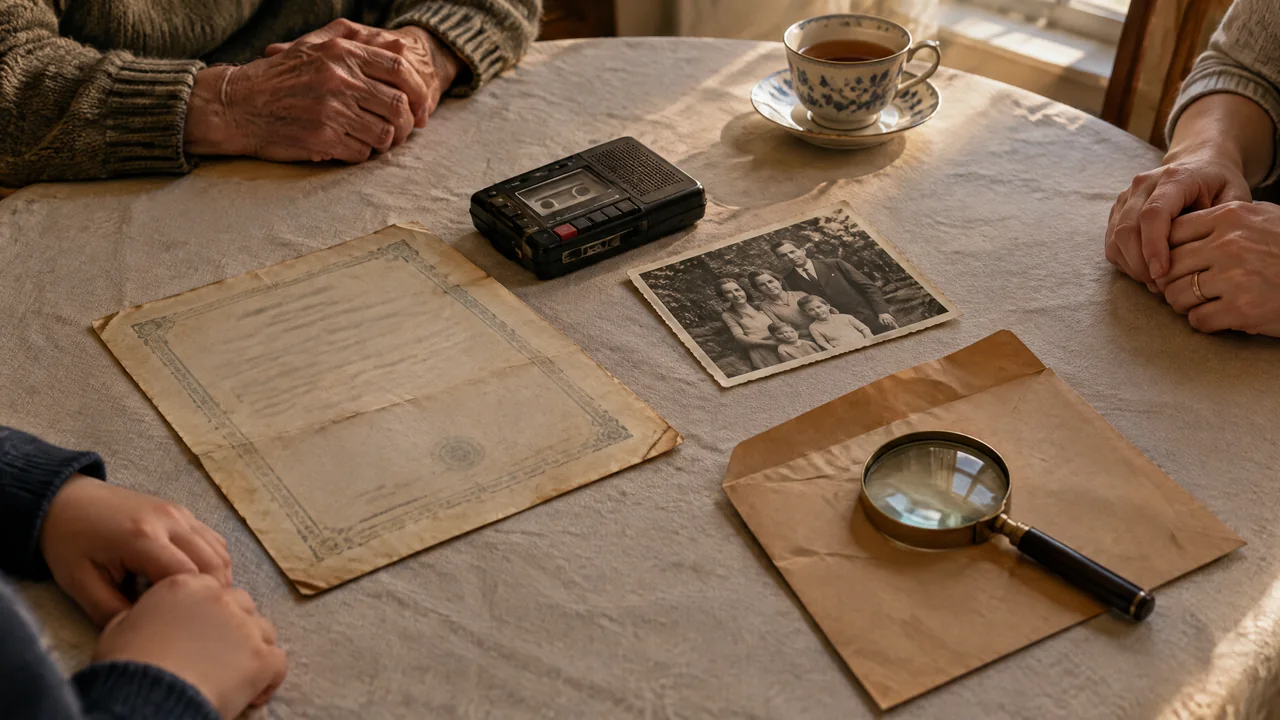
Bring one photo, letter or small object to a conversation. Ask permission before taking notes or recording. Then fill in these three short sections together:
- Record: What can we see or read directly? Note the item, its date if known, where it came from and the exact detail it supports.
- Story: Who remembers something connected to it? Write their words in a natural way, along with who is speaking and when they shared it.
- Question: What remains unclear? Turn each uncertainty into one small question that a relative could answer, a home collection might clarify, or future research could explore.
Close by asking, “Is there anything here you would rather we did not keep, share or discuss further?” The Oral History Association recommends clear, documented discussion of purpose, recording and access expectations, and recognises that narrators may refuse subjects or restrict access. 3 For living people, seek consent before sharing personal details, explain the intended audience in plain language, and honour a request to leave something out. Choosing not to take part is always acceptable.
Return to notes with care
Once a month or after a family gathering, read new notes with the labels in mind. Has a Question gained a useful Record? Has a Story been attributed to the person who told it? Has a Record been copied without its source? Small reviews keep the project understandable without turning every conversation into an investigation.
The aim is not to remove uncertainty or make every family story official. It is to make the difference visible: research records show what an item supports, oral stories show who remembers what, and unanswered questions show where the family can continue learning. That clarity makes room for both accuracy and affection.
References
If you would like an optional place to explore a shared family-tree project, visit MemContinuity’s Family Tree.