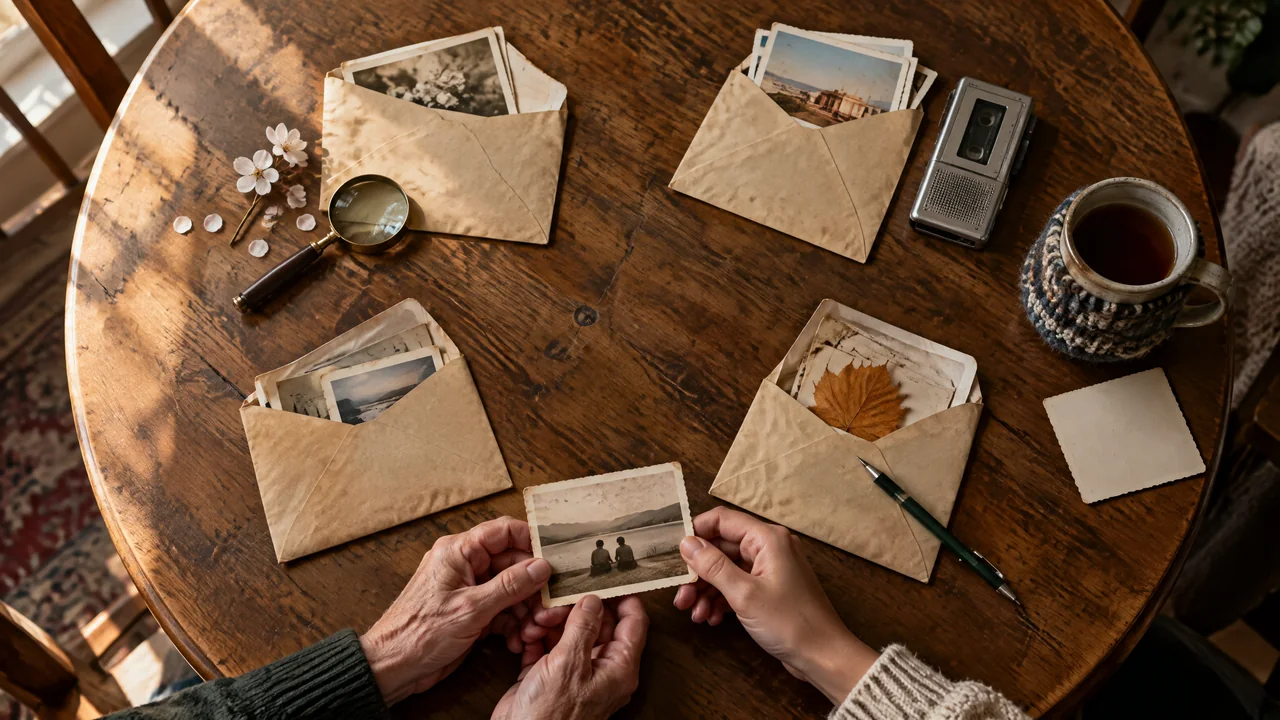
Begin with one small branch of the family, not every relative at once. Over a year, you can gather a few names and records, invite stories at a comfortable pace, keep clear notes on what is known and finish by sharing the progress. The aim is not a perfect tree. It is a useful, kind project that other people may choose to help grow.
Set a gentle starting point in spring
Choose one question that feels manageable: perhaps the grandparents of one parent, the story of a particular home, or the names behind a box of photographs. Write the question in ordinary language and decide what a helpful result would look like.
Make three simple labels for every item you add:
- Research record: a document, image, index entry or other source you can name and revisit.
- Oral story: a relative’s memory, wording and point of view, with the storyteller and date noted.
- Open question: something not yet established, including a disagreement or a missing name.
This distinction lets a treasured recollection remain valuable without making it carry more certainty than it has. Good genealogy practice asks researchers to identify their sources, assess evidence and resolve conflicts before drawing a conclusion. 1 A story may point you toward a record; it does not need to be “proved” before it is saved as a story.
Create a small working sheet or notebook. For each person or photograph, record where the information came from, when you received it and who shared it. If a date is only an estimate, write “about 1940” rather than turning a guess into an exact date.
Invite contributions through early summer
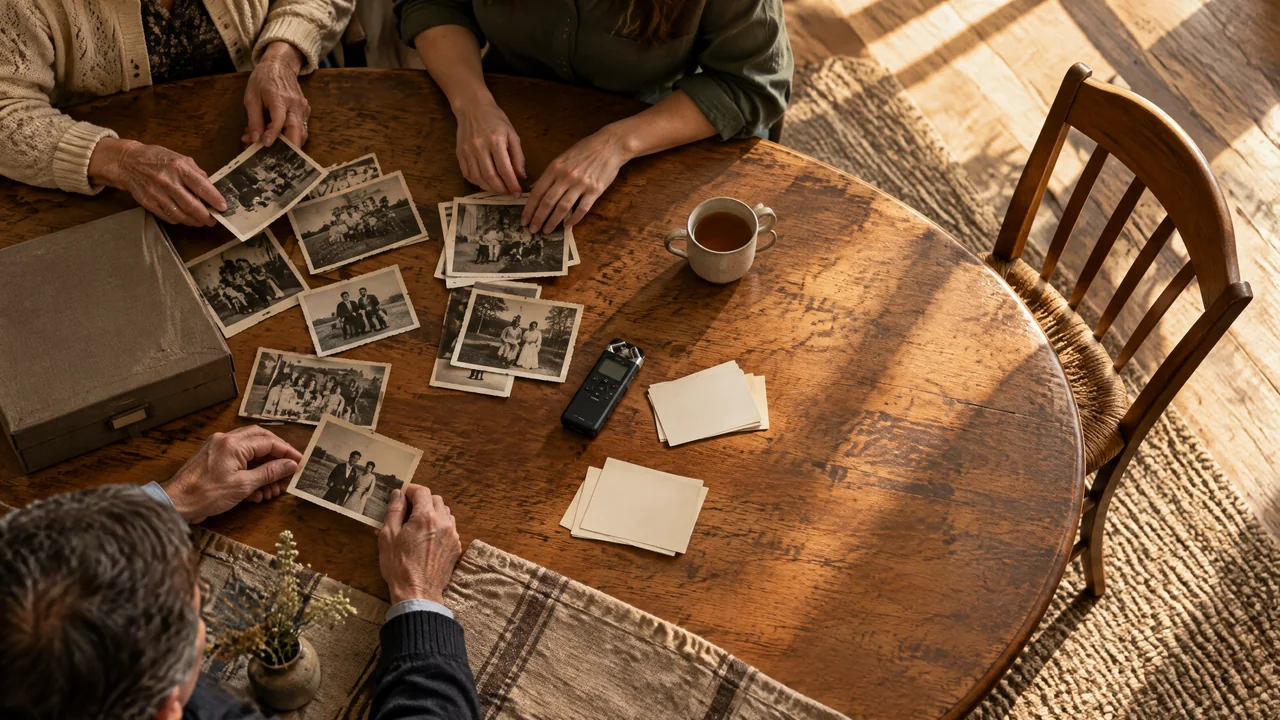
Ask a few people individually rather than sending a large demand to the whole family. A cousin may be happy to identify a photograph but not to discuss private matters. An aunt may prefer a telephone call to a digital form. Give each person a small, specific invitation and a clear way to decline. Participation is voluntary, and opting out is completely acceptable.
Before recording a conversation or sharing a living person’s photo or story, explain what you hope to collect, who might see it and whether the contributor can review it. Oral-history guidance recommends discussing the purpose, recording process, review and intended access before recording, and respecting an interviewee’s choice not to discuss a subject or to restrict access. 2 Guidance for family memories likewise advises obtaining consent before submitting photos of living people. 3
Here is a message you can adapt:
Hello [Name], I am putting together a small family-history project this year. I am trying to identify the people and occasions in a few photographs from [place or side of family]. Would you be comfortable having a 20-minute conversation, or would you prefer to send a note? I will mark your memories as your account, and I will check with you before sharing anything about you or other living people. It is also fine to say no, or to answer only the parts you choose.
Bring one or two photographs or objects to a conversation. Ask open questions such as “What do you remember about this day?” or “Who would have known this person well?” Make a brief note of the date, who was present and any spellings or places mentioned. Do not press when a subject becomes uncomfortable.
Gather and sort in late summer
This is the season for turning loose contributions into a project someone else can understand. Give each scan or photograph a plain file name that includes a person, place or approximate year where known. Keep the original item’s owner and its source with the description. For an audio conversation, note the narrator, interviewer, date, broad topic and any agreed limits on sharing.
Do not try to solve every puzzle while sorting. Make one folder or list called “Questions for later.” Put possible matches, uncertain dates and conflicting spellings there. A question with a source attached is more useful than a question remembered only vaguely: “Was this 1956 graduation photograph taken in Leeds? Aunt May called it a graduation, 14 June 2026.”
If you record interviews, make a second copy soon after the conversation and keep copies in more than one physical location. The Oral History Association recommends redundant digital copies and organising related photographs, documents and descriptive information with each interview. 2
Resolve a few questions in autumn
Choose only two or three open questions to investigate. Start with the most useful clue, not the most dramatic tale. Compare names, dates and places across the sources you have. Ask: Who created this record? When? How would they have known the information? Does another independent record support or contradict it? These are sensible questions because evidence needs to be evaluated in context, and even records made close to an event can contain errors. 1
When information conflicts, leave a short note instead of silently choosing a winner. For example: “Two birth years are in circulation: 1928 in the family notebook and 1929 on a certificate. More checking needed.” If you do not, preserve the question for another season. This protects both accuracy and family trust.
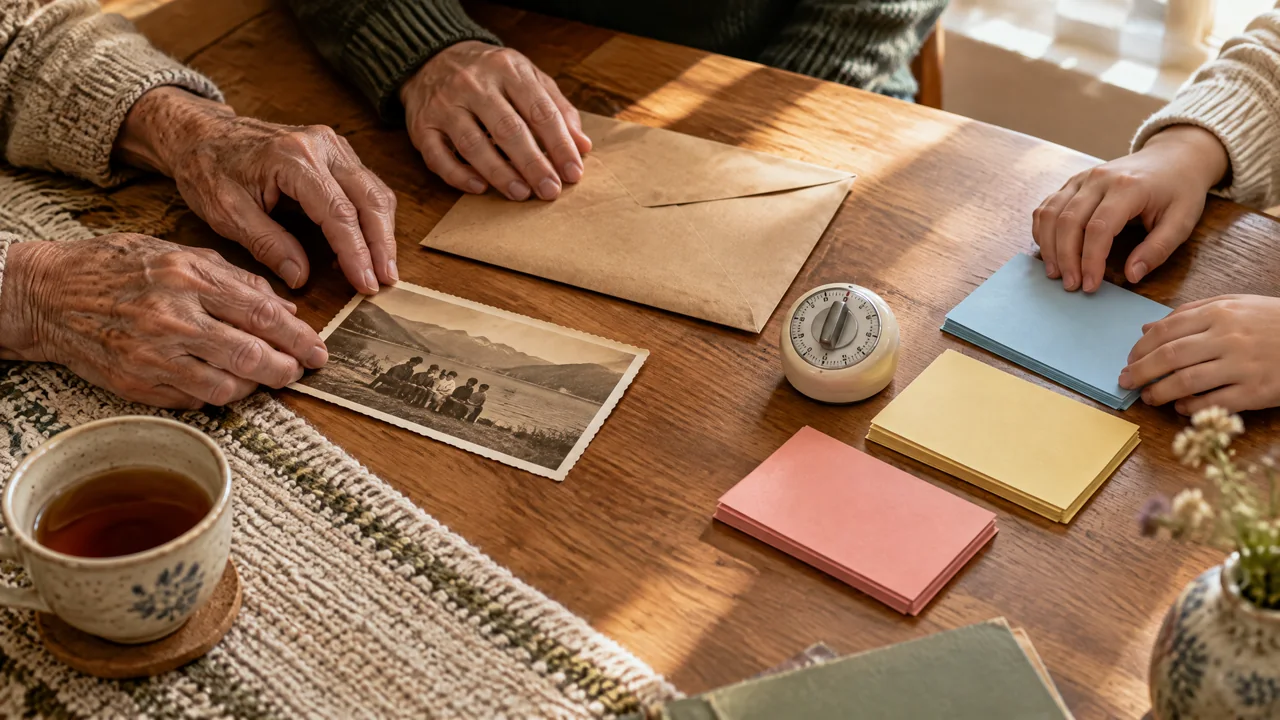
You can also hold a relaxed “question afternoon.” Put five images or names on the table and ask guests to add only what they know. Use prompts such as: “Which details are certain?” “Whose memory might help?” “What should remain private?” and “What are we not ready to decide?”
Celebrate and prepare for winter
End the first year by making the progress visible, not by judging what remains undone. Share a small selection with the people who contributed: perhaps a two-page timeline, a set of captioned copies, or a listening afternoon with a few approved clips. Thank contributors by name only if they are comfortable with that. Ask whether anything needs correcting, removing or keeping within the family.
Then make a one-page handover note for next year. Include the branch you explored, the sources you used, the stories recorded, the questions still open and the next person to ask. A living family tree stays useful when its history of research is visible, not just its conclusions.
Choose one modest next step for the coming spring. You might identify another photograph, invite one new voice or revisit one unresolved date. The project can pause, change shape or stay small; its value is in the care taken with people, memories and evidence.
Optional next step: If you would like a place to explore a family-tree project, visit MemContinuity’s Family Tree.