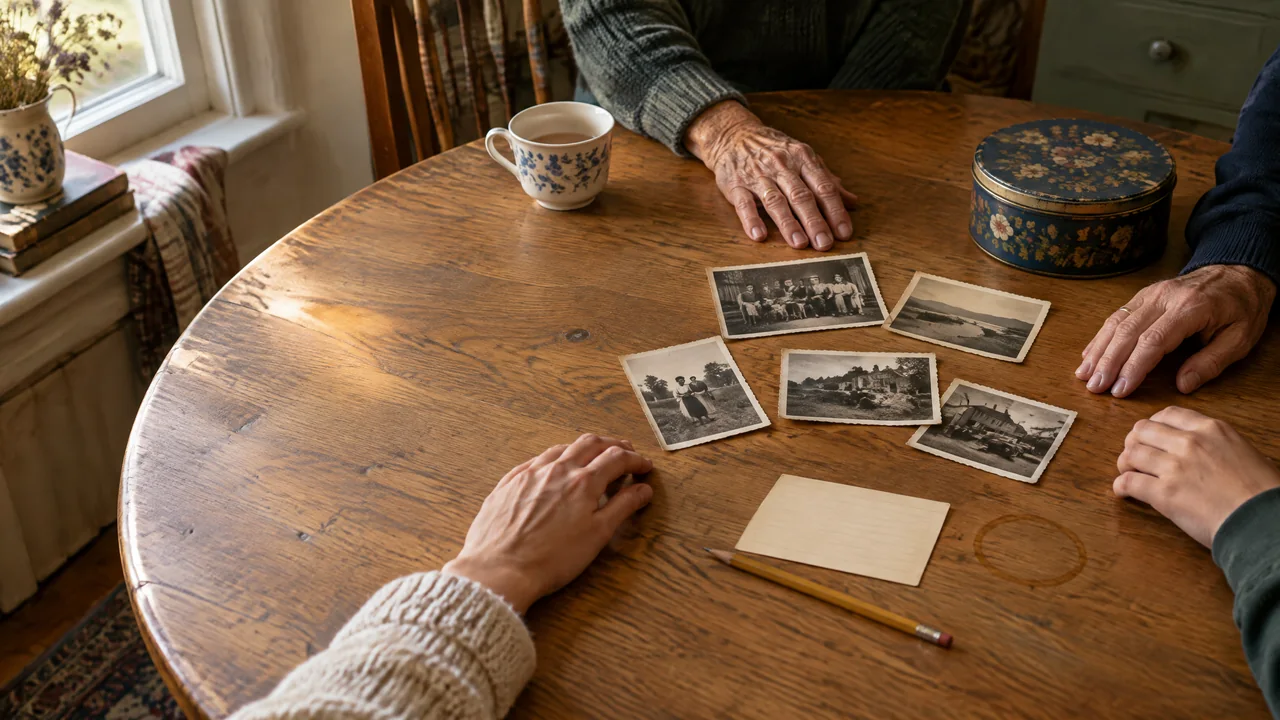
Keep the first family-tree meeting simple: invite people to help shape a shared project, not to prove what they know. Aim to leave with a few willing next steps, a clearer sense of boundaries, and the feeling that every contribution is welcome but voluntary.
Make the invitation feel safe and useful
A first meeting works best when it is small, unhurried, and clearly limited. An hour over tea, a video call, or a quiet corner after a family meal can be enough. Choose a time that does not compete with a birthday, a holiday, or another occasion that already carries expectations.
In the invitation, say what the meeting is and what it is not. It is a chance to decide whether the family would like to build a family tree together. It is not a quiz, a request for private documents, or a demand that anyone tell personal stories. Let people know that they may simply listen, send a thought later, or opt out altogether.
This gentle beginning also makes room for different kinds of knowledge. One person may remember a nickname or the name of a childhood street. Another may know where a box of photographs is kept. Someone else may prefer not to discuss a branch of the family. All of those responses are useful information about how to proceed.
Give the gathering one modest purpose
Do not try to build a whole tree in one sitting. The National Archives recommends beginning with what is already known and working toward the unknown; it highlights names, dates, places, and relationships as useful details to note. 1 For a first meeting, that is a helpful frame rather than a target. You only need to identify a few starting points and decide what deserves care.
A good purpose might be: “We want to make a respectful list of the people and stories our family would like to remember.” This keeps the conversation human. It also avoids turning the oldest person in the room into an on-demand archive.
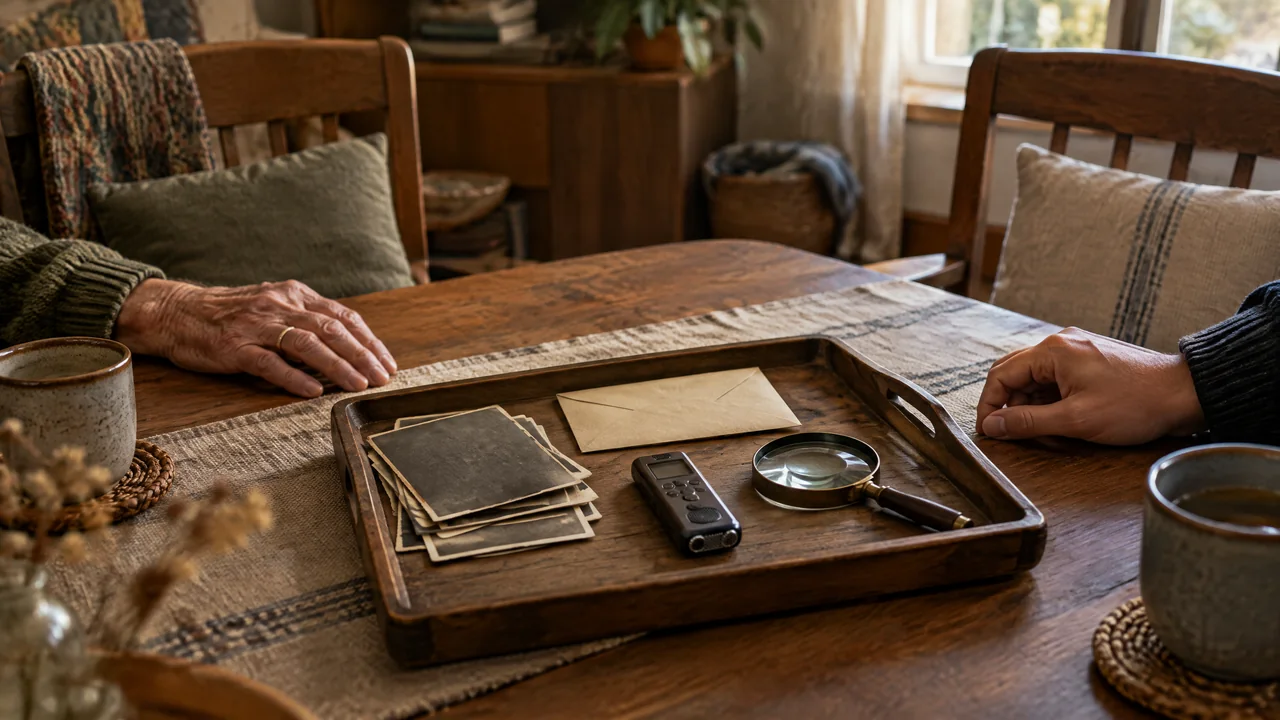
Before the meeting, one host can prepare a blank sheet of paper or a shared note with three headings: research record, oral story, and unanswered question. Research records are items that can be checked, such as a dated certificate, letter, census entry, or photograph with a reliable note. Oral stories are memories, family sayings, and recollections. Unanswered questions are leads for later, not gaps that anyone must fill today.
Keeping these headings separate is kind as well as practical. A treasured story does not become less meaningful because it has not been verified. A document may add detail but may not capture how a person experienced their life. Marking the difference prevents a memory from being presented as settled fact and leaves room for careful future research. Oral-history guidance likewise notes the subjective nature of an interview and the value of verifying information that is presented as factual. 2
Use this first-meeting worksheet
Bring this short checklist, but treat it as a menu. It is fine if the group uses only one part of it.
- Welcome (five minutes): “Thank you for being here. No one needs to remember anything today, and no one has to share anything they would rather keep private.”
- Purpose (five minutes): “We are exploring whether we want a family-tree project that can grow slowly, with care.”
- One prompt (ten minutes): Ask, “What person, place, object, or tradition would you be glad not to lose track of?” Allow silence. Do not press for a fuller account.
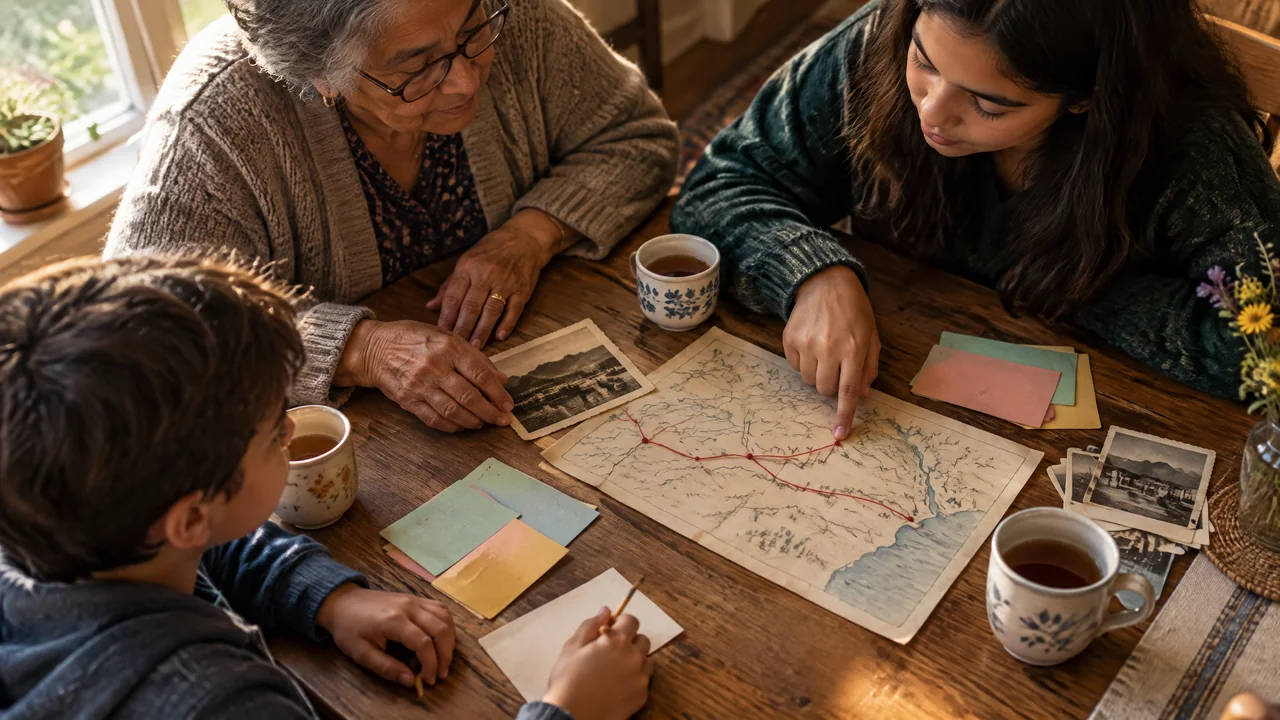
- Sort, do not solve (fifteen minutes): With permission, place each contribution under research record, oral story, or unanswered question. Record only what a contributor is comfortable sharing.
- Choose one small next step (ten minutes): For example, one volunteer may photograph the backs of two old pictures, ask an aunt whether she wants to name people in them, or write down a question for a later conversation.
- Close with choices (five minutes): Ask, “Would you like to be asked again, contribute later in another way, or not be involved for now?” Accept each answer warmly.
If a person wishes to show a letter, photograph, or family document, ask before passing it around or making a copy. A useful question is, “May we make a note of this, and who may see it?” Do not assume that being related means everyone is comfortable sharing the same details. For living people especially, leave out sensitive information unless the person has chosen to share it.
Set boundaries before stories become records
A meeting can include stories without recording them. If anyone proposes audio or video, pause and ask permission before beginning. The Library of Congress similarly advises asking a relative if you may record a conversation. 3 Say why you would like to record, who might listen, and whether the person would like to review a summary first. A simple “not today” is a complete answer.
Professional oral-history guidance recommends explaining a project’s purpose, recording process, possible review, and intended use before an interview, and it emphasizes a narrator’s right to decline topics or restrict access. 2 Your family gathering does not need to be a formal oral-history project to follow the same spirit: be clear, listen carefully, and honour the limits people set.
It can help to name a contact person for questions after the meeting. They can receive corrections, remove a note that was shared too quickly, or hold a private concern without asking the whole family to resolve it. Keep a brief decision note: what the group agreed to explore, what should remain private, and who—if anyone—volunteered for a next step.
Leave people lighter than they arrived
End on time. Thank people for their presence rather than praising only the person with the most dates or documents. Read back the one or two next steps, then leave the rest open. A family tree can grow through many small contributions: a correction next month, a remembered recipe next year, or a story someone is ready to tell much later.
The first meeting has succeeded if it creates trust, not if it produces a perfect chart. Begin with what people are ready to offer, label what is known and what is still a question, and make returning optional. That gives the project a welcoming foundation for the long term.
References
Optional next step: if you would like a place to explore a shared project, see MemContinuity’s Family Tree.