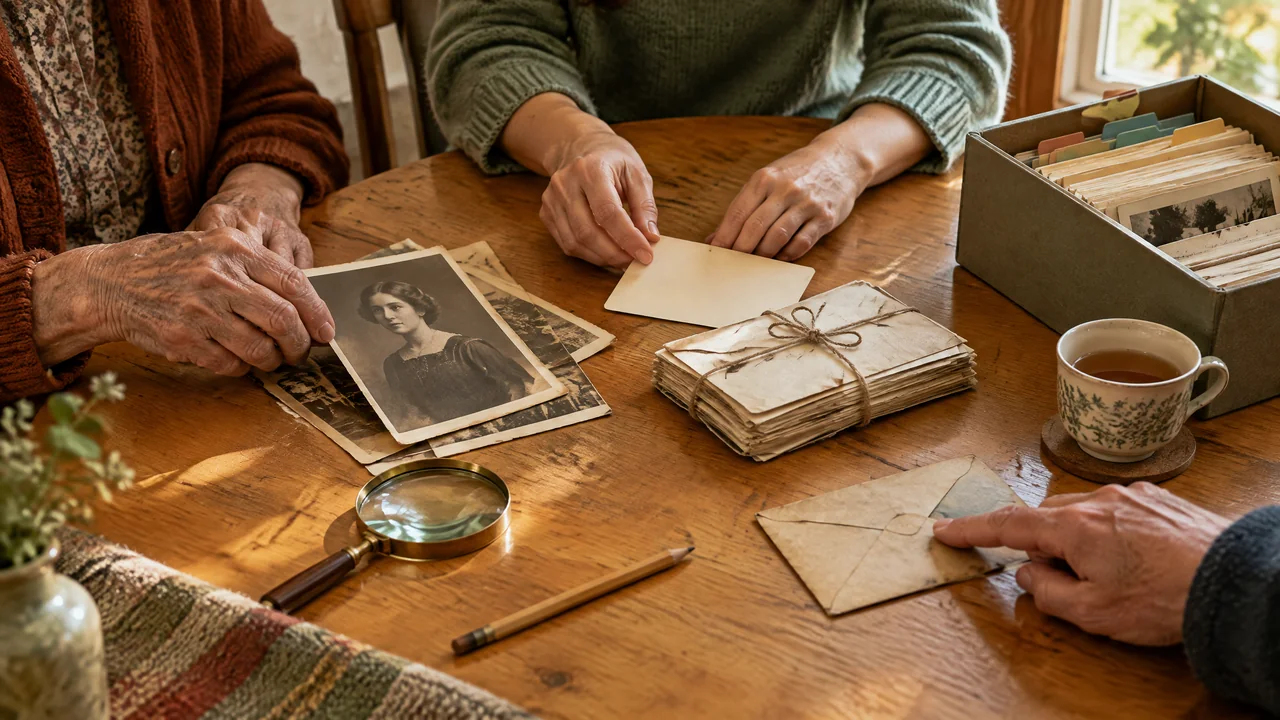
A family research table is a short, shared session built around one modest question, a few familiar items, and a clear way to record what happens. It turns ‘someone should look into that’ into a calm next step—without asking anyone to search the whole internet or settle every family mystery.
Give the gathering one question, not a whole family tree
Begin with something answerable in an hour or so. ‘Which town did Grandad live in before he married?’ is better than ‘Find everything about Grandad.’ A focused question helps relatives notice details that matter instead of opening ten trails at once.
Start with what the family already knows. The U.S. National Archives recommends working from the known toward the unknown and looking for names, dates, places, and relationships in the material you find. 1 Write the day’s question where everyone can see it. Beneath it, list the two or three facts you already have, along with where each came from.
This is not a test of anyone’s memory. A cousin may remember a nickname, an aunt may recognise a street in a photograph, and someone else may know where a box of letters is kept. The aim is to collect clues carefully, not to decide who has the best memory.
Bring a small, useful selection
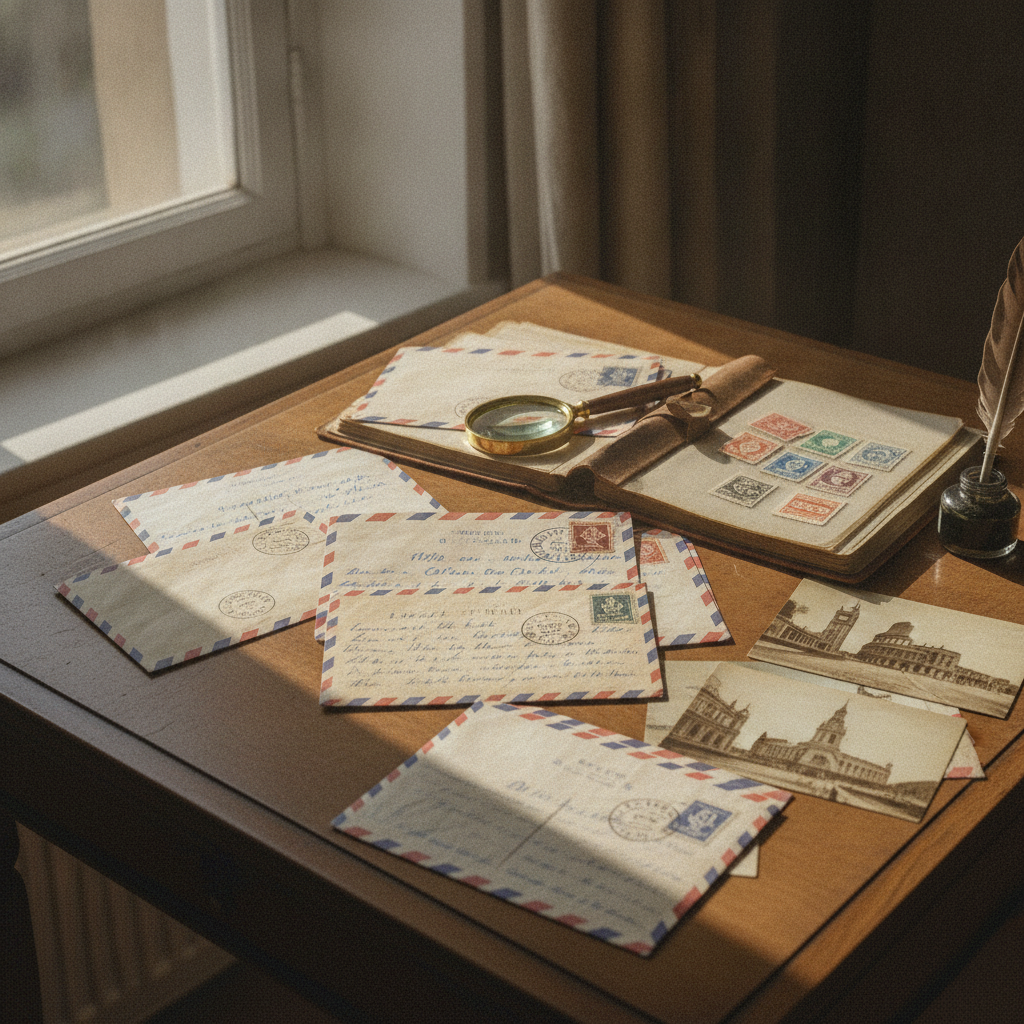
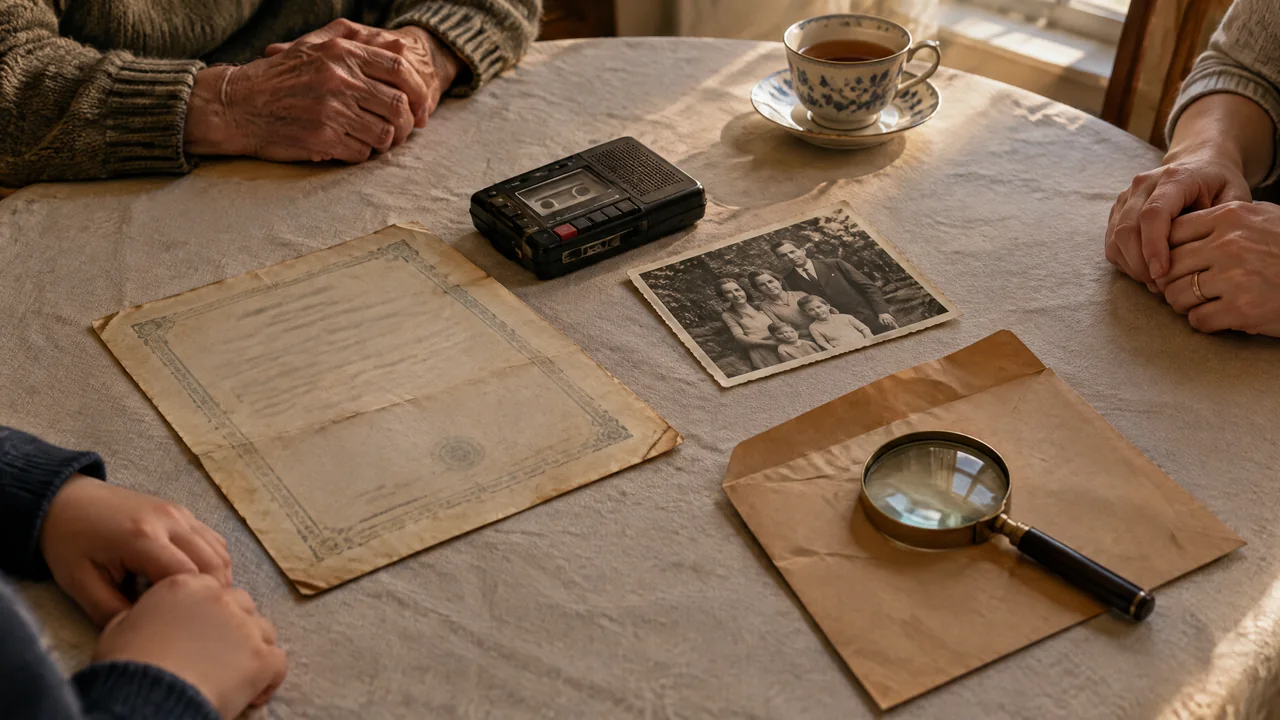
Ask each willing contributor to bring one or two items only: a labelled photograph, a letter, an address book, a certificate, a diary page, or a copied record. Family papers and the backs of photographs can be useful starting points, and relatives may also hold stories that help frame a later search. 1
At the table, keep three kinds of information visibly separate:
- Research records are things you can point to, such as a dated letter, a photograph, a certificate, or a catalogue entry. Note where the item came from and what it actually says or shows.
- Oral stories are memories or accounts shared by a person. Record who told the story and, if they are comfortable with it, when it was shared. A story can be important even when it has not yet been matched to a record.
- Unanswered questions are not facts waiting to be filled in. They are useful signposts: ‘Was this name a nickname?’ or ‘Could there have been two people with this surname?’
This separation protects the value of each kind of contribution. It also prevents a much-loved story, an online hint, or a copied family tree from quietly becoming a confirmed fact.
Set out four simple working areas
A good research table needs no special equipment. Four sheets of paper, index cards, or sections of a notebook are enough. The order below keeps the session focused. American Ancestors advises choosing a few research goals and concentrating on one genealogical question at a time; it also describes a research log as a way to record every source checked, including unsuccessful searches. 2
Copy this family research-table worksheet
1. Question list
- Today’s question: ______________________________
- What we know already: _________________________
- What would count as a useful clue today: __________
2. Source log
For every item discussed, note:
- Item or source: _________________________________
- Where it came from or where it can be found: ________
- What it says, shows, or suggests: _________________
- Label: record / oral story / unanswered question
- Result: useful clue / does not answer today’s question / check later
3. Name-variant card
- Main name: ____________________________________
- Nicknames, maiden or earlier names, alternate spellings, initials, or translated forms: __________________
- Places and approximate dates connected with each version: _______________________________________
4. Next-step board
- Small next step: _________________________________
- Volunteer, if someone chooses to take it: ____________
- What to bring back, or what would help: _____________
- Leave unassigned if no one is available.
A short log is more useful than a perfect one that never gets used. The Board for Certification of Genealogists notes that research logs and notes document substantive sources consulted, whether or not they provide useful information, and support later analysis and citations. 3
Let name variations open possibilities, not close them
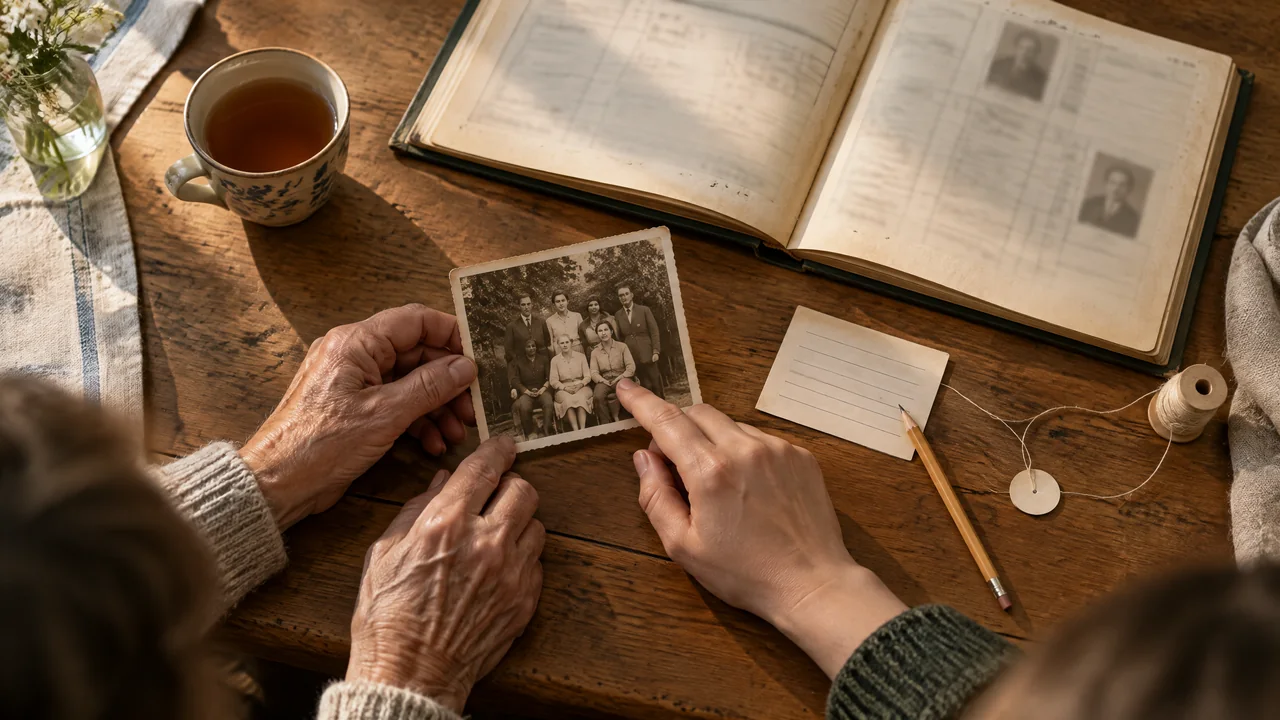
Names change in ordinary family life. A person may have used a middle name, a nickname, a maiden name, a different spelling, or a name shaped by another language. Put each variation on the name-variant card without deciding that every similar name belongs to the same person.
Pair a name with place, approximate date, relationship, or occupation whenever you can. ‘Annie Bell, near Leeds, about 1930, sister of Frank’ is a safer clue than ‘Annie Bell.’ Genealogy guidance also warns researchers to remain flexible about spelling and minor inconsistencies while being cautious about people with the same name in different circumstances. 3
Run the session at an easy pace
For a 60- to 75-minute gathering, spend the first ten minutes agreeing on the question and looking at the materials. Use the next half hour to take turns sharing one item or one memory at a time while a volunteer fills in the source log. Give the final ten minutes to the name-variant card and next-step board. End by reading the written notes aloud so people can correct a date, spelling, or label.
If the conversation wanders, place the interesting side topic on the unanswered-questions list. It has not been dismissed; it has been saved for another day. Avoid turning the session into a race through online results. One document checked carefully, one relative contacted kindly, or one local library question prepared well can be a meaningful next step.
When accounts differ, write both without forcing a verdict. You might note, ‘The postcard is dated 1954; Lena remembers the move as 1955.’ Later, a record may clarify the difference, or it may not. The important thing is to preserve the distinction between what a source says, what someone remembers, and what still needs checking.
Make room for consent and quiet participation
Living relatives deserve particular care. Before writing down a personal story, ask what the speaker is happy to have noted and who, if anyone, may see it. Do not press for sensitive details. Someone may prefer to tell a story without recording it, ask for a note to be withheld, or opt out altogether; all are acceptable.
This is a matter of family respect, not a legal rulebook. Oral History Association guidance emphasises documenting restrictions and respecting a narrator’s stated wishes about access and use. 4 A simple note such as ‘Shared for this conversation only—do not pass on’ can help everyone remember an agreement.
Thank people for their time, even if they brought no paper and offered no story. The next meeting can begin with the unanswered question that feels most manageable. Over time, these small, voluntary sessions create a clearer trail of clues and a kinder record of how the family learned together.
If your family would like an optional place to explore a family-tree project, visit MemContinuity’s Family Tree.