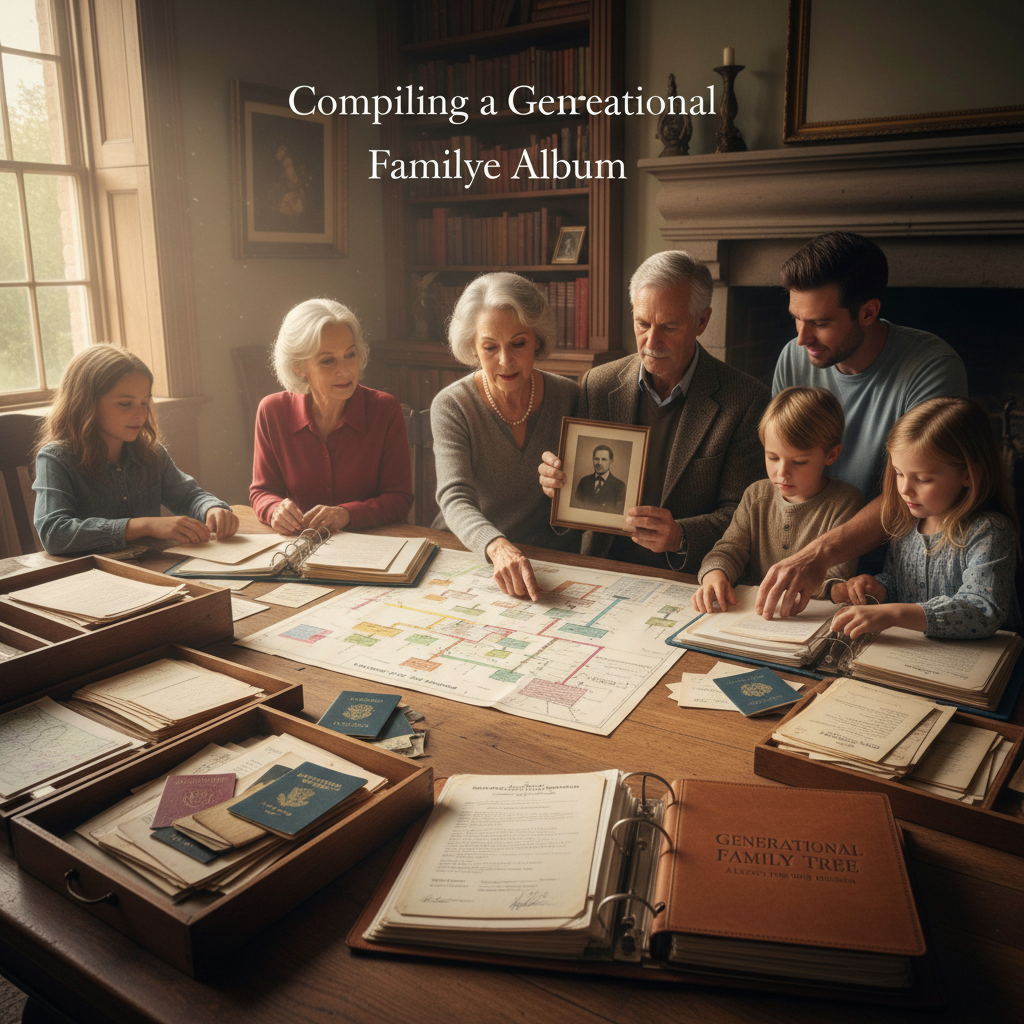
A family tree is easier to keep alive when no one person is expected to know everything or do everything. Give relatives small, voluntary roles, make handoffs ordinary, and keep room for people to say no. The aim is not a perfect chart. It is a shared record that can grow at a comfortable pace.
Give the project a small working shape
Think of the tree as a family project with a few useful jobs, not as a committee with ranks. One person may take a role for a month, help with one branch, or simply pass along an item they have found. Another can take over later.
Begin with a modest goal: identify the people in one album, collect three memories about a grandparent, or check the sources for one household. Write down who is doing what, when you will next compare notes, and what happens if someone is away. This prevents the work from resting on the most enthusiastic person.
Family-held material is a sensible place to start. The U.S. National Archives lists letters, scrapbooks, photographs and even information written on the backs of photographs among the records that may help a family history; it also notes that relatives can hold both information and stories. 1 That makes a range of contributions valuable from the beginning.
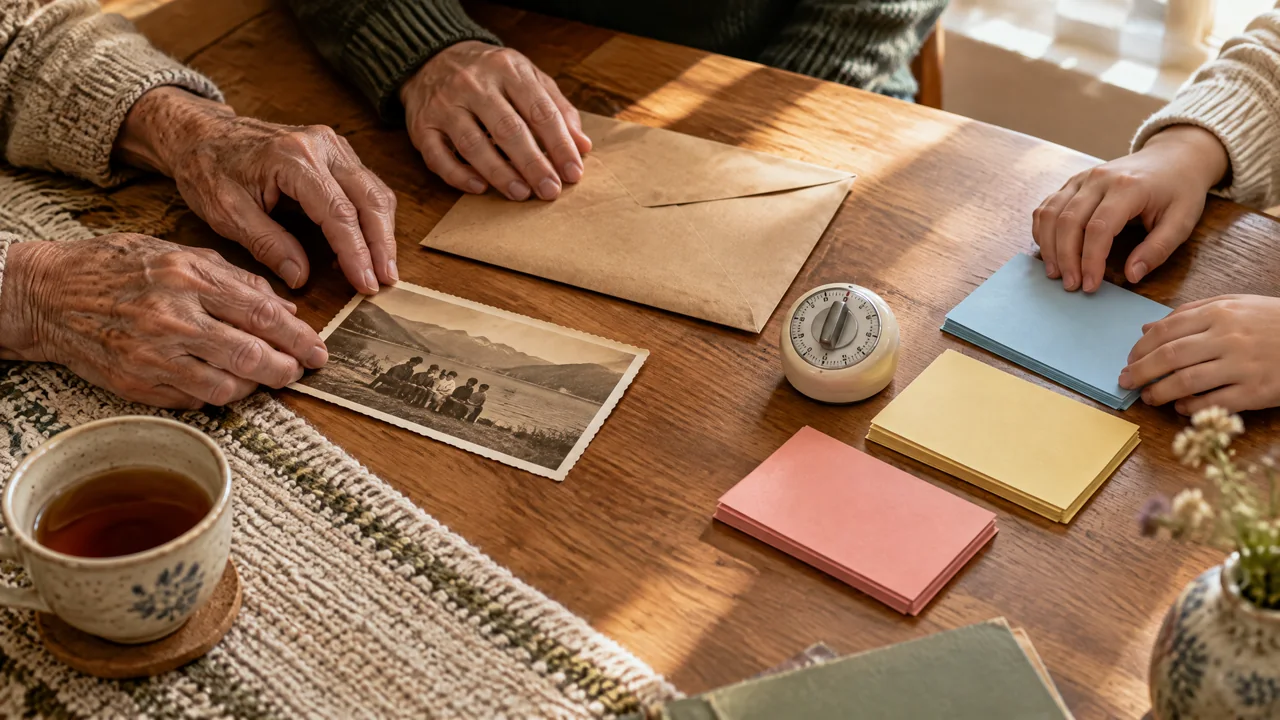
Six roles that can move between people
The steward
The steward keeps the project moving gently. They set the next small question, note what arrived, and invite help without chasing people. Their useful habit is a brief update naming the next two or three tasks.
The interviewer
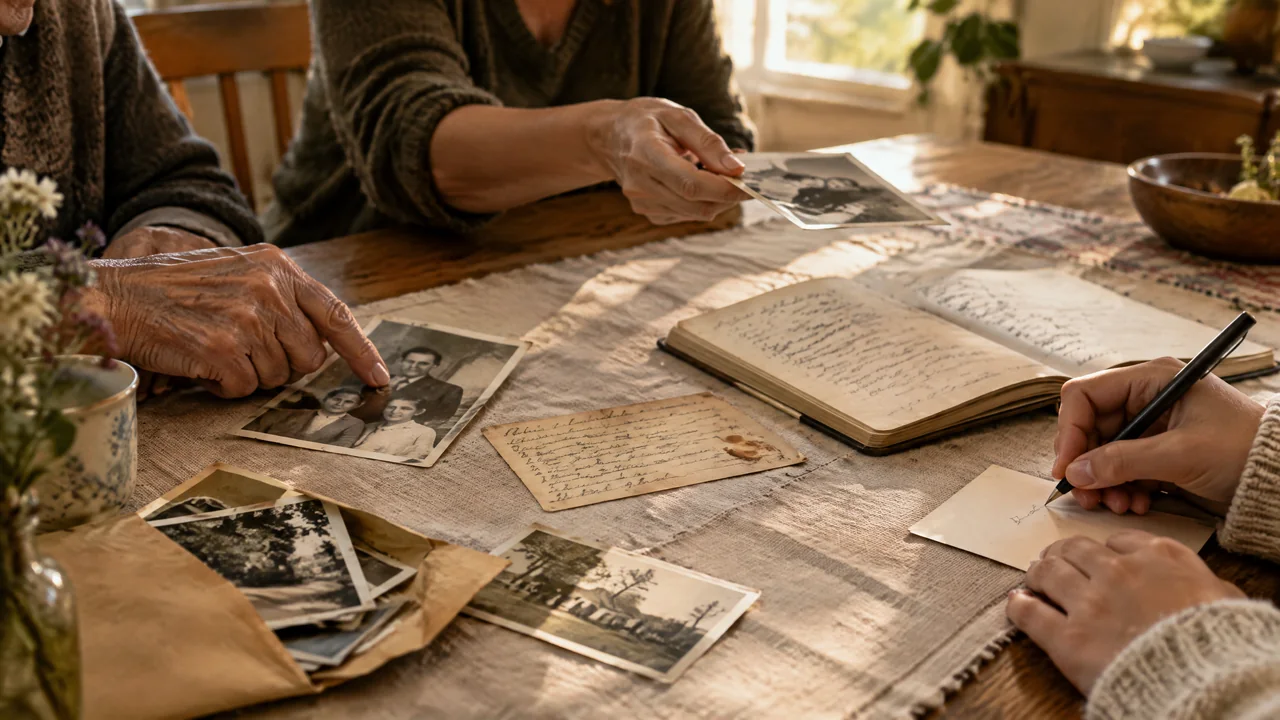
The interviewer gathers oral stories. Before recording, they ask whether the person is comfortable being recorded and how they would like the story used. The Library of Congress similarly advises asking an older relative for permission to record a conversation and notes that a recording may later be transcribed and shared. 3 Open prompts work well: “What do you remember about this house?” Then allow pauses and changes of subject.
A story should be saved as a story, with the speaker’s name, the date, and a short note about permission or limits on sharing. It may lead to useful research, but it need not be forced into a fact straight away.
The photo captioner
The photo captioner works slowly through images. They can record what is known, what is guessed, and who supplied the identification. A helpful caption might say: “Believed to be Lena and Arthur at the coast, about 1958; identified by Mara, May 2026.” If no one knows, “unidentified” is useful.
The source checker
The source checker asks a calm question: “What supports this?” They attach a clear reference to a record, image, book, letter or conversation, and flag differences rather than smoothing them away. The Board for Certification of Genealogists describes complete documentation as showing both the quality of sources and the scope of research, and its standards emphasise assessing evidence before drawing conclusions. 2
This lets the next relative see where a date, relationship or spelling came from. If records disagree, keep both references and note the difference.
The contributor
The contributor brings one piece at a time: a scanned card, a remembered nickname, a funeral notice, a recipe with a name on it, or a correction. They need not organise it all. The steward notes where it came from and asks one follow-up question only if needed. Contributions can be private to the family’s working group or held back altogether; giving nothing is also acceptable.
The privacy contact
The privacy contact is the person relatives can approach if they want a name, photograph, story or detail changed, limited, or removed from the group’s materials. They record the request and pass it to the steward. This is useful when a story is sensitive or an image includes more than one person.
Consent is a practical act of respect, not a box to rush through. The BCG Code of Ethics says genealogists should not publish personal or genealogical information disclosed to them without informed consent or without omitting personally identifying detail. 2 A FamilySearch help page likewise tells users not to submit photographs of living people without consent. 4 Families can follow the same considerate habit by asking first, agreeing what may be shared, and making it easy to change one’s mind. This is not legal advice, and each person can opt out.
Keep three kinds of notes separate
A working tree becomes confusing when a record, a memory and a hunch look alike. Use three plain labels every time you add something:
- Research record: a document or other source you have seen, with enough detail for someone else to find it again.
- Oral story: what a person remembers or says, named and dated without treating it automatically as proof.
- Open question: the uncertainty that remains, plus one possible next step.
For example, a passenger list may support a travel date, while an aunt’s recollection explains why the journey mattered. Keeping these separate honours the storyteller and makes later checking clearer.
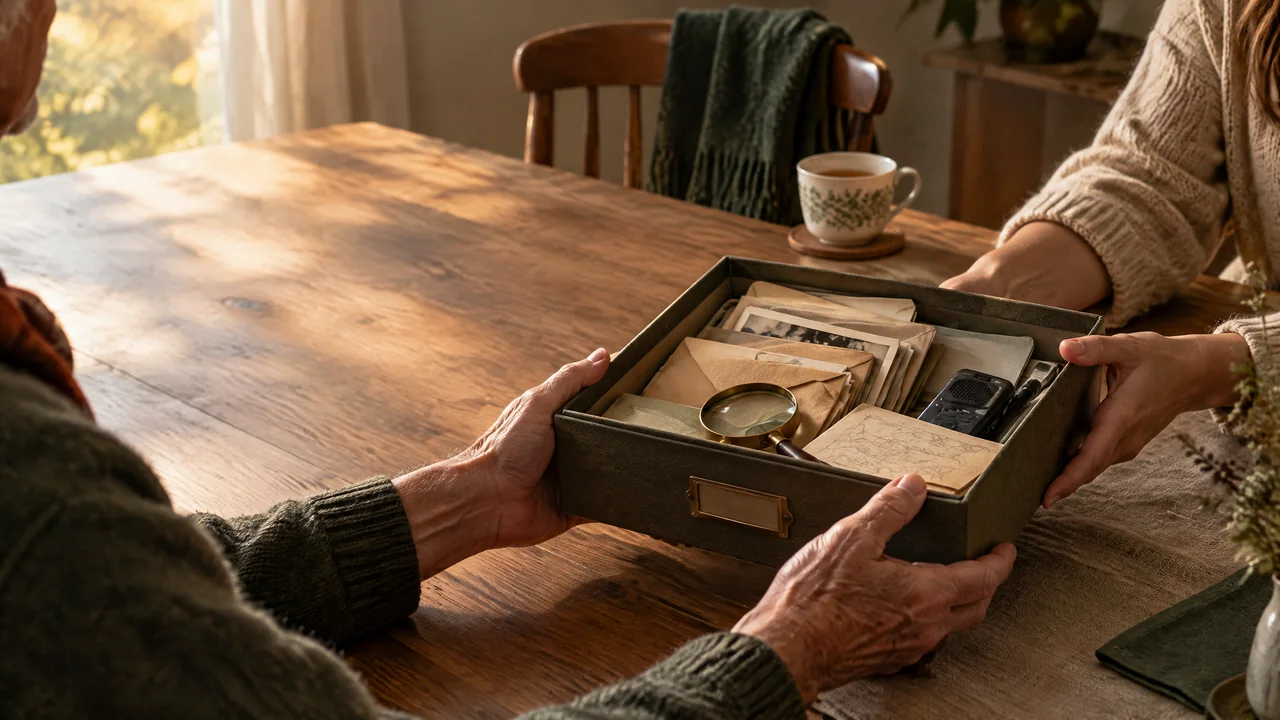
A 20-minute handoff worksheet
Use this at the end of a call, visit or family meal.
- This week’s focus: What single person, photograph, place or question are we working on?
- Steward for now: Who will gather the next replies and send a short update?
- One story task: Who will ask one relative for a memory, and will they ask permission before recording or sharing it?
- One photo task: Which image needs names, a date, a place, or a note that it is unidentified?
- One source task: What claim needs a record or a fuller reference?
- Privacy check: Is any living person mentioned or pictured, and has their preference been heard?
- Handoff: If the named person cannot continue, who may pick up the task?
- Next contact: Choose a date or a simple trigger, such as “after Aunt Rosa replies.”
Finish with one sentence that can be copied into a message: “Thank you for what you shared; we have marked these details as a story, a record, or a question, and you are welcome to correct, add to, or decline any part.”
Let participation stay human
Roles are most useful when they invite rather than assign. Someone may offer one photograph and never join a discussion. Another may compare records but not want stories circulated. Thank both people.
When a task is finished, leave a short trail: what was done, what remains uncertain, and who might know more. That small habit makes a handoff feel normal instead of like a burden. Over time, the tree gains not only names and dates, but a clear memory of how the family worked together to care for them.
Optional next step: If you would like a place to explore a family-tree project together, see MemContinuity’s Family Tree.